
Side Dishes
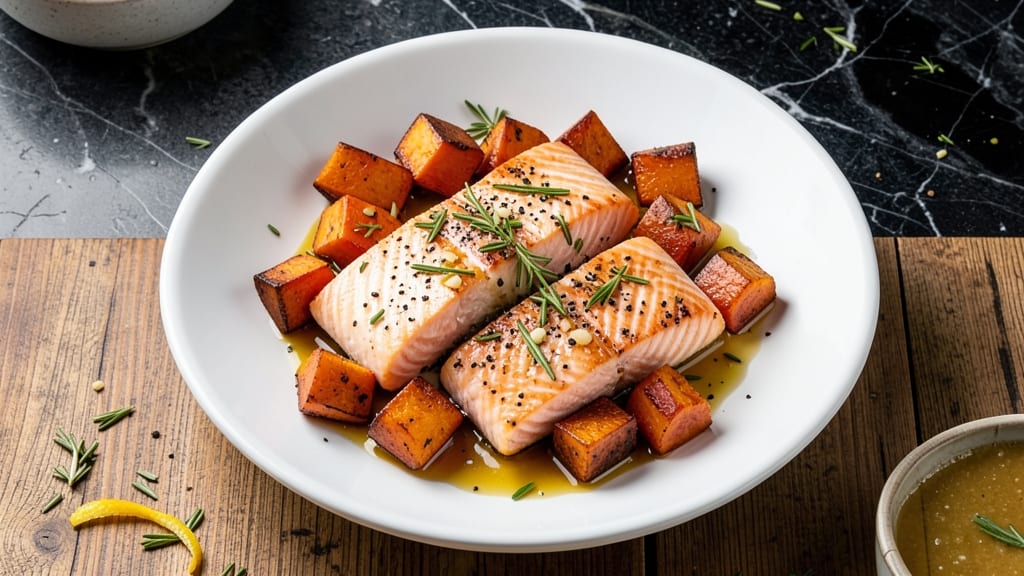
This American Journey salmon & sweet potato recipe transforms a simple weeknight dinner into a restaurant-worthy meal with minimal effort. The secret lies in perfectly pan-seared salmon—juicy inside, crisp on the edges—paired with caramelized sweet potatoes that balance sweetness with smoky depth.
I developed this dish after realizing how often we overcomplicate home cooking when the best meals often start with just a few high-quality ingredients and the right technique.
The salmon benefits from a simple yet effective seasoning blend—just salt, pepper, and a touch of lemon zest—that enhances its natural richness without overpowering it.
Meanwhile, the sweet potatoes roast until their edges turn golden and their interiors become tender, absorbing flavors from a light maple glaze or a sprinkle of smoked paprika.
Together, they create a plate that’s visually stunning and packed with complementary textures: the flaky, buttery salmon and the velvety, slightly crispy sweet potatoes.
What makes this dish truly special is how it comes together in under 30 minutes—no fancy equipment or advanced skills required. The salmon cooks in just 5 minutes per side, while the sweet potatoes roast alongside it, filling your kitchen with an irresistible aroma.
Serve this dish with a crisp white wine or a citrusy cocktail to elevate the meal further, and you’ll have a dinner that feels indulgent without the fuss.
This recipe is perfect for pescatarian meals, family dinners, or even a special occasion when you want to impress without stress. The balance of flavors and textures ensures every bite is satisfying, and the simplicity of the preparation means you’ll spend more time enjoying the meal than cooking it.
Let’s get started on creating this harmonious, flavorful dish.
Ingredients for american journey salmon & sweet potato
Pan-seared salmon and caramelized sweet potatoes—just 11 quality ingredients for a restaurant-worthy weeknight meal.
| Ingredient | Amount | Notes |
|---|---|---|
| Center-Cut Salmon Fillets 🐟 | 1 ½ lb | Skin-on, even thickness preferred |
| Medium Sweet Potatoes 🍠 | 2 whole | Organic preferred, uniform size |
| Extra-Virgin Olive Oil 🫒 | ½ cup | Light, fruity variety for roasting |
| Unsalted Butter 🧈 | 4 tbsp | Cold, cut into pats for searing |
| Kosher Salt 🧂 | 1 ½ tsp | Diamond Crystal preferred for balance |
| Freshly Ground Black Pepper 🌶️ | 1 tsp | Coarse grind for texture |
| Lemon Zest 🍋 | 1 tsp | From 1 large organic lemon |
| Smoked Paprika 🌶️ | 1 tsp | Spanish smoked for depth |
| Pure Maple Syrup 🍯 | 2 tbsp | Grade A for sweetness balance |
| Fresh Rosemary 🌿 | ¼ cup | Finely chopped, stems removed |
| Garlic Cloves 🧄 | 2 cloves | Minced, fresh preferred |
The salmon is everything here. Center-cut fillets with skin-on stay together better than tails—Trader Joe's or Whole Foods carry perfect portions. Look for bright pink color, no fishy smell, and even thickness. Sweet potatoes? Organic if possible—they absorb flavors better. The maple syrup matters too: Grade A has the right balance of sweetness without being cloying. For the olive oil, California brands like Corto have that light, fruity profile that won't overpower the salmon's natural flavor.
No smoked paprika? Regular paprika plus a pinch of liquid smoke works in a pinch. Fresh rosemary wilting? Dried at half the amount is fine—just crush it between your fingers to release the oils. The lemon zest can be skipped if you're short, but trust me on the freshly ground black pepper. Pre-ground loses its punch fast. For the butter, Plugrá or Land O'Lakes unsalted melt beautifully. If you've got extra maple syrup, drizzle it over the salmon at the end—it caramelizes beautifully with the pan juices.
Salmon stays fresh 1-2 days in the fridge—use it within 24 hours for best texture. Sweet potatoes keep 2 weeks in a cool, dark place. The maple syrup? Indefinitely if unopened, 6 months once opened. I always make double the rosemary and garlic—extra goes into the next night's roasted veggies. The lemon zest? Use it all immediately—it loses its brightness fast. Store everything but the butter in airtight containers, and you'll be set for your next quick dinner.
Why You'll Love This Recipe
- I’ll be real: center-cut salmon isn’t cheap, but this recipe stretches it perfectly. The sweet potatoes bulk it up, and a little butter goes a long way when you’re roasting everything together. It’s the kind of meal that makes you feel like you splurged, without actually breaking the bank.
- One-Pan Magic: I swear by this for nights when I’m too tired to scrub pots—just toss the salmon and sweet potatoes on a sheet pan, drizzle with olive oil, and let the oven do the work. The butter bastes everything right on the tray, so cleanup is basically nonexistent.
- Sweet & Savory Balance: That caramelized sweet potato meets flaky, buttery salmon? It’s the kind of combo that makes you pause mid-bite. The salt draws out the natural sweetness of the potatoes while keeping the salmon rich but not overpowering—honestly, it’s the simplest way to make a dish feel fancy.
- Weeknight to Weekend: Between us, this recipe works for everything. Toss it together for a lazy Tuesday dinner, bring it to a potluck (it’s always the first to disappear), or serve it at a dinner party—no one will guess it took less than 40 minutes. The sweet potatoes even reheat beautifully, so leftovers don’t feel like a chore.
Step-by-step instructions for pan-seared salmon with caramelized sweet potatoes
Here's how to transform simple ingredients into a restaurant-worthy dish with perfect textures and bold flavors.
Prep the Sweet Potatoes for Maximum Caramelization
Preheat your oven to 425°F and line a baking sheet with parchment paper. Peel the 2 whole medium sweet potatoes and cut them into 1-inch chunks, leaving the skin on for texture. Toss them in a large bowl with 0.25 cup finely chopped fresh rosemary, 2 cloves minced garlic, 1 tsp smoked paprika, 1 tsp kosher salt, and 2 tbsp pure maple syrup.
Spread the sweet potatoes in a single layer on the prepared baking sheet, leaving space between each piece. This ensures even browning and crispy edges. Roast for 25-30 minutes, flipping halfway through, until they're tender when pierced with a fork and have developed deep caramelized spots. The maple syrup will create a sticky glaze that intensifies their natural sweetness.
Create the Perfect Pan-Seared Salmon Crust
While the sweet potatoes roast, pat the 1.5 lb center-cut salmon fillets completely dry with paper towels—this is crucial for crispy skin. In a large skillet, melt 4 tbsp cold unsalted butter over medium-high heat until it foams but doesn't brown. Add 0.5 cup extra-virgin olive oil and let it shimmer.
Season the salmon fillets generously with 1.5 tsp kosher salt, 1 tsp freshly ground black pepper, and 1 tsp lemon zest. Place them skin-side down in the skillet, pressing gently with a fish spatula to ensure full contact. Cook undisturbed for 4-5 minutes until the skin is golden brown and crispy—this creates the signature crunch. Flip carefully and cook for another 2-3 minutes until the salmon reaches 135°F internally and flakes easily with a fork.
Finish with a Bright, Herby Sauce
Remove the salmon from the skillet and tent loosely with foil to keep warm. Reduce the heat to medium-low and add the roasted sweet potatoes to the same skillet. Pour in any accumulated juices from the salmon and let them simmer for 1-2 minutes to create a quick sauce.
Add a splash of water if needed to deglaze the pan, then stir in the remaining 0.25 cup chopped fresh rosemary and 1 tsp lemon zest. The residual butter and oil will create an emulsified sauce that coats the sweet potatoes beautifully. Taste and adjust seasoning with additional kosher salt or black pepper if needed.
Plate with Perfect Presentation
Divide the caramelized sweet potatoes evenly among 4 plates, creating a generous base. Place each salmon fillet on top, skin-side up, to showcase that crispy crust. Drizzle the herby sauce over both components and garnish with an additional sprinkle of lemon zest and freshly cracked black pepper.
Serve immediately while the salmon is still warm and the sweet potatoes maintain their crispy edges. The contrast of silky salmon against the caramelized sweet potatoes creates a textural masterpiece, while the bright lemon and rosemary tie everything together. This dish balances richness with freshness—perfect for a weeknight dinner that feels special.
Pro Tips For Making American Journey Salmon & Sweet Potato
- CUT SWEET POTATO LENGTHWISE: I learned this the hard way—slicing sweet potatoes into rounds means they turn to mush when roasted. Instead, halve them lengthwise (skin on) so the flesh stays dense and caramelizes properly. You’ll get that perfect crispy edge without falling apart.
- SALMON SKIN ON, SEASON LATE: Leave the skin on those center-cut fillets—it’s the secret to keeping them from curling. Salt the salmon just before cooking (about 5 minutes prior) so it doesn’t draw out moisture too early. Trust me, your salmon will thank you.
- BUTTER THE PAN COLD: After searing the salmon, don’t rush the butter. Let the pan cool slightly (about 30 seconds) before adding the butter—this prevents it from burning instantly and lets it foam up for that rich, glossy finish. Yes, even if you’re impatient like me.
- REST SALMON UNDER FOIL: Skip the plate and tent the salmon with foil for 5 minutes after cooking. This keeps it warm while the juices redistribute, so you don’t end up with dry edges. I was skeptical until I tried it—now it’s non-negotiable.
Troubleshooting your american journey salmon & sweet potato
Undercooked Salmon
If your salmon feels rubbery or doesn't flake easily, it's likely undercooked. Use an instant-read thermometer to check the thickest part—it should reach 135°F internally. I recommend cooking salmon 2-3 minutes less than you think it needs, then letting it rest 5 minutes under foil.
The residual heat will carry it to perfection. For thicker fillets (1.5 inches), start with 3 minutes per side at medium-high heat. 🌡️
Overcooked Sweet Potatoes
Sweet potatoes can turn mushy if over-roasted, especially if cut too small. Stick to 1-inch chunks and roast at 425°F for no more than 30 minutes. If they're browning too quickly, tent with foil.
For extra insurance, undercook them slightly—they'll finish cooking while resting. I also recommend using a meat thermometer; they're done at 205°F in the center. 🍠
Skin Not Crispy
Salmon skin stays limp when it's not properly dried before cooking. Pat fillets thoroughly with paper towels, then let them air-dry on a wire rack for 5 minutes. Another trick: Chill the salmon 15 minutes before cooking to firm up the skin.
Use a 12-inch nonstick skillet (like All-Clad) for even heat distribution, and don't overcrowd—cook in batches if needed. 🧂
Maple Glaze Too Sweet
The maple syrup can dominate if you use too much or if the sweet potatoes aren't balanced. Start with just 1 tbsp per pound of sweet potatoes, then adjust to taste.
For a more savory profile, add ½ tsp smoked paprika or a pinch of cayenne pepper to the roasting mix. I also recommend roasting at 400°F instead of 425°F to develop deeper caramelization without excess sweetness. 🍯
Salmon Sticking to Pan
Sticking happens when the pan isn't hot enough or the salmon isn't properly seasoned. Heat your skillet until a drop of water sizzles instantly, then add the salmon. A light coating of olive oil (not butter) helps too—just ½ tsp per fillet.
For extra insurance, press the salmon gently with a fish spatula for 10 seconds after placing it in the pan. I swear by a 10-inch cast-iron skillet for this—it maintains even heat. 🔥
Uneven Cooking
Thicker edges cooking faster? Flip the sweet potatoes once during roasting, and rotate the pan 90 degrees halfway through. For salmon, use a fish spatula with a thin, flexible blade (like OXO Good Grips) to gently lift and flip.
If your fillets vary in thickness, start with the thickest side down. I also recommend cooking salmon on medium-high heat—too high causes uneven browning. ⚡
Nutrition facts
Frequently asked questions
Can I substitute regular potatoes for sweet potatoes?
While you can use regular potatoes, the flavor and texture will differ significantly. Sweet potatoes have a naturally sweeter taste and creamier texture when roasted, which pairs beautifully with the salmon's richness. If you must substitute, try Yukon Gold potatoes—they're the closest in sweetness and hold up well to roasting. For best results, reduce the maple syrup to 1 tbsp to avoid over-sweetening.
How do I keep the salmon from drying out?
Never overcook the salmon! Remove it from the pan when it reaches 130°F internally—it will continue cooking while resting. The 5-minute rest under foil is crucial for redistributing juices. For extra moisture, baste the salmon with 1 tbsp butter during the last 30 seconds of cooking. Also, avoid cutting into it immediately—let it rest completely before serving.
Can I make this recipe ahead of time?
Yes, but with some adjustments. Roast the sweet potatoes up to 2 days ahead and store them at room temperature—they'll keep their texture. For the salmon, cook it just before serving to maintain perfect doneness. If making ahead, focus on the sweet potatoes as the base, then quickly sear fresh salmon when ready to eat. Reheat the sweet potatoes in a 350°F oven for 5-10 minutes to restore crispiness.
What's the best wine pairing for this dish?
A crisp, dry white wine works beautifully—try a Sauvignon Blanc from New Zealand or a Pinot Grigio from Italy. The acidity cuts through the richness of the salmon while complementing the sweet potatoes' caramelized notes. For a non-alcoholic option, sparkling apple cider with a splash of lemon juice mimics the same refreshing contrast. Avoid heavy reds like Cabernet—they'll overpower the delicate flavors.
Can I use frozen salmon instead of fresh?
but thaw it properly first! Place frozen salmon in the refrigerator 24 hours before cooking. For quicker thawing, use the cold water method (30 minutes10 minutes. Never thaw at room temperature—it promotes bacterial growth. Pat the salmon completely dry before cooking, as any moisture will prevent crispy skin. Frozen salmon works just as well in this recipe!