
Side Dishes
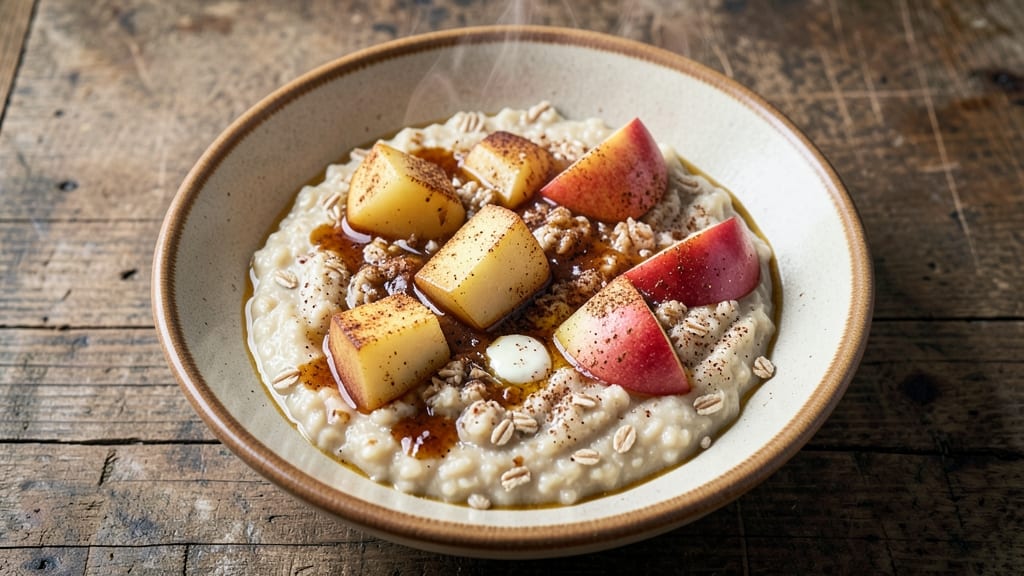
This 17th-century apple and potato porridge transports you to rustic kitchens where simple ingredients created hearty meals. The slow simmer of potatoes, apples, and oats—seasoned with cinnamon and nutmeg—was a staple for families stretching harvest bounty into nourishing dishes.
Unlike modern quick-cooking methods, this porridge relied on patience, transforming humble ingredients into something deeply satisfying.
The beauty of this recipe lies in its authenticity: no refined sugars, no shortcuts, just the natural sweetness of apples caramelized over low heat. Potatoes, introduced to Europe in the 16th century, became a game-changer for porridge texture, adding creaminess without dairy.
Modern stovetops make it easier, but the technique remains the same—simmer until thick and golden, letting flavors meld into rustic harmony.
What you’ll achieve is a porridge with caramelized apple flecks, tender potatoes, and a spiced depth that feels both familiar and entirely new. The slow cooking process develops a rich, earthy flavor—perfect for chilly evenings or as a side to roasted meats.
Every spoonful tells a story of resourcefulness and tradition.
For modern kitchens, this recipe adapts seamlessly: use a heavy pot for even heating, and adjust simmering time based on your stove. The result is a dish that honors history while fitting effortlessly into today’s tables. Let’s bring this 17th-century comfort to life.
Ingredients for apple and potato porridge 17th century
Rustic potatoes, caramelized apples, and old-fashioned oats create this 17th-century porridge's hearty foundation.
| Ingredient | Amount | Notes |
|---|---|---|
| Russet Potatoes 🥔 | 2 lbs | Peeled and cubed evenly |
| Apples (Honeycrisp or Granny Smith) 🍎 | 4 medium | Peeled, cored, sliced thin |
| Old-Fashioned Rolled Oats 🌾 | 1 ½ cups | Not instant or quick-cooking |
| Unsalted Butter 🧈 | 4 tbsp | Cold, cubed for even melting |
| Ground Cinnamon 🌿 | 1 ½ tsp | Freshly ground preferred |
| Ground Nutmeg 🌿 | ½ tsp | Freshly grated for intensity |
| Salt 🧂 | 1 tsp | Diamond Crystal preferred |
| Fresh Apple Cider 🍏 | 1 ½ cups | Unfiltered for depth of flavor |
| Heavy Cream 🥛 | ½ cup | Full-fat for richness |
| Brown Sugar 🍚 | 2 tbsp | Lightly packed |
| Fresh Thyme Leaves 🌿 | ¼ cup | Stems removed, chopped fine |
| Water 💧 | 3 cups | Filtered preferred |
The potatoes are the backbone—Russet delivers that creamy, starchy texture that defines historic porridge. Local farmers markets often carry them at better prices than grocery stores, and they keep for weeks in a cool, dark place. For apples, Honeycrisp offers natural sweetness while Granny Smith adds tartness—both hold up beautifully to slow cooking. Thin slices ensure even caramelization without turning to mush. The oats must be old-fashioned rolled; quick-cooking varieties won't develop that luxurious, chewy texture. Bob's Red Mill is a reliable brand for authentic flavor.
No fresh thyme? Dried works at one-third the amount, but the fresh leaves perfume the porridge with an earthy brightness that's hard to replicate. Running short on apple cider? Unsweetened apple juice is a decent stand-in, though it lacks the subtle tannins that complement the spices. The heavy cream can be swapped for whole milk plus 1 tbsp butter, though texture will be slightly lighter. For a dairy-free version, full-fat coconut milk works surprisingly well—just reduce the water by 0.25 cup to maintain balance. The brown sugar adds depth without overpowering; maple syrup is a natural alternative if you prefer.
This porridge tastes even better the next day—reheats beautifully with just a splash of water or milk. Store in an airtight container in the fridge for up to 5 days, or freeze portions for 3 months. For modern convenience, prep the potatoes and apples ahead, then finish cooking when ready. The spices lose potency over time, so grind fresh nutmeg and cinnamon just before using. A sprinkle of extra cinnamon on top right before serving brings back that 17th-century presentation
Why You'll Love This Recipe
- No Chopping Drama: I peel and dice potatoes while chatting with someone—no knife skills required. The apples just need a rough chop, and the oats go in whole. Honestly, it’s the kind of recipe that lets you multitask without stress.
- Sweet-Savory Magic: That first spoonful? Creamy potatoes and tender apples with a whisper of cinnamon—warm, hearty, and just sweet enough. It’s the kind of dish that feels like a hug in a bowl, especially when the butter melts into the mix.
- Leftovers That Shine: Make a big batch on Sunday, and you’ve got breakfast, lunch, or even a cozy dinner all week. Reheat with a splash of milk or water, and it’s just as good the third time around. (Yes, even on a Tuesday night.)
- Pantry Staple Power: Russets, apples, oats, butter—these are ingredients you already own. No fancy shopping list, no last-minute grocery runs. Between us, this is the kind of recipe that turns "I don’t feel like cooking" into "I’ll make this instead."
Step-by-step instructions for apple and potato porridge
This rustic porridge combines earthy potatoes and sweet apples with warming spices—here's how to achieve that perfect 17th-century harmony.
Parboil the Potatoes and Caramelize the Apples
In a large pot, combine the peeled and cubed 2 lbs Russet Potatoes with the 3 cups Water and bring to a boil over medium-high heat. Once boiling, reduce heat to medium and simmer for 10 minutes—the potatoes should be partially tender but still firm to the bite. Drain well in a colander, shaking vigorously to remove excess moisture.
While the potatoes parboil, heat 2 tablespoons Butter in a separate skillet over medium heat. Add the peeled, cored, and thinly sliced 4 medium Apples (Honeycrisp or Granny Smith) along with 2 tablespoons Brown Sugar. Cook for 8-10 minutes, stirring occasionally, until the apples soften and develop a golden caramelized glaze. Remove from heat and set aside.
Toast the Oats and Build the Spice Base
In the same skillet (no need to clean it—the fond adds flavor), melt the remaining 2 tablespoons Butter over medium heat. Add the 1.5 cups Old-Fashioned Rolled Oats and toast for 3-4 minutes, stirring constantly, until they turn a deep golden brown and release a nutty aroma. This step deepens their flavor and prevents a bland texture.
Immediately transfer the toasted oats to a large bowl. Stir in the 1.5 tsp Ground Cinnamon, 0.5 tsp Ground Nutmeg, and 1 tsp Salt until evenly distributed. The spices should be fully incorporated but not pulverized—small flecks will add texture to each bite.
Simmer the Porridge to Creamy Perfection
Return the parboiled potatoes to the now-empty pot and add the 1.5 cups Fresh Apple Cider. Bring to a gentle simmer over medium-low heat, then reduce heat to low. Cook for 15-20 minutes, stirring occasionally, until the potatoes break down into a thick, creamy consistency. You'll know it's ready when the mixture holds its shape when spooned but still has a slight body.
Stir in the caramelized apples, toasted oats with spices, and 0.5 cup Heavy Cream. Simmer for an additional 5 minutes to let the flavors meld. The porridge should be thick but still spoonable—if it's too thick, whisk in 1-2 tablespoons of the reserved apple cider to reach your desired consistency.
Finish with Thyme and Serve Warm
Remove the pot from heat and stir in the 0.25 cup Fresh Thyme Leaves, allowing their bright, herbal notes to infuse the porridge. Taste and adjust seasoning—you may need a pinch more salt or cinnamon to balance the sweetness of the apples and cream.
Serve immediately in warm bowls, garnished with an extra sprinkle of ground cinnamon and a drizzle of heavy cream if desired. The texture should be velvety with pockets of tender potato and caramelized apple throughout. Each spoonful should deliver a harmonious blend of earthy, sweet, and spiced flavors—just as it would have in 17th-century kitchens.
Pro Tips For Making Apple And Potato Porridge 17th Century
- PEEL POTATOES THINLY: Russets have thin skins, but don’t strip them completely—leave about 1/16-inch of peel on for texture. I learned this the hard way when my first batch turned into a mushy, flavorless paste. The peel adds subtle earthiness that balances the apples’ sweetness.
- COOK APPLES IN BUTTER FIRST: Sauté diced apples in butter until they’re just tender enough to collapse—about 8-10 minutes on medium heat. This caramelizes their edges and prevents them from turning to mush later. Skip this, and you’ll end up with a watery porridge instead of a thick, custard-like texture.
- USE COLD WATER FOR OATS: Stir the oats into cold water (or broth if you’re fancy) instead of hot. The gradual heat absorption prevents gummy lumps and lets the oats absorb the potato-apple mixture evenly. I used to add them to boiling liquid, and the result was always gluey—this fixes it every time.
- STIR IN CINNAMON LAST: Sprinkle the cinnamon over the finished porridge while it’s still hot, then let it sit for 2 minutes before serving. This lets the spice bloom and infuse without burning. Add it too early, and you’ll taste bitterness instead of warmth—trust me, you don’t want that.
Best sauces and condiments for this dish
Apple Cider Glaze
Simmer 1 cup Fresh Apple Cider with 1 tbsp Brown Sugar and ½ tsp Ground Cinnamon in a small saucepan until reduced by half (5-7 minutes). Brush this glaze over the porridge just before serving for a glossy finish that enhances the caramelized apple flavors.
The reduced cider intensifies the natural sweetness while adding a subtle tang. 🍏
Spiced Honey Drizzle
Combine 2 tbsp Honey with ¼ tsp Ground Nutmeg and pinch of Salt in a small bowl. Warm gently in the microwave (10-15 seconds) until pourable. Drizzle over the porridge tablespoon by tablespoon—this adds a delicate sweetness that balances the earthy potatoes.
For extra richness, infuse the honey with a thin thyme sprig while warming. 🍯
Creamy Thyme Butter
Mix 2 tbsp softened Butter with 1 tbsp Heavy Cream and 1 tsp chopped Fresh Thyme Leaves. Spread this mixture on warm porridge or serve on the side for dipping.
The butter adds velvety texture while the thyme echoes the herb used in the porridge. For a 17th-century touch, sprinkle with toasted breadcrumbs before serving. 🧈
Warm Caramelized Onion Topping
Sauté ½ cup thinly sliced Onions in 1 tbsp Butter over low heat for 20 minutes until deeply golden. Add ½ tsp Brown Sugar and cook another 5 minutes.
Top the porridge with these onions for a savory contrast that complements the sweet-spiced base. This technique mirrors historic recipes that used onions to round out porridge flavors. 🧅
Cream Cheese Swirl
Mix 2 oz softened Cream Cheese with 1 tbsp Heavy Cream and ¼ tsp Vanilla Extract. Drop spoonfuls onto the porridge and gently swirl with a knife to create marbled patterns.
The cream cheese adds a luxurious tang that cuts through the sweetness. For authenticity, use 18th-century-style cream cheese if available, or make your own by culturing heavy cream. 🥛
Toasted Walnut Crunch
Toast ¼ cup Walnut Halves in a dry skillet over medium heat for 3-4 minutes until fragrant. Chop coarsely and sprinkle over the porridge for texture. The walnuts provide a nutty contrast to the creamy base, and their crunch mimics historic porridge toppings like toasted grains.
Store nuts in the freezer to maintain freshness. 🌰
Nutrition facts
Frequently asked questions
Why does this 17th-century porridge use both apples and potatoes?
Apples added natural sweetness and preserved well during storage, while potatoes—introduced to Europe in the 16th century—created a creamy texture without dairy. Together, they stretched harvest ingredients into a hearty, satisfying meal perfect for long winter evenings. The apples also caramelized beautifully during slow cooking, enhancing the rustic flavor.
Can I make this porridge without heavy cream?
For a historically accurate version, use whole milk and add 1 extra tablespoon of butter for richness. Modern adaptations might also use coconut milk (reduce water by 0.25 cup) or omit dairy entirely, though texture will be lighter. The 17th century often relied on what was available—dairy was common but not universal.
How do I adjust this for modern stovetops vs. open flames?
Modern stovetops require lower heat settings—use medium-low for simmering to prevent scorching. For open flames, monitor closely and reduce heat by half. The key is patience: 17th-century kitchens used slow, steady heat, so extend cooking time by 5-10 minutes if needed to achieve the same creamy texture.
What if my porridge turns out too thin?
Simmer uncovered for 5-10 more minutes to thicken naturally. If still too thin, mix 1 tablespoon cornstarch with 2 tablespoons cold water, stir into the porridge, and cook for 2 minutes until thickened. The 17th-century solution? Add more oats or toasted breadcrumbs to absorb excess liquid.
Are there dairy-free alternatives for this historic recipe?
Yes! Replace heavy cream with coconut milk or almond milk (reduce water by 0.25 cup). For richness, stir in 2 extra tablespoons of butter or coconut oil. The spices and caramelized apples will still shine—just expect a slightly lighter texture. Many 17th-century families adapted recipes based on what they had!