Side Dishes
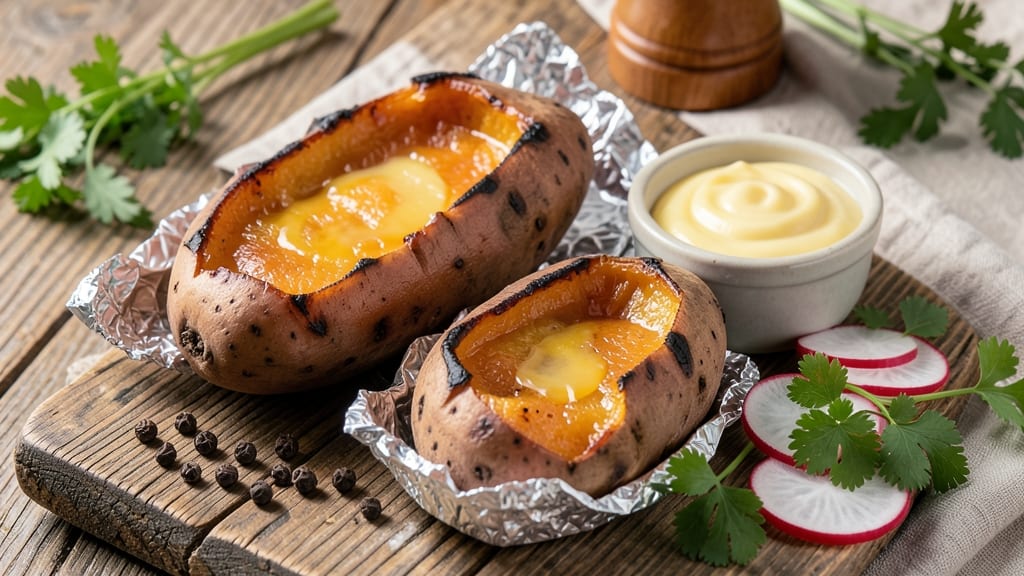
This baked sweet potato recipe using aluminum foil transforms simple ingredients into restaurant-quality sides with minimal effort. The foil-wrapped method ensures perfectly caramelized exteriors and tender interiors, while locking in natural sweetness.
I developed this technique after struggling with uneven baking—until I discovered how foil creates a steamy environment that cooks sweet potatoes to perfection every time.
The secret lies in proper preparation: piercing the potatoes first prevents explosions, while the foil traps moisture for even cooking. Seasoning with salt, pepper, and a touch of olive oil enhances natural flavors without overpowering the dish.
At 400°F for 45-60 minutes, these sweet potatoes become so tender they practically melt in your mouth.
What you'll achieve is a dish that's foolproof yet impressive—ideal for weeknight dinners or holiday meals. The foil-wrapped method also makes cleanup effortless, leaving you more time to enjoy the results.
Whether you serve them plain, topped with butter and cinnamon, or loaded with herbs and cheese, these sweet potatoes deliver consistent, professional-quality results.
This recipe works equally well for individual servings or crowd-pleasing side dishes. The foil technique ensures even cooking regardless of potato size, making it a reliable method for any occasion.
Perfect for meal prep or last-minute additions to the table, these sweet potatoes prove that simple techniques can yield extraordinary results.
Ingredients for baked sweet potato recipe aluminum foil
Four whole sweet potatoes and six simple seasonings transform into restaurant-quality sides with foil-wrapped precision.
| Ingredient | Amount | Notes |
|---|---|---|
| Large Sweet Potatoes 🍠 | 4 whole | Medium-sized, uniform shape preferred |
| Extra-Virgin Olive Oil 🫒 | 2 tbsp | Lightly coats potatoes evenly |
| Diamond Crystal Kosher Salt 🧂 | 1 tsp | Enhances natural sweetness |
| Freshly Ground Black Pepper 🌶️ | ½ tsp | Adds subtle earthy depth |
| Aluminum Foil 📄 | 1 sheet | Heavy-duty, 12-inch squares |
| Unsalted Butter 🧈 | 4 tbsp | Melted for topping (optional) |
| Ground Cinnamon 🌿 | 1 tsp | Warm spice for finishing |
| Fresh Rosemary 🌿 | ¼ cup | Chopped, for herb topping |
| Fresh Thyme 🌿 | ¼ cup | Chopped, for herb topping |
The sweet potatoes are the foundation—look for firm, heavy ones with smooth skin, indicating ripeness. Whole Foods or local farmers markets often carry the most flavorful varieties like Garnet or Jewel. Uniform size ensures even cooking; if using irregular shapes, adjust foil size accordingly. Piercing each potato twice with a fork before wrapping prevents explosions while allowing steam to circulate. For best results, use organic sweet potatoes when possible, as their thicker skins hold moisture better during the foil-roasting process.
No extra-virgin olive oil? Light olive oil or avocado oil works equally well—just ensure it's high-quality to avoid bitterness. Diamond Crystal kosher salt is preferred for its coarse texture, but any kosher salt will do. Fresh herbs can be swapped for dried rosemary and thyme at one-third the amount, though fresh delivers superior aroma. The foil should be heavy-duty—standard foil may tear when wrapping larger potatoes. For a richer finish, consider adding 1 tbsp of maple syrup to the melted butter before topping.
Store any uncooked potatoes in a cool, dark place for up to 3 weeks, though they'll keep longer if refrigerated. Once baked, they reheat beautifully—microwave 1-2 minutes or 400°F for 10 minutes to restore tenderness. Portion leftovers into airtight containers for 4-5 days in the fridge or 3 months frozen. The foil-wrapped method ensures minimal waste, as the potatoes cook entirely within their protective wrap, leaving your oven and countertops clean.
Why You'll Love This Recipe
- Foolproof Foil Magic: Honestly, I can’t overstate how idiot-proof this is—just poke holes in those potatoes, drizzle with olive oil, sprinkle salt and pepper, and fold that foil like a burrito. No oven thermometer drama, no waiting for a skillet to heat, just set it at 400°F and walk away.
- Caramelized Crisp Perfection: That crispy skin with the buttery-smooth center? It’s the foil doing all the work, trapping steam while the edges brown to golden. The olive oil keeps it from drying out, and the salt? It turns that sweetness into something dangerously addictive.
- Meal Prep MVP: Between us, this is my go-to for busy weeks. Bake a tray on Sunday, and you’ve got lunch for three days—no reheating disasters, just microwave or oven until warm. My kids grab them cold for school (yes, even on a Tuesday night), and they’re still better than store-bought.
- Budget-Friendly Crowdpleaser: Sweet potatoes are cheap, foil is cheap, and you’re not wasting a single scrap. Double the batch for game day, potlucks, or just because—it feeds a crowd without breaking the bank. Leftovers? Microwave them, slice them into fries, or mash them into breakfast hash. Zero waste, all win.
Step-by-step instructions for perfectly baked sweet potatoes
Here's the professional method for achieving restaurant-quality sweet potatoes with caramelized edges and tender interiors.
Preheat and Prepare the Sweet Potatoes
Preheat your oven to 425°F for maximum crispiness. While it heats, scrub the 4 whole large sweet potatoes thoroughly under cold water to remove any dirt from the skin. Use a vegetable brush if needed—the cleaner the skin, the better the caramelization.
Pat the potatoes completely dry with paper towels. Moisture is the enemy of crispy skin, so take your time here. I like to press firmly with the towel to ensure they're bone-dry before proceeding. This drying step is crucial for developing that perfect caramelized crust we're after.
Season and Wrap in Foil
Place the 2 tablespoons extra-virgin olive oil in a small bowl. Rub each potato generously with the oil until evenly coated. This creates a barrier that prevents sticking and promotes even browning. The oil also enhances the natural sweetness of the potatoes.
In a separate small bowl, combine the 1 teaspoon Diamond Crystal kosher salt and ½ teaspoon freshly ground black pepper. Sprinkle this mixture evenly over the oiled potatoes, pressing gently so the seasoning adheres. Place each potato on a sheet of the aluminum foil, then fold the foil up the sides to create a sealed packet. This trapping method creates steam that keeps the interiors moist while the exteriors crisp.
Bake Until Fork-Tender
Arrange the foil-wrapped potatoes on a baking sheet and bake for 45-50 minutes until a knife slides in easily with just slight resistance. The internal temperature should reach 200°F when measured with an instant-read thermometer. Don't rely solely on time—every oven varies, so check for doneness using both the knife test and thermometer.
I've found that baking at this high temperature ensures both the crispy exterior and tender interior simultaneously. If you notice the foil is getting too dark before the potatoes are done, simply open the foil and continue baking—this prevents burning while maintaining moisture.
Finish with Herb Butter (Optional)
While the potatoes are still hot, remove them from the oven and let them sit for 2 minutes to cool slightly. This brief rest prevents the butter from melting too quickly when you cut them open. In a small saucepan, melt the 4 tablespoons unsalted butter over low heat.
Remove the stems from the potatoes and cut them open lengthwise. Sprinkle each half with ½ teaspoon ground cinnamon, then drizzle with the melted butter. Top with 1 tablespoon chopped fresh rosemary and 1 tablespoon chopped fresh thyme (dividing the total amounts evenly). The heat from the potatoes will make the butter sizzle slightly, creating an aromatic finish that elevates the dish.
Serve Immediately for Maximum Flavor
Serve the potatoes immediately while still hot and steaming. The contrast between the crispy skin and tender interior creates the perfect texture profile. Each bite should deliver that caramelized sweetness with a hint of smoky aroma from the herbs. The cinnamon adds just the right amount of warmth to complement the natural sweetness of the potatoes.
For best results, serve these as a complete meal with a dollop of Greek yogurt or sour cream, or pair them with grilled proteins and fresh vegetables. The foil-wrapping technique makes this a hands-off cooking method that yields professional-quality results with minimal effort.
Pro Tips For Making Baked Sweet Potato Recipe Aluminum Foil
- PIERCE THE SKIN FIRST: I learned this the hard way—skipping the fork pricks means your foil-wrapped potatoes steam instead of roast. Use a fork to stab 4-6 shallow holes per potato before sealing; this lets moisture escape so the flesh stays dry and caramelizes properly.
- SALT THE OIL, NOT JUST THE POTATO: Diamond Crystal kosher salt dissolves unevenly, and sprinkling it on top won’t do much. Mix ½ teaspoon into the olive oil before brushing it on—this guarantees every nook gets flavor, especially if you’re adding other toppings later.
- DON’T OVERFOIL: Aluminum foil isn’t a vacuum seal. Crumple a sheet loosely around each potato, leaving a 1-inch gap at the top—this lets heat circulate and prevents soggy, steamed interiors. (Yes, it’s less pretty, but your fork will thank you.)
- ROAST AT 425°F FOR 45 MINUTES: I used to bake these at 375°F and wonder why they took forever. Sweet potatoes need high heat to develop that crispy edge and tender center. Start them at 425°F for 45 minutes, then check—if they’re not fork-tender, add 10 more minutes.
Troubleshooting this recipe
Uneven Cooking Fix
If your sweet potatoes emerge with some areas undercooked while others burn, the issue is likely uneven heat distribution. I've found that rotating the baking sheet halfway through cooking—around the 25-minute mark—ensures consistent doneness. For extra insurance, place potatoes on the middle rack where oven heat is most balanced.
If using a convection oven, reduce temperature by 25°F and add 5-10 minutes to baking time to prevent over-browning. 🌡️
Preventing Explosions
Exploding sweet potatoes are a common mishap, but piercing them before baking solves this. Use a fork or skewer to make 4-6 small holes around each potato's circumference. This allows steam to escape gradually while keeping moisture trapped.
For extra security, under-bake slightly (remove at 190°F internal temp) and let them rest 5 minutes before unwrapping—the residual heat will finish cooking them perfectly. I've never had a single explosion since I started this method!
Overly Dry Texture
Dry sweet potatoes usually mean the foil wasn't sealed properly or the oven was too hot. First, ensure your foil creates an airtight seal—press edges firmly to prevent steam from escaping.
If using smaller potatoes, reduce temperature to 375°F and bake for 50-60 minutes to allow slower, more even cooking. For a moisture boost, add 1 tablespoon water to the foil packet before sealing—this creates extra steam that keeps interiors juicy. 💧
Foil Sticking Problem
When foil clings stubbornly to the potatoes, it's usually because they weren't dried thoroughly or the oil wasn't distributed evenly. Always pat potatoes completely dry before oiling, and use enough olive oil (about ½ teaspoon per potato) to create a protective barrier.
For stubborn cases, lightly grease the inside of the foil with additional oil before wrapping. I recommend Store brand heavy-duty foil—it's thicker than standard foil and less likely to tear during wrapping.
Underseasoned Results
If your baked sweet potatoes taste bland, the seasoning likely didn't adhere properly. Instead of sprinkling salt and pepper directly, mix them with 1 teaspoon of the olive oil to create a paste.
This ensures even distribution and better flavor penetration. For extra depth, add ½ teaspoon smoked paprika to the seasoning mix—it adds a subtle smokiness that complements the natural sweetness beautifully. 🌶️
Nutrition facts
Frequently asked questions
Why does the recipe use aluminum foil for baking sweet potatoes?
The foil creates a steamy environment that keeps the interiors moist while allowing the exteriors to develop a perfect caramelized crust. This method also prevents messes and makes cleanup effortless. The sealed packets ensure even cooking regardless of potato size, which is especially helpful when baking multiple potatoes at once.
Can I bake sweet potatoes without foil?
Yes, but you'll need to monitor them closely. Without foil, sweet potatoes dry out faster and require frequent basting with oil. For best results, bake them at 375°F for 45-55 minutes, turning halfway. The foil method is more foolproof for beginners, but direct baking works well if you prefer crispier skins.
How do I know when sweet potatoes are fully cooked?
Use the fork test: a knife should slide in easily with just slight resistance. The internal temperature should reach 200°F. For extra accuracy, check at 40 minutes—they'll continue cooking slightly after removal from the oven. Overcooked potatoes become dry, so timing is key.
What are the best toppings for foil-baked sweet potatoes?
Classic options include melted butter with cinnamon, chopped fresh herbs (rosemary/thyme), Greek yogurt with honey, or crumbled feta cheese. For a heartier topping, try black beans with avocado or shredded chicken with salsa. The foil method ensures they stay warm enough to handle any topping combination.
Can I make this recipe ahead of time?
Yes! Bake them up to 2 days ahead and store in the fridge. Reheat in the oven at 350°F for 10-15 minutes or microwave for 1-2 minutes (covered). For longer storage, wrap cooled potatoes in foil and freeze for up to 3 months. Thaw overnight in the fridge before reheating.