
Soups & Stews
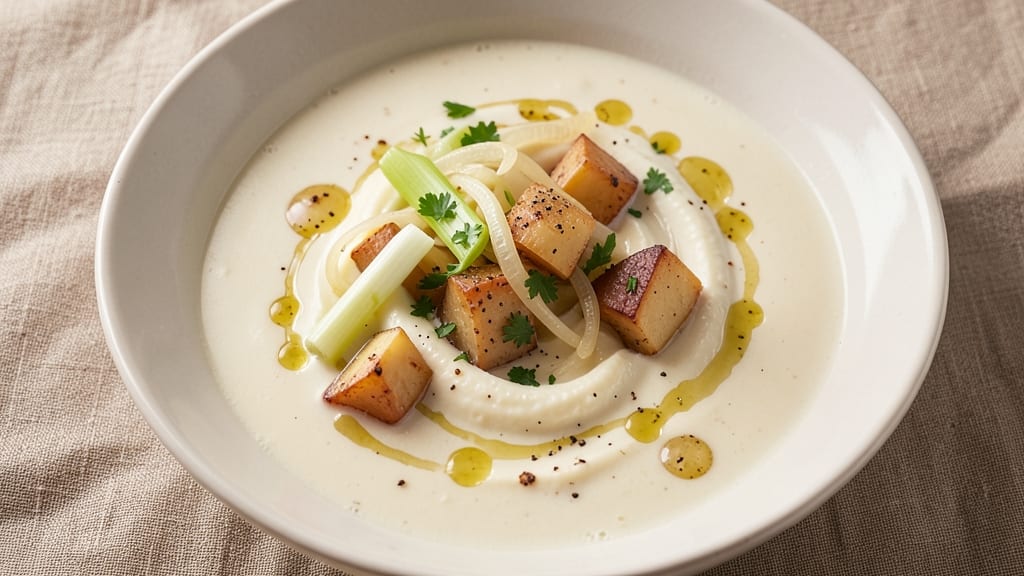
This Barefoot Contessa potato leek soup recipe delivers the creamy, comforting texture you crave with a professional touch that elevates simple ingredients. The secret lies in slow-cooked leeks and potatoes that blend into velvety perfection, topped with crispy herbed breadcrumbs that add irresistible contrast.
I've perfected this version to balance richness with freshness, ensuring every spoonful feels like a restaurant-quality experience at home.
The foundation of great potato leek soup starts with proper leek preparation—thoroughly washing and slicing to remove any sandiness, then sautéing until tender. Potatoes cook until fork-tender, creating a naturally thickened broth that requires no heavy cream.
The blend is silky smooth, with just enough body to coat your spoon. What truly makes this recipe special is the herbed breadcrumb topping, which adds texture and aroma that transforms ordinary soup into something extraordinary.
By the time you're done, you'll have a bowl of soup that's creamy without being heavy, aromatic from the leeks, and topped with golden, crispy breadcrumbs that pack a flavor punch.
The combination of smooth and crunchy creates a satisfying contrast that makes this soup perfect for chilly evenings or as a comforting starter. Serve with a glass of white wine and crusty bread to soak up every last drop of that velvety goodness.
This recipe scales beautifully for gatherings, and leftovers reheat perfectly—just add a splash of broth or water to restore that creamy texture. The beauty of this soup is its versatility; it works as a standalone meal or pairs beautifully with grilled meats and salads.
Let's create something that feels both nostalgic and refined in your kitchen.
Ingredients for barefoot contessa potato leek soup
Six ingredients for the soup base plus crispy toppings—simple but restaurant-worthy.
| Ingredient | Amount | Notes |
|---|---|---|
| Yellow Onions 🧅 | 2 whole | Large, cut into 1-inch slices |
| Leeks 🧅 | 3 whole | White and light green parts, thoroughly washed |
| Russet Potatoes 🥔 | 2 lbs | Peeled and cut into 1-inch chunks |
| Celery Stalks 🧅 | 3 whole | Cut into 1-inch pieces |
| Extra-Virgin Olive Oil 🫒 | ½ cup | For sautéing vegetables |
| Garlic Cloves 🧄 | 4 cloves | Minced for depth of flavor |
| Vegetable Broth 💧 | 6 cups | Low-sodium preferred |
| Heavy Cream 🥛 | 1 cup | Full-fat for richness |
| Fresh Thyme 🌿 | 2 tbsp | Leaves only, chopped |
| Fresh Parsley 🌿 | ¼ cup | Chopped for garnish |
| Baguette 🍞 | 1 whole | Day-old, crusts removed |
| Parmesan Cheese 🧀 | ½ cup | Freshly grated from block |
| Extra-Virgin Olive Oil 🫒 | 2 tbsp | For breadcrumb topping |
| Salt 🧂 | 1 ½ tsp | Kosher or sea salt |
| Black Pepper 🌶️ | ½ tsp | Freshly ground preferred |
Leeks are the star here, so don't skimp. Look for fresh, firm leeks with white and pale green parts—avoid any with yellowing or wilted spots. Whole Foods or your local farmers market usually have the best selection. The onions and celery form the aromatic base, so chop them evenly for consistent cooking. For the potatoes, Russets are ideal—they hold up better during blending than waxy varieties. If you're short on time, pre-cut frozen potatoes work in a pinch, but fresh gives the best texture. The key is thorough washing of the leeks to remove any dirt or sand.
No fresh thyme? Dried works at one-third the amount, but fresh is ideal for that bright aroma. Short on vegetable broth? Chicken broth works too—just omit the heavy cream and use coconut milk for a vegetarian version. The breadcrumbs need to be crispy, so day-old baguette is perfect, but fresh works if toasted first. For the Parmesan, grate it yourself—pre-grated gets clumpy and lacks flavor. If you're making this ahead, store the soup base separately and add the breadcrumbs just before serving to keep them crisp.
This soup reheats beautifully—just add a splash of broth or water to restore that velvety texture. Keeps for 5 days in the fridge or 3 months frozen. The breadcrumb topping is best made fresh, but you can prep it a day ahead and store it in an airtight container. For gatherings, double the batch—it's perfect for potlucks. Serve with a crisp white wine like Sauvignon Blanc to cut through the richness. Leftovers taste even better the next day as flavors meld.
Why You'll Love This Recipe
- No Chopping Nightmare: I swear by the leek-and-potato combo here—just slice the leeks in half lengthwise, rinse them once, and let the pot do the work. That celery? One rough chop, toss in, forget about it.
- Creamy Without the Guilt: The Russets break down into that velvety texture, but honestly? It’s the olive oil—generous, golden drizzle—that makes it taste like a restaurant dish. No heavy cream, no weird aftertaste, just pure, satisfying richness.
- Leftovers That Beg for More: This soup actually improves the next day. The flavors meld into something deeper, and it reheats like a dream. I’ve microwaved it straight from the fridge for lunch—crispy cheese on top, no judgment.
- Pantry Staple Magic: Onions, potatoes, celery—stuff you already own. Leeks? Buy a bunch, use half, store the rest. It’s the kind of recipe that turns $8 worth of ingredients into a meal that feels like you spent an hour cooking. (Spoiler: You didn’t.)
Step-by-step instructions for creamy potato leek soup
Here's how to make velvety soup with that perfect crispy breadcrumb topping everyone loves.
Sauté the Aromatic Vegetables
Heat the 0.5 cup extra-virgin olive oil in a large pot over medium heat. Add the sliced 2 whole yellow onions and 3 whole leeks (white and light green parts only) along with the 3 whole celery stalks cut into pieces. Cook for 8-10 minutes until the vegetables soften and become translucent.
You'll know they're ready when they smell sweet and the edges start to turn golden. Stir occasionally to prevent burning, especially the leeks which can scorch quickly. This slow cooking draws out all their natural flavors into the oil.
Add Potatoes and Garlic
Push the sautéed vegetables to one side of the pot and add the 4 cloves minced garlic. Stir for 30 seconds until fragrant - you should smell that wonderful garlic aroma. Then add the 2 lbs peeled and chunked russet potatoes to the pot.
Pour in the 6 cups vegetable broth and bring everything to a gentle boil. Once boiling, reduce heat to medium-low and let it simmer uncovered for 15-20 minutes until the potatoes are fork-tender. You'll see the potatoes soften and the soup thicken slightly as they cook.
Blend Until Silky Smooth
Remove the pot from heat and let the soup cool for 5 minutes. Then carefully transfer it to a blender in batches (don't overfill). Blend each batch until completely smooth, scraping down the sides as needed. Return all blended soup to the pot and stir in the 1 cup heavy cream.
Return the soup to medium heat and warm through for 3-4 minutes, stirring occasionally. Season with 1.5 tsp salt and 0.5 tsp black pepper, then add the 2 tbsp chopped fresh thyme. Taste and adjust seasoning if needed - this is where you can really make the soup sing.
Prepare the Herbed Breadcrumb Topping
While the soup simmers, pulse the 1 whole day-old baguette in a food processor until you get fine breadcrumbs (about 1 cup). Transfer to a bowl and mix with 2 tbsp extra-virgin olive oil, 0.5 cup freshly grated parmesan cheese, and 2 tbsp chopped fresh parsley.
Spread the breadcrumb mixture on a baking sheet and toast in a 375°F oven for 8-10 minutes until golden brown and crispy. Watch closely - it should be just golden, not burned. These crispy topping bits are what make this soup so special.
Serve Warm with Crispy Topping
Ladle the warm soup into bowls and immediately sprinkle with the crispy herbed breadcrumbs. The contrast between the velvety soup and crunchy topping is what makes this dish so satisfying. Serve extra breadcrumbs on the side if you're really hungry.
For best results, serve immediately while the breadcrumbs are still crispy. If you need to reheat leftovers, do so gently on the stovetop with a splash of broth to restore the creamy texture. The soup keeps well in the refrigerator for up to 3 days, and the breadcrumb topping can be made ahead and stored in an airtight container.
Pro Tips For Making Barefoot Contessa Potato Leek Soup
- SWIM THE LEEKS FIRST: This isn’t just about flavor—it’s about texture. After trimming the dark green tops, slice leeks into ¼-inch rounds and immediately plunge them into ice water for 10 minutes. The bitterness fades, and they’ll stay crisp instead of turning mushy when you finally sauté them. (Yes, even if you’re impatient like me.)
- SWEAT THE ONIONS LOW AND SLOW: I learned this the hard way—cranking the heat to brown the onions fast just burns the edges and turns the soup bitter. Instead, keep the heat at a steady medium-low and let them cook for 10-12 minutes until they’re translucent and just starting to caramelize. That’s when the leeks and celery join the party.
- PEEL POTATOES AFTER COOKING: Storing peeled Russets in water for more than 30 minutes leaches their starch and makes the soup gluey. Instead, peel them right before adding to the pot, then rinse and pat them dry. The skin stays intact longer, and the soup stays creamy without turning pasty. (Your future self will thank you.)
- SALT THE WATER LIKE THE OCEAN: The Barefoot Contessa recipe calls for salted water, but most people underdo it. Use about 2 teaspoons of kosher salt per quart of water—enough so the potatoes cook evenly and absorb flavor. If you’re using a stockpot, that’s roughly 4-5 teaspoons total. Trust me, the soup tastes like it’s been simmering for hours, not 20 minutes.
Pro cooking tips for great barefoot contessa potato leek soup
Leek Prep Mastery
Leeks are the soul of this soup, so washing them properly is non-negotiable. Cut them in half lengthwise and rinse each half under cold running water for 2-3 minutes, opening the layers like a book to dislodge sand.
I use a colander with a tight mesh to swirl them around vigorously—this removes the grit that hides between the layers. For extra insurance, soak them in cold water for 10 minutes before slicing. 🌊
Slice the white and pale green parts into ¼-inch rounds—thinner slices cook faster and prevent bitterness. Discard any dark green parts that are tough or fibrous.
The goal is even cooking, so aim for consistent slice thickness throughout. Pro tip: Use a mandoline slicer for precision if you're making this often.
Potato Texture Secrets
Russet potatoes are your best friend here because they break down beautifully when blended, creating that signature creamy texture. Cut them into 1-inch chunks—uniform size ensures even cooking.
For extra smoothness, I like to parboil the potatoes for 5 minutes before adding them to the pot with the other vegetables. This jumpstarts the cooking process and prevents a gummy texture after blending. 🥔
Never skip the 15-20 minute simmer—this is where the magic happens. The potatoes should be fork-tender but not falling apart. If they're cooking too fast, reduce the heat to maintain a gentle simmer.
Overcooking turns them mushy and ruins the blend. Taste one raw potato—it should be slightly resistant but yield easily to your fork.
Blending Like a Pro
Blending hot soup directly can be dangerous, so let it cool for 5 minutes first. Work in batches—never fill the blender more than halfway. I use an immersion blender for small batches, which saves cleanup and prevents spills.
For best results, blend until completely smooth, then scrape down the sides and blend again. This ensures no lumps remain. 💫
Returning the soup to the pot? Use a spatula to break up any surface skin that forms during cooling. Stir in the heavy cream gently over low heat to prevent curdling.
If the soup seems too thick after blending, thin it with a splash of broth or water—just enough to reach your desired consistency. Taste as you go and adjust seasoning gradually.
Breadcrumb Perfection
The breadcrumb topping makes or breaks this soup, so don't rush it. Pulse the baguette in a food processor until you get fine, even crumbs—not powdery, but not coarse either.
Mix in the olive oil, Parmesan, and parsley, then spread the mixture on a baking sheet in an even layer. This ensures even browning. 🍞
Toast the breadcrumbs at 375°F for 8-10 minutes, stirring halfway through for even browning. They should be golden and crisp—if they're not, toast them another 2 minutes**.
Watch closely after the first 8 minutes to avoid burning. For extra flavor, add a pinch of smoked paprika or dried thyme to the mixture before baking.
Nutrition facts
Frequently asked questions
Can I make this potato leek soup without a blender?
For a rustic texture, simply mash the cooked potatoes with a potato masher or fork until smooth. The soup will have a slightly thicker, chunkier consistency but still be delicious. You can also use an immersion blender if you have one—it works perfectly for small batches and keeps the process contained.
How do I prevent the breadcrumbs from getting soggy?
Toast the breadcrumbs until they're golden and crisp, then let them cool completely before adding them to the soup. Store any extras in an airtight container at room temperature for up to 2 days. For extra insurance, sprinkle them on top right before serving—this ensures maximum crunch every time.
Can I use sweet potatoes instead of russets?
Yes, but the texture will be slightly different. Sweet potatoes add natural sweetness and a vibrant color, but they don't break down as smoothly as russets when blended. For best results, reduce the simmering time to 12-15 minutes to prevent mushiness. The soup will still be creamy, just with a different flavor profile.
What's the best way to reheat leftovers?
Gently reheat on the stovetop over low heat, stirring occasionally and adding a splash of broth or water to restore creaminess. Avoid microwaving—it can make the breadcrumbs soggy and turn the soup rubbery. For extra richness, stir in a dollop of cream or a pat of butter while reheating.
Is this soup gluten-free?
Not as written, but you can easily adapt it! Use gluten-free breadcrumbs or omit the topping entirely. For a dairy-free version, swap heavy cream for coconut milk and use gluten-free broth. The base soup remains naturally gluten-free, so these adjustments keep it safe for dietary restrictions.