
Side Dishes
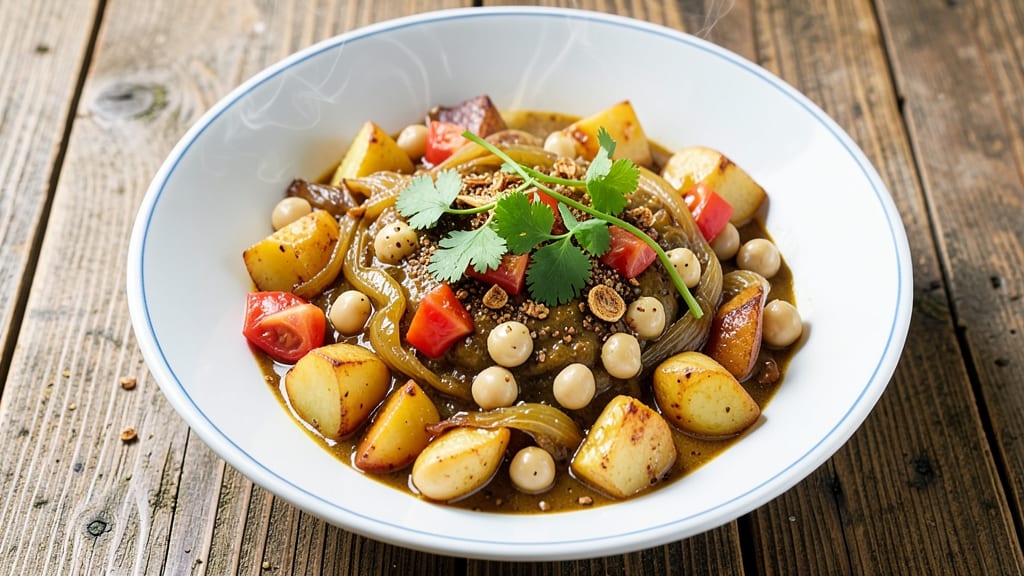
A beans and potato curry recipe transforms simple ingredients into a deeply satisfying one-pan dish that balances hearty textures and aromatic spices. This vegetarian curry delivers tender potatoes and beans simmered in a rich, tomato-based sauce infused with cumin, coriander, and garam masala—perfect for a weeknight dinner or meal prep.
The secret lies in slow cooking, which develops complex flavors while keeping the vegetables perfectly tender.
What sets this curry apart is the technique of tempering whole spices in hot oil before adding them to the sauce. This traditional method unlocks their full flavor, creating layers of warmth that linger long after the first bite.
The dish comes together in a single pot, making it both efficient and foolproof for home cooks of any skill level.
By the end, you’ll have a curry with tender potatoes that hold their shape, creamy chickpeas, and a sauce thick enough to coat every bite. The spices meld into a harmonious blend that’s fragrant, slightly sweet, and deeply satisfying—ideal for serving with steamed basmati rice or warm naan.
It’s the kind of meal that feels both comforting and special.
Whether you’re feeding a family or meal prepping for the week, this curry adapts effortlessly. The flavors only improve with time, making it perfect for leftovers. Ready to create a dish that’s as nourishing as it is delicious? Let’s get started.
Ingredients for beans and potato curry
Simple ingredients that transform into a deeply aromatic, vegetarian curry with tender potatoes and creamy chickpeas.
| Ingredient | Amount | Notes |
|---|---|---|
| Yellow Onions 🧅 | 1 whole | Diced, medium size preferred |
| Garlic Cloves 🧄 | 6 cloves | Minced, fresh for best flavor |
| Fresh Ginger 🌿 | 1 ½ tbsp | Grated, aromatic variety |
| Yellow Potatoes 🥔 | 1 ½ lb | Medium size, peeled and cubed |
| Canned Chickpeas 🌱 | 1 can | Drained, rinsed, 15 oz |
| Canned Diced Tomatoes 🍅 | 1 can | 28 oz, San Marzano preferred |
| Coconut Milk 🥥 | 1 can | Full-fat, 13.5 oz |
| Vegetable Oil 🫒 | ¼ cup | For tempering spices |
| Ground Cumin 🌿 | 1 tbsp | Freshly toasted preferred |
| Ground Coriander 🌿 | 1 tbsp | Freshly ground for brightness |
| Garam Masala 🌶️ | 1 tbsp | Store-bought or homemade blend |
| Turmeric Powder 🌿 | ½ tsp | Bright yellow color |
| Sea Salt 🧂 | 1 tsp | Kosher or fine grain |
| Black Pepper 🌶️ | ½ tsp | Freshly ground for heat |
| Fresh Cilantro 🌿 | ¼ cup | Chopped, for garnish |
The foundation of this curry starts with the spices—Penzeys or bulk bins are ideal for fresh, aromatic blends. Look for garam masala with a mix of cinnamon and cardamom for that authentic depth. The ginger and garlic should be organic if possible—their freshness makes all the difference. For the potatoes, Yukon Golds hold their shape beautifully, but russets work too if that's what you have. The chickpeas? Drained and rinsed thoroughly—no one likes mushy beans in curry. Coconut milk is non-negotiable here: full-fat only—light versions won't give you that rich, velvety texture.
No fresh ginger? Substitute with 1 tbsp grated ginger powder, but it won't be quite the same. Short on garam masala? Mix 1/2 tsp each of cinnamon, cardamom, and cloves as a substitute. The diced tomatoes can be fresh if you prefer, but canned San Marzano gives you that sweet, meaty depth without extra prep. For the potatoes, smaller cubes cook faster but larger pieces hold their shape better—adjust based on your patience. The cilantro is optional but adds that bright finish. Skip it if you're sensitive to cilantro's soapy taste—fresh parsley works too.
This curry tastes even better the next day—flavors meld beautifully when reheated. Store in an airtight container in the fridge for up to 5 days, or freeze portions for 3 months. I like to portion it into meal prep containers with a side of rice—just microwave for 2 minutes and it's ready. The sauce thickens as it cools, so add a splash of water or coconut milk when reheating if needed. Leftovers make fantastic lunches or quick dinners.
Why You'll Love This Recipe
- One-Pot Magic: I swear by this recipe when I’m too tired to wash pots—just chop the onions, mince the garlic and ginger, toss everything in one pan, and let it simmer. The potatoes soften while the chickpeas soak up all that spiced oil, turning into a rich, cohesive dish with zero extra cleanup.
- Spice & Creamy Balance: That first bite of tender potato with its crispy edges? Then the chickpeas—soft but still holding shape—absorbing the garlicky, ginger-kissed sauce. Honestly, the way the onions caramelize at the bottom gives it this deep, almost sweet undertone that makes it way more exciting than it sounds.
- Lunchbox Hero: Between us, this is my go-to for packed lunches. The flavors only get better after chilling, and it reheats like a dream—no soggy potatoes here. I’ll even sneak in some yogurt or a squeeze of lime when packing it, because nothing beats a meal that tastes intentional even cold.
- Budget-Friendly Staple: A bag of potatoes, a can of chickpeas, and a few pantry spices? This feeds four for under $8, and leftovers taste just as good the next day. I’ll make a double batch on Sundays, freeze half, and still have a reliable, filling meal when I’m too exhausted to think. (Yes, even on a Tuesday night.)
Step-by-step instructions for spiced one-pan curry
This method delivers perfectly tender potatoes and chickpeas with rich, aromatic flavors.
Sauté Aromatics Until Fragrant
Heat the 0.25 cup vegetable oil in a large, heavy-bottomed pot over medium heat. Add the 1 whole diced yellow onions and cook for 5-6 minutes until softened and translucent. The onions should release their natural sweetness without browning.
Add the 6 cloves minced garlic cloves and 1.5 tbsp grated fresh ginger. Cook for another 2-3 minutes until the garlic becomes golden and fragrant. Be careful not to let the garlic burn—it should smell sweet and pungent, not bitter. This aromatic base forms the flavor foundation of your curry.
Toast Spices for Depth of Flavor
Reduce the heat to medium-low and add the 1 tbsp ground cumin, 1 tbsp ground coriander, and 0.5 tsp turmeric powder. Stir constantly for 1 minute until the spices release their oils and fill your kitchen with warm, earthy aromas. You'll see the spices darken slightly—this indicates proper toasting.
Next, add the 1 tbsp garam masala and stir for 30 seconds to distribute evenly. Immediately pour in the 1 can diced tomatoes (with juices) and stir well. Let this mixture simmer for 5 minutes until slightly thickened. This step develops the complex spice profile that defines the curry's character.
Add Potatoes and Simmer Until Tender
Add the 1.5 lb cubed yellow potatoes to the pot, stirring to coat them evenly with the spiced tomato mixture. Pour in 1 cup water (enough to come about halfway up the potatoes) and bring to a gentle boil. Once boiling, reduce heat to medium-low and cover partially with a lid.
Simmer for 15-18 minutes until the potatoes are fork-tender but still hold their shape. You'll know they're ready when you can pierce them easily with a fork but they don't fall apart. The liquid should reduce slightly but still coat the potatoes. If it evaporates too quickly, add 2-3 tablespoons water to maintain moisture.
Incorporate Chickpeas and Coconut Milk
Add the 1 can drained chickpeas and 1 can coconut milk to the pot. Stir gently to combine, then increase heat to medium-high to bring the mixture to a boil. Once boiling, reduce heat to low and let it simmer uncovered for 10-12 minutes. This allows the flavors to meld while the chickpeas absorb the rich coconut milk.
Taste the curry and adjust seasoning with 1 tsp sea salt and 0.5 tsp black pepper as needed. The curry should be well-seasoned but not overly salty. The coconut milk should create a velvety texture while the spices remain vibrant. If the curry is too thick, add 2-3 tablespoons water to reach your desired consistency.
Finish and Garnish for Freshness
Remove the pot from heat and let the curry rest for 5 minutes to allow the flavors to settle. Stir in the 0.25 cup chopped fresh cilantro just before serving. The cilantro adds a bright, fresh contrast to the rich, spiced curry and prevents the dish from becoming too heavy.
Serve the curry immediately with warm basmati rice or crusty bread. The potatoes should be tender with a slight bite, the chickpeas creamy, and the sauce perfectly balanced between spicy, creamy, and aromatic. Each bite should showcase the harmony of all the ingredients working together.
Pro Tips For Making Beans And Potato Curry
- SOFTEN POTATOES FIRST: Toss your peeled potatoes in 1 tablespoon of oil and roast them at 400°F (200°C) for 20 minutes before adding to the curry—this prevents them from turning mushy later. I learned this the hard way when my curry ended up as a thick potato mash instead of tender chunks.
- PEEL GINGER THINLY: Use a spoon to scrape off just the pale inner layer of ginger, not the tough outer skin—this gives a milder, more aromatic flavor without the bitterness. My grandmother swore by this, and she was right: thinly peeled ginger blends smoothly without overpowering the dish.
- DON’T SKIP THE ONION BLOOM: Cook the onions on medium-low heat for 8–10 minutes until they’re golden brown, not just translucent—this builds deep flavor before adding garlic and spices. After burning three batches, I finally figured out that patience here makes a real difference.
- RINSE CHICKPEAS WELL: Drain and rinse canned chickpeas thoroughly to remove excess sodium, then pat them dry with a towel before adding them to the curry—this keeps them from turning soggy. Sounds weird, but it works: dry chickpeas absorb spices better and stay intact.
Essential equipment for perfect results
Heavy-Bottomed Pot
Your curry needs a large, heavy-bottomed pot—I recommend a 5-6 quart Dutch oven like the Le Creuset Stoneware or All-Clad Stainless Steel. These pots distribute heat evenly, preventing hot spots that can burn your onions or spices.
A heavy base also helps maintain consistent simmering, which is crucial for tender potatoes and chickpeas. If you don’t have one, a stainless steel saucepan with a diameter of at least 10 inches works in a pinch. 🔥
Wooden Spoon
A long-handled wooden spoon is essential for stirring the curry without scratching your pot. I prefer a 12-inch spoon like the OXO Good Grips because it reaches every corner of the pot while preventing splatters.
Wood won’t react with acidic ingredients like tomatoes or coconut milk, and it’s gentle on your pot’s nonstick or enamel coating. Avoid metal spoons—they can cause scorching. ✨
Fine-Mesh Strainer
For rinsing chickpeas and draining excess liquid, a fine-mesh strainer is a game-changer. I use a stainless steel colander with 325-micron holes (like the OXO Good Grips) to ensure no stray spices or debris slip through.
This step is critical for preventing a watery curry. If you’re short on time, a clean kitchen towel works too—just press the chickpeas gently to remove excess moisture. 💫
Immersion Blender (Optional)
If you prefer a smoother sauce, an immersion blender lets you blend the curry directly in the pot. I love the Ninja BN601 for its powerful motor and easy cleanup. Simply blend for 10-15 seconds after adding the coconut milk, then adjust consistency by adding water or more milk.
Skip this step for a rustic, chunky texture—both styles are delicious! 💡
Spice Grinder
Freshly ground spices make all the difference in curry flavor. A small spice grinder (like the Spice & Tea Mini Grinder) ensures your cumin, coriander, and garam masala are aromatic and potent. Pre-ground spices lose flavor quickly, so grinding them just before cooking maximizes impact.
For garam masala, I toast whole spices first (cumin, coriander, cardamom) and grind them fresh—this adds a smoky depth that store-bought blends can’t match. 🌶️
Nutrition facts
Frequently asked questions
Can I use sweet potatoes instead of yellow potatoes?
Sweet potatoes add natural sweetness and a vibrant color to the curry. Use the same 1.5 lb quantity, but they'll cook slightly faster—check for tenderness at 12-15 minutes instead of 15-18 minutes. The texture will be creamier, so reduce simmering time by about 2-3 minutes to avoid mushiness.
How can I make this curry vegan?
Simply replace the vegetable oil with refined coconut oil (or another neutral plant-based oil) and ensure all spices are certified vegan. The recipe is already plant-based, so no other substitutions are needed. The coconut milk is naturally vegan, and the chickpeas provide complete protein for a hearty, cruelty-free meal.
What if my curry turns out too thick?
Add 2-3 tablespoons water or coconut milk at a time, stirring gently between additions. Start with water to thin it quickly, then adjust with coconut milk for creaminess. Avoid adding too much at once—simmer for 2-3 minutes between additions to let flavors rebalance. The sauce should coat the back of a spoon but remain spoonable, not watery.
Can I prepare this curry in an Instant Pot?
Yes! Sauté onions, garlic, and ginger first. Then add spices and tomatoes, cooking for 1 minute on sauté. Add potatoes, chickpeas, and 1 cup water, sealing the lid and cooking on high pressure for 5 minutes. Quick-release, stir in coconut milk, and finish with cilantro. The pressure cooker reduces total time to about 25 minutes while keeping flavors intense.
Why does my curry taste bland after resting?
Resting enhances flavors, but blandness usually means insufficient seasoning or spice toasting. Next time, toast spices longer (2 minutes instead of 1 minute) and taste before adding salt—you may need an extra 0.5 tsp. For extra depth, add 1 tsp sugar with the tomatoes to balance acidity, or a pinch of asafetida powder (hing) for umami.