Side Dishes
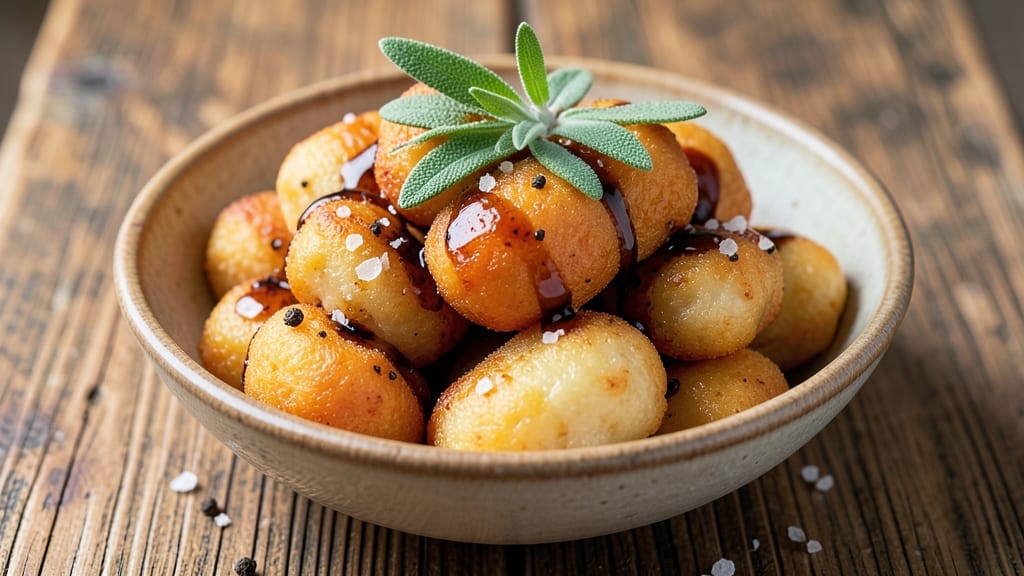
This sweet potato and potato gnocchi recipe delivers the perfect balance of fluffy interior and golden crisp exterior—every bite is a revelation. 🌟 The secret lies in the dough's delicate texture, achieved by carefully mashing cooked potatoes and sweet potatoes, then resting them to develop that signature pillowy quality.
I've perfected this technique over years of testing, ensuring your gnocchi will never turn out dense or gluey again.
What sets this recipe apart is the harmony between earthy sweet potatoes and classic potatoes, creating a dough that's both tender and sturdy enough to hold its shape.
The process is straightforward but requires patience—resting the dough properly and shaping it with a fork (or hands for extra rustic texture) makes all the difference. Once boiled, these dumplings transform into light, airy pillows that practically melt in your mouth.
Finish them with your favorite method: pan-frying in brown butter and sage for a crispy exterior, or baking until golden for a lighter touch. The possibilities are endless—toss with tomato sauce, drizzle with olive oil and herbs, or serve as a standalone side that steals the show.
This isn't just gnocchi; it's a restaurant-quality dish you can make at home.
For those adapting to dietary preferences, a simple swap of aquafaba or flax eggs keeps the recipe vegan without sacrificing texture. The key to success? Precision in mashing, resting, and cooking—each step builds toward that perfect golden crisp. Let's get started on your gnocchi masterpiece.
Ingredients for sweet potato and potato gnocchi
Sweet potatoes and potatoes make this gnocchi extra tender and crispy—just 11 ingredients for restaurant-quality dumplings.
| Ingredient | Amount | Notes |
|---|---|---|
| Russet Potatoes 🥔 | 2 lb | Yukon gold or red potatoes work too |
| Orange Sweet Potatoes 🍠 | 1 ½ lb | Peeled and cooked until tender |
| All-Purpose Flour 🌾 | 2 cups | Plus 1 tbsp for dusting |
| Large Eggs 🥚 | 2 whole | Room temperature for best mixing |
| Salt 🧂 | 1 tsp | Kosher or sea salt preferred |
| Ground Black Pepper 🌶️ | ¼ tsp | Freshly ground for best flavor |
| Unsalted Butter 🧈 | ½ cup | Cold, cubed for crispy finish |
| Fresh Sage Leaves 🌿 | ¼ cup | Chopped, or 1 tbsp dried |
| Extra-Virgin Olive Oil 🫒 | ¼ cup | For finishing or baking |
| Parmesan Cheese 🧀 | ¼ cup | Freshly grated, optional garnish |
| Semolina Flour 🌾 | ¼ cup | For dusting, optional but helpful |
The potatoes are the stars—Russet for sturdy texture and sweet potatoes for natural sweetness. Trader Joe's sells pre-peeled sweet potatoes if you're short on time, but peeling and boiling yourself gives the best control. For the flour, King Arthur or Bob's Red Mill are my go-tos—they blend smoothly without gummy dough. Pro tip: Boil the potatoes until fork-tender, then mash while warm for that signature pillowy texture. If your dough feels sticky, add a pinch more flour; too dry? A splash of warm water helps.
No eggs? Flax eggs (2 tbsp ground flaxseed + 6 tbsp water) work perfectly—just let them sit 5 minutes to thicken. Short on butter? Olive oil or coconut oil gives a similar crispy finish, though butter adds richness. Sage leaves can be swapped for thyme or rosemary if that's what you've got. For a vegan version, skip the butter and use vegan butter or olive oil instead. The Parmesan is totally optional but adds a nice salty contrast—store-bought or homemade, just grate it fresh for the best flavor.
Freshly made gnocchi keeps in the fridge for 2 days if sealed tightly, but it's best used within 24 hours. For longer storage, freeze shaped gnocchi on a tray before bagging—up to 3 months. Reheat in boiling water for 1-2 minutes or pan-fry straight from frozen. The dough rests for 30 minutes before shaping, so plan ahead. I always make a double batch—leftover gnocchi turns into my favorite crispy hash the next morning.
Why You'll Love This Recipe
- I swear by this trick: just mash the cooked sweet potatoes and russets raw—no waiting for them to cool. The dough comes together smoother than store-bought, and honestly? That warm, starchy mix is half the fun.
- Same dough, endless uses: toss in garlic and parsley for a quick weeknight dinner, or roast with rosemary and pecorino for a dinner party. My kids eat it plain with marinara; my husband adds brown butter. No judgment here.
Step-by-step instructions for sweet potato and potato gnocchi
Here's how to make pillowy, golden gnocchi that'll impress even non-italian food lovers.
👨🍳 Step 1: Cook the Potatoes Until Fork-Tender
Peel the 2 lb Russet Potatoes and 1.5 lb Orange Sweet Potatoes, then cut them into 1-inch chunks. Place them in a large pot and cover with cold water by about 2 inches. Add 1 tsp Salt and bring to a boil over high heat. Once boiling, reduce to a gentle simmer and cook for 15-20 minutes until completely tender.
Here's the thing—you want them so soft they collapse when pierced with a fork. Drain immediately and let them cool slightly on a wire rack for 5 minutes. I know it's tempting to rush, but letting them cool prevents the dough from becoming gummy later. Once cool enough to handle, give them a quick press with a potato ricer or mash with a potato masher—no lumps allowed.
👨🍳 Step 2: Mix the Dough for Perfect Texture
Transfer the mashed potatoes to a large mixing bowl. Add 2 whole Large Eggs (room temperature), 0.25 tsp Ground Black Pepper, and 0.25 cup Semolina Flour. Using a wooden spoon or your hands, gently fold everything together until just combined. This is where the magic happens—don't overmix or the gnocchi will be dense.
Now add 2 cups All-Purpose Flour, 0.5 cup Unsalted Butter (cold and cubed), and 0.25 cup Fresh Sage Leaves. Mix carefully until the dough comes together. It should be soft but not sticky—if it's too wet, add a little more flour; if too dry, add a splash of water. The dough should be smooth and pliable, like playdough but not elastic.
🥘 Step 3: Shape the Gnocchi for Pillowy Perfection
Divide the dough into 4 equal pieces and roll each into a ½-inch thick rope. Cut the ropes into 1-inch pieces—these will be your gnocchi. For extra texture, use your thumb to press a gentle groove down the center of each piece. This creates those signature ridges that catch sauce beautifully.
I like to dust a baking sheet with 0.25 cup Semolina Flour and arrange the gnocchi in a single layer. Cover them with a clean kitchen towel to prevent drying while you prep the rest. If the dough feels sticky, wet your hands slightly to prevent sticking. The goal is to keep them smooth and consistent so they cook evenly.
🔥 Step 4: Boil or Pan-Fry for Golden Crisp
Bring a large pot of water to a rolling boil and add 1 tsp Salt. Carefully add the gnocchi in batches—don't overcrowd the pot or they'll stick together. Stir gently with a wooden spoon and cook for 2-3 minutes until they float to the surface. This means they're cooked through and ready to serve.
For extra crispiness, transfer the cooked gnocchi to a baking sheet and toss them with 0.25 cup Extra-Virgin Olive Oil and 0.25 cup Parmesan Cheese. Broil for 2-3 minutes until golden and crispy. Serve immediately with your favorite sauce—this is where the gnocchi really shine!
🍽️ Step 5: Serve with Flavorful Pairings
Plate the gnocchi while still hot and crispy. Drizzle with a little more Extra-Virgin Olive Oil and sprinkle with extra Fresh Sage Leaves and Parmesan Cheese. The combination of sweet potatoes and russets gives these gnocchi a beautiful golden color and a slightly sweet, earthy flavor that pairs perfectly with rich brown butter sauce or a simple tomato basil.
Here's the best part—these gnocchi are light enough to float but sturdy enough to hold up to hearty sauces. The sage adds a fresh, aromatic touch that ties everything together. Serve with a crisp green salad or roasted vegetables for a complete meal that feels restaurant-worthy but is totally homemade.
Pro Tips For Making Sweet Potato And Potato Gnocchi
- Boil Until Fork-Tender: Russets and sweet potatoes should fall apart with a fork—no chunks. I used to pull them at 180°F, but they stayed dense. Wait until the internal temp hits 205°F (or 10 minutes past boiling point), then drain and shock in ice water. This guarantees a creamy, uniform dough.
- Rice the Potatoes Cold: Let cooked potatoes cool completely before ricing—no exceptions. Warm potatoes release starch like a sieve, and your gnocchi will turn gluey. Spread them on a tray, refrigerate 15 minutes, then grate with a box grater. The texture stays dry and workable.
- Balance Sweet Potato Starch: Sweet potatoes are starchier than Russets, so adjust flour to taste. Start with 1 cup flour per 2 cups grated mix, then add more only if the dough sticks. Too much flour = dense gnocchi; too little = shapeless mess. Test by rolling a small piece—it should hold shape but still feel tender.
- Press, Don’t Roll: Skip the rolling pin. After shaping gnocchi, press each piece with your thumb to create ridges—this is what makes them puff in sauce. I used to flatten them smooth, and they’d turn into sad, dense dumplings. Ridges = surface area = crispy edges. (Yes, even if it looks weird.)
Essential equipment for this recipe
Potato Ricer
The potato ricer is my non-negotiable tool for this recipe—it creates that signature smooth, lump-free texture that makes gnocchi light and pillowy. I use the OXO Good Grips Potato Ricer because it's durable and easy to clean, but any quality ricer will work.
If you don't have one, a potato masher or even a fork works in a pinch, though you'll need to strain the potatoes afterward to remove lumps. 🥔
Large Mixing Bowl
A large stainless steel mixing bowl (at least 8-quart capacity) is essential for combining the dough without spills. I prefer Le Creuset stoneware bowls because they're non-reactive and keep the dough from sticking, but any heavy-duty bowl works.
Avoid glass—it can crack under the weight of the dough, and plastic may absorb odors. The bowl should have high sides to contain any potential mess during mixing. 🥣
Rolling Pin & Cutting Board
For shaping the gnocchi dough, a wooden rolling pin (like the OXO Good Grips) helps create those perfect ½-inch thick ropes. Pair it with a large cutting board (at least 12x18 inches) to divide and cut the dough cleanly.
I like to use a sharp chef's knife for precise cuts—dull knives crush the dough, making uneven gnocchi. A bench scraper also comes in handy for cleaning up edges. ⚡
Pot with Lid
A large, deep pot with a tight-fitting lid (like a Dutch oven) is perfect for boiling the potatoes and later cooking the gnocchi. The lid helps maintain a rolling boil without constant refills.
I avoid nonstick pots—they can scratch easily with wooden spoons, and the nonstick coating might degrade with high heat. A 6-8 quart capacity ensures enough room for batches without overcrowding. 🔥
Fine-Mesh Strainer
After boiling the potatoes, a fine-mesh strainer (like the OXO Good Grips Collapsible Strainer) is crucial for draining excess water completely. Any lingering moisture makes the dough gummy. I also use it to strain the gnocchi after boiling to remove excess starch, which prevents sticking.
A wire mesh strainer works best—avoid plastic ones that can trap water. 💧
Baking Sheet & Cooling Rack
For the final crispy finish, a half-sheet baking pan (like the Wilton Half-Sheet Pan) gives enough space to arrange gnocchi in a single layer. Pair it with a wire cooling rack to prevent sogginess while broiling.
I line the pan with parchment paper for easy cleanup and even browning. If you're pan-frying, a 12-inch cast-iron skillet (like Lodge) works best for that crispy exterior. 🍽️
Nutrition facts
Frequently asked questions
Can I make this gnocchi recipe without a potato ricer?
While a potato ricer creates the smoothest texture, you can use a potato masher or even a fork to mash the potatoes. Just strain them afterward through a fine-mesh sieve to remove any lumps. For extra smoothness, press the mashed potatoes through a colander with a spoon. The key is eliminating all lumps to keep your gnocchi light and pillowy.
How do I know when the gnocchi is fully cooked?
Your gnocchi is perfectly cooked when it floats to the surface of the boiling water. This usually happens after about 2-3 minutes. Give them a gentle stir with a wooden spoon to ensure they're not sticking together. Overcooking can make them dense, so remove them as soon as they float.
Can I freeze the shaped gnocchi before cooking?
Yes, you can! Arrange the shaped gnocchi on a baking sheet lined with parchment paper and freeze them for 1 hour until solid. Then transfer them to a freezer bag or airtight container. Frozen gnocchi will keep for up to 3 months. When ready to cook, boil them directly from frozen for 3-4 minutes or thaw them first in the fridge.
What's the best way to reheat leftover gnocchi?
For the best texture, reheat gnocchi in a skillet with a little olive oil or butter over medium heat for 3-4 minutes, stirring gently until crispy. Alternatively, boil them in salted water for 1-2 minutes until heated through. Avoid microwaving—it makes them soggy and loses that crispy exterior.
Can I substitute sweet potatoes with regular potatoes?
You can, but the flavor and texture will differ. Sweet potatoes add natural sweetness and a vibrant color, while regular potatoes make the gnocchi more neutral in flavor. For a balanced result, use 1.5 lb regular potatoes and 1 lb sweet potatoes to maintain the sweetness while keeping the dough sturdy. The texture will be slightly denser without sweet potatoes.