
Side Dishes
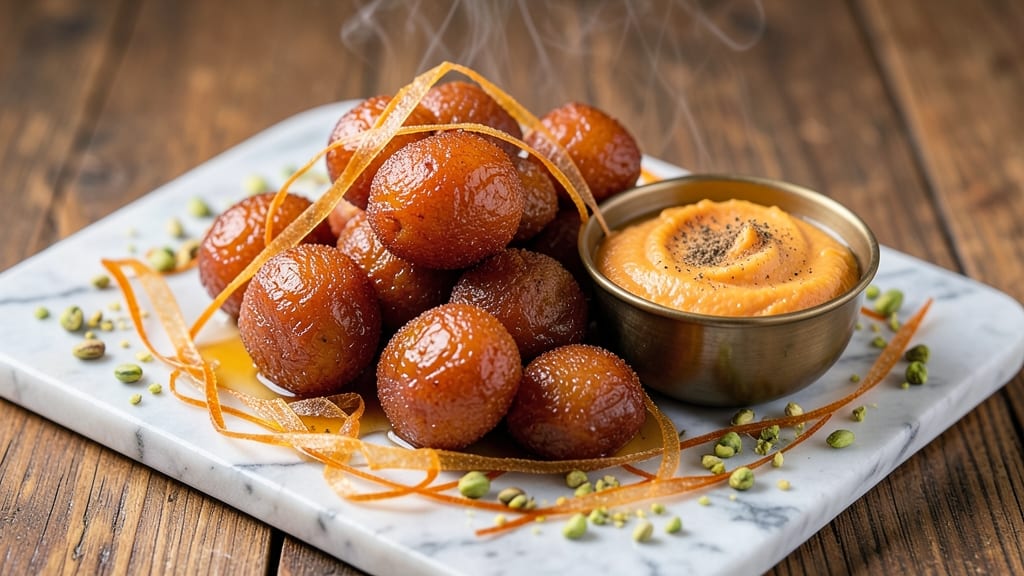
This sweet potato gulab jamun recipe transforms humble sweet potatoes into velvety, cardamom-spiced milk-soaked delights that taste like a celebration. 🌟 The secret lies in perfectly kneaded dough that fries to golden perfection and soaks up fragrant syrup without falling apart—a balance that takes practice but delivers restaurant-quality results every time.
Unlike traditional gulab jamun made with khoya (clotted cream), this version uses sweet potato puree for a lighter texture while keeping the same melt-in-your-mouth consistency. The dough requires just a few simple ingredients—sweet potatoes, milk powder, and cardamom—and no yeast, making it beginner-friendly yet impressive.
Frying in small batches ensures even cooking, while the syrup's perfect consistency (tested with the float test) guarantees those signature syrup-soaked pockets.
What you'll end up with is a plate of golden, syrup-drenched gulab jamuns that look as beautiful as they taste—crispy edges giving way to soft, spiced centers.
The cardamom-infused milk syrup adds layers of warmth and aroma, making these perfect for festive occasions or as a comforting dessert any night of the week. The best part? Once you master the dough, you can experiment with flavors like rose water or pistachio.
Serve warm with a sprinkle of chopped pistachios or a drizzle of extra syrup for that restaurant-worthy presentation. This recipe delivers the magic of Indian desserts with a modern twist—foolproof enough for weeknights but special enough for gatherings. Let's get started!
Ingredients for sweet potato gulab jamun
Twelve simple ingredients transform humble sweet potatoes into restaurant-quality gulab jamun magic.
| Ingredient | Amount | Notes |
|---|---|---|
| Orange Sweet Potatoes 🍠 | 3 lbs | Peeled and boiled until soft |
| All-Purpose Flour 🌾 | 1 ½ cups | Sifted for smooth dough |
| Milk Powder 🥛 | ½ cup | Whole milk powder preferred |
| Ghee 🧈 | ½ cup | Clarified butter for frying |
| Cardamom Pods 🌿 | 10 whole | Lightly crushed for aroma |
| Baking Soda 🧪 | ½ tsp | Activates dough |
| Salt 🧂 | ¼ tsp | Fine sea salt preferred |
| Vegetable Oil 🫒 | 2 cups | For deep frying |
| Whole Milk 🥛 | 2 cups | For syrup base |
| Sugar 🍚 | 1 ½ cups | Granulated, for syrup |
| Rose Water 🌸 | 1 tbsp | Optional for floral note |
| Pistachios 🥜 | ¼ cup | Chopped, for garnish |
The sweet potatoes are the star—orange varieties like Jewel or Beauregard work best for their natural sweetness and vibrant color. Whole Foods or Trader Joe's usually carry them year-round, but check the produce section for firm, unblemished tubers. Peel and boil them until fork-tender, then mash into a smooth puree. Costco sells bulk milk powder if you prefer to stock up, but the regular grocery store brand works perfectly fine. For the ghee, Amul or Gowardhan brands are my go-to for authentic flavor—look for the bright yellow color that means pure, high-quality butter. Cardamom pods should be plump and aromatic; if they smell dull, toast them lightly before crushing to wake up the flavor.
No milk powder? Substitute with 1 cup powdered sugar + 1/2 cup all-purpose flour—it mimics the texture but lacks the richness. Running out of ghee? Vegetable shortening or coconut oil works in a pinch, though the flavor won't be as authentic. For the syrup, brown sugar adds depth if you want a caramel note, but granulated keeps it classic. The float test is key—drop a small ball of dough into the syrup; if it floats, it's ready. Rose water is optional but worth it—just a teaspoon elevates the whole dish to festive levels. For the pistachios, unsalted and lightly toasted gives the best crunch and flavor.
Store the fried jamuns in an airtight container between layers of parchment paper for up to 3 days—they stay crispy surprisingly well. The leftover syrup? Keep it in the fridge for 1 week or freeze it for 3 months; reheat gently for extra drizzling. I always make double batches because these disappear faster than you can say 'cardamom.' For a shortcut, fry the dough balls ahead and store them unfried in the fridge—just fry from cold when ready. The dough itself keeps for 2 days wrapped tightly in plastic, but fresh is always better.
Why You'll Love This Recipe
- No Boiling Chaos: I’ll be real—peeling and boiling sweet potatoes used to stress me out. Here, you just grate and steam them whole in their skins, then peel after. Done. That’s 15 minutes saved right there, and zero sticky mess.
- Velvet, Not Gummy: The secret’s in the milk powder and ghee—it gives these a real gulab jamun texture, not that sad, rubbery store-bought feel. The cardamom? Lightly crushed, so every bite has that warm, aromatic punch without overpowering the sweet potato’s natural nuttiness.
- Party in a Box: Make a double batch, store them in the fridge, and they’re ready for anything—breakfast toast with peanut butter, a quick dessert for guests, or even a fancy charcuterie board. Honestly, they disappear faster than I can say “second helping.”
- Budget Magic: Orange sweet potatoes are cheaper than regular ones, and you’re using way less ghee than traditional recipes. A bag lasts forever, and the milk powder stretches the dough perfectly. My wallet and my taste buds win. (Yes, even on a Tuesday night.)
Step-by-step instructions for sweet potato gulab jamun
Transform humble sweet potatoes into melt-in-your-mouth gulab jamun with this foolproof method!
👨🍳 Step 1: Prepare the Sweet Potato Dough
Boil the 3 lbs orange sweet potatoes in their skins until fork-tender (20-25 minutes). Drain immediately and let cool slightly. Peel while warm—the skin slips off easily when hot. Mash the potatoes until completely smooth, with no lumps remaining. This ensures a uniform texture for your dough.
In a large mixing bowl, combine the mashed potatoes with 1.5 cups all-purpose flour, 0.5 cup milk powder, 0.5 cup ghee, 10 lightly crushed cardamom pods, 0.5 tsp baking soda, and 0.25 tsp salt. Mix vigorously with your hands or a dough whisk until you achieve a thick, pliable dough. The dough should be soft but not sticky—add a few drops of milk if needed. Here's the thing—this dough needs to be smooth for perfect gulab jamun, so take your time kneading it well.
🍳 Step 2: Shape and Deep-Fry to Golden Perfection
Heat 2 cups vegetable oil in a deep, heavy-bottomed pot to 350°F—use a thermometer for accuracy. The oil should be shimmering but not smoking. Divide the dough into 12 equal portions (about 1.5 oz each) and roll each into smooth, round balls. I press gently between my palms to create a dimple in the center—this helps them puff up beautifully.
Carefully lower 3-4 balls at a time into the hot oil using a slotted spoon. Fry for 3-4 minutes until they turn a deep golden brown and float to the surface. Remove with a slotted spoon and drain on paper towels. Don't overcrowd the pot—this lowers the oil temperature and makes them greasy. The secret to perfect gulab jamun is patience here: let them cook undisturbed until they're uniformly golden.
🥘 Step 3: Prepare the Cardamom-Spiced Milk Syrup
In a saucepan, combine 2 cups whole milk, 1.5 cups sugar, and 1 tbsp rose water. Bring to a gentle simmer over medium heat, stirring constantly until the sugar dissolves completely. Add the 10 cardamom pods and simmer for 5-7 minutes until the mixture reduces slightly and coats the back of a spoon. The syrup should be thick enough to cling to the gulab jamun but still pourable—this creates that signature glossy coating.
Real talk: the syrup is where the magic happens. Taste it before adding the jamun—it should be sweet but not cloying, with a delicate floral aroma from the rose water. If it's too thin, simmer for another minute; if too thick, whisk in a splash of warm milk. This balance ensures your gulab jamun soak up just the right amount of syrup without becoming soggy.
🍽️ Step 4: Soak and Garnish for Restaurant-Quality Results
Immediately after frying, add the 12 gulab jamun to the warm syrup. Gently press each one to help it absorb the syrup evenly. Cover and let soak for 1-2 hours at room temperature. The longer they soak, the more flavor they'll develop—but don't exceed 2 hours or they'll become mushy. I like to do this step in a warm oven (200°F) if I'm prepping ahead, as the gentle heat helps the syrup penetrate more evenly.
Before serving, garnish each gulab jamun with 2-3 chopped pistachios. The nutty crunch contrasts beautifully with the soft, syrupy center. Serve warm with a dusting of extra pistachios on top—this is the moment that matters: when you take that first bite of perfectly balanced sweet, spiced, and nutty flavors. Trust me, your guests will think you've been making these for years!
Pro Tips For Making Sweet Potato Gulab Jamun
- BOIL UNTIL SOFT NOT MUSHY: Sweet potatoes should yield easily with a fork but still hold shape—overcooking turns them into a paste, and you’ll regret it. Test one piece early; if it falls apart, you’ve gone too far (and yes, you can’t fix it).
- SIFT THE FLOUR DRY: Mixing wet ingredients into unsifted flour creates lumps that ruin the texture. Sift the flour first, then fold in milk powder and cardamom powder—this keeps the batter light and prevents dense, heavy gulab jamuns.
- FRIED ON LOW HEAT: High heat sears the outside before the center cooks, leaving you with raw centers or burnt exteriors. Keep the flame low and fry in batches—golden, even browning takes patience, but it’s worth it for that perfect melt-in-your-mouth feel.
- GHEE AFTER FRIED: Drizzling warm ghee over freshly fried gulab jamuns adds richness without soaking them. Do it after frying, not before—otherwise, the oil absorbs into the batter, making them greasy instead of glossy.
Regional styles of this recipe
North Indian Style
In North India, these sweet potato gulab jamuns are often made with a touch of kesar (saffron) in the syrup, giving them a luxurious golden hue and subtle floral aroma.
I like to add ½ tsp saffron strands steeped in 2 tbsp warm milk to the syrup for that signature North Indian touch. The syrup is also traditionally thicker here, almost like a caramel, which creates those signature syrup-soaked pockets.
For extra richness, some cooks add 1 tsp khus (vetiver) powder to the dough—it adds a unique earthy depth that pairs beautifully with the cardamom. 🌸
South Indian Twist
South Indian versions often incorporate grated coconut into the dough, giving it a lighter texture and a tropical flavor profile. I blend ½ cup freshly grated coconut with the sweet potato puree before adding the other ingredients.
The syrup might also include a pinch of black pepper and 1 tsp grated ginger for a warm, spiced note that balances the sweetness. These versions are typically served with a side of sweet coconut chutney for dipping, adding another layer of flavor.
The frying oil temperature is sometimes kept slightly lower (340°F) to achieve a softer, less crispy exterior that's more common in South Indian desserts.
Bengali Influence
In Bengal, these treats are often called shondesh when made with sweet potato, and they're typically smaller in size with a denser texture. The dough here might include ½ cup powdered jaggery instead of milk powder for a deeper, caramelized sweetness.
The syrup is usually made with equal parts milk and water and includes 1 tsp fennel seeds for a licorice-like warmth. Bengali cooks often dust the finished jamuns with powdered sugar instead of pistachios, creating a snowy white appearance that's visually stunning.
The syrup is also sometimes infused with a few strands of mango pulp for a fruity twist. 🥜
Punjabi Version
Punjabi households often make these with a pinch of nutmeg and ½ tsp green cardamom powder in the dough for a fragrant, aromatic profile. The syrup is typically made with condensed milk instead of fresh milk, giving it a thicker, creamier consistency.
These versions are often served with a side of rabri (reduced milk) drizzled over the top for extra richness. Punjabi cooks also love to add a few drops of kewra water (a floral water made from screw pine flowers) to the syrup for an exotic touch.
The jamuns are usually larger and served warm with a sprinkle of crushed dry fruits like almonds and cashews.
Modern Fusion Adaptation
For a contemporary twist, try adding 1 tsp vanilla bean paste to the syrup and garnishing with toasted coconut flakes instead of pistachios. The vanilla adds a creamy depth that pairs beautifully with the cardamom.
Another fusion idea is to make matcha-infused gulab jamun by adding 1 tsp matcha powder to the dough—it creates a stunning green and gold color contrast when served with a drizzle of white chocolate ganache.
For a tropical version, replace the rose water with 1 tsp lime zest and add ½ cup shredded coconut to the syrup. These modern adaptations keep the traditional technique while offering exciting new flavor combinations. ✨
Nutrition facts
Frequently asked questions
Why does my sweet potato dough turn out sticky?
The dough should be soft but not sticky. If it's too wet, you likely didn't boil the sweet potatoes long enough or added too much milk. Try mashing them until completely smooth with no lumps, then gradually add 1-2 tbsp more flour until it forms a pliable dough. For extra insurance, chill the dough for 30 minutes before shaping—this helps firm it up.
Can I make this recipe without ghee?
Yes, but the flavor won't be as authentic. Substitute with ½ cup vegetable shortening or ½ cup coconut oil for frying. For richness, add 1 tbsp melted butter to the dough. The texture will still be great, though the aroma will be slightly different. If you're avoiding dairy entirely, use ½ cup refined coconut oil for both the dough and frying.
How do I fix gulab jamun that are too greasy?
Greasy gulab jamun usually happen from overcrowding the fryer or oil that's too cool. For next time, fry in small batches of 3-4 balls at 350°F oil, and keep the heat consistent. If you've already fried them, drain on paper towels for 10 minutes, then pat dry with clean kitchen towels. For extra crispiness, sprinkle with powdered sugar before serving to absorb excess oil.
Can I make the syrup ahead of time?
Make the syrup up to 3 days in advance and store it in an airtight container in the fridge. When ready to use, gently reheat it on the stove until warm (don't boil). For longer storage, freeze the syrup for up to 3 months. Thaw overnight in the fridge before using. Pro tip: Add a splash of warm milk when reheating to restore its smooth consistency.
What's the best way to store leftover gulab jamun?
Store them in an airtight container between layers of parchment paper to maintain crispiness. They'll stay fresh for 3 days at room temperature or 1 week in the fridge. For longer storage, freeze them unfried (on a tray first, then in a bag) for up to 1 month. To serve, fry from frozen—just add 30 seconds to the frying time. Reheat the syrup separately and soak briefly before serving.