
Side Dishes
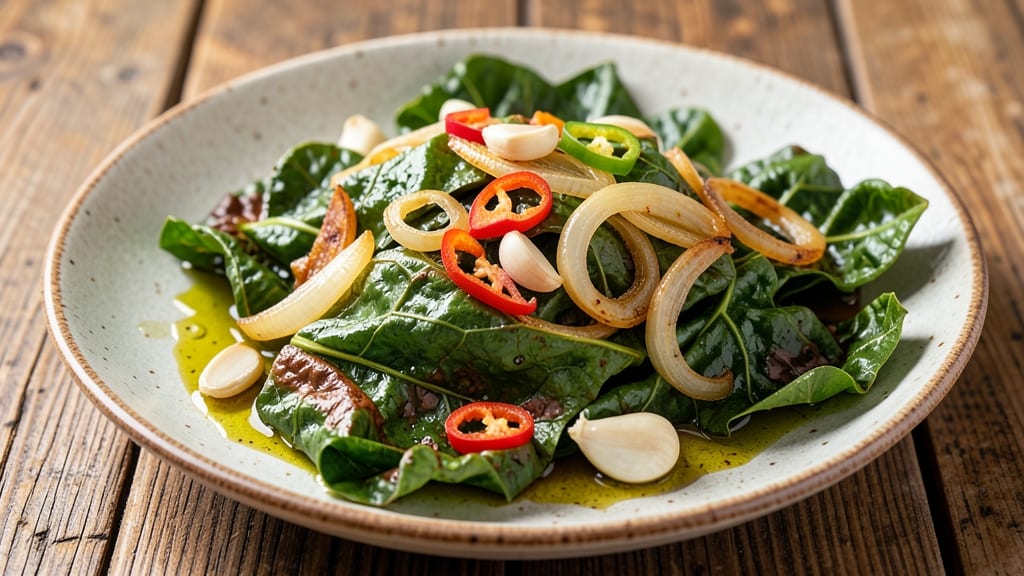
This Filipino sweet potato leaves recipe transforms humble greens into a crispy, aromatic side dish that steals the show at any meal. 🌟 The secret lies in proper preparation—washing, blanching, and sautéing with garlic, onions, and a touch of chili heat—just like in traditional Filipino kitchens.
What makes this dish special is its versatility; it pairs perfectly with rice, grilled meats, or fried fish, adding both texture and depth to your plate.
The process is straightforward but requires attention to detail, especially the blanching step, which ensures the leaves remain tender yet develop that signature crispy edge when sautéed. Traditional Filipino cooking often relies on simple techniques to maximize flavor, and this dish is no exception.
The garlic and chili not only enhance the natural sweetness of the leaves but also create a harmonious balance of heat and richness that’s hard to resist.
What you’ll end up with is a vibrant, crispy-sautéed side dish that’s as nutritious as it is delicious. The leaves retain their bright green color while absorbing the savory flavors of the garlic and onions, making every bite both satisfying and wholesome.
This dish is a staple in Filipino households, often served during family gatherings or special occasions, and it’s easy to see why—it’s simple, flavorful, and deeply comforting.
Whether you’re serving it alongside a hearty main or enjoying it as part of a larger spread, this recipe delivers restaurant-quality results with minimal effort.
Let’s get started on creating a dish that’s as much a celebration of Filipino cuisine as it is a testament to the magic of simple, well-executed ingredients.
Ingredients for sweet potato leaves recipe filipino
Simple, vibrant ingredients transform into crispy, aromatic Filipino sweet potato leaves perfect for any meal.
| Ingredient | Amount | Notes |
|---|---|---|
| Sweet Potato Leaves (Kamote Leaves) 🌿 | 1 lb | Fresh, organic preferred, stems removed |
| Yellow Onions 🧅 | 1 whole | Medium size, sliced thin |
| Garlic Cloves 🧄 | 6 cloves | Fresh, minced finely |
| Chili Peppers 🌶️ | 2 whole | Bird's eye or siling labuyo, chopped |
| Extra-Virgin Olive Oil 🫒 | ¼ cup | High quality, fruity |
| Salt 🧂 | 1 tsp | Diamond Crystal kosher salt |
| Black Pepper 🌶️ | ½ tsp | Freshly ground |
| Vegetable Oil 🫒 | ½ cup | For sautéing leaves |
| Lemon Juice 🍋 | 1 tbsp | Freshly squeezed |
| Fish Sauce (Optional) 🍶 | ½ tsp | Vegetarian substitute: soy sauce |
| Sugar 🍚 | ½ tsp | White granulated |
The sweet potato leaves are the star—look for vibrant, deep green leaves at Asian markets or specialty produce sections. Filipino markets often carry them fresh, but if unavailable, substitute with spinach or collard greens. The garlic and chili peppers should be fresh, with the chili having a bright red color and slight heat. Bird's eye chilies are traditional, but any small, fiery chili works. For the onions, choose firm, yellow varieties—avoid any with sprouting or soft spots. The olive oil should be extra-virgin for best flavor, but any good quality oil will suffice. If using fish sauce, opt for a high-quality brand like Red Boat, but the soy sauce substitute works perfectly for vegetarian versions.
No sweet potato leaves? Spinach or collard greens work well, though they may require slightly less cooking time. Substitute fish sauce with soy sauce or coconut aminos for a vegetarian-friendly option. If you lack fresh garlic, garlic powder at half the amount is acceptable, though fresh is preferred. For a milder heat, reduce the chili peppers to just one or use a small amount of red pepper flakes. The sugar can be omitted entirely if you prefer a less sweet profile, but it balances the acidity from the lemon juice beautifully. If you're short on time, skip the blanching step and sauté the leaves directly, though they may not achieve the same crispy texture.
Fresh sweet potato leaves keep for 3-4 days in the fridge, wrapped in damp paper towels. Blanch and store the leaves in an airtight container with a splash of water to maintain crispness. The sautéed leaves reheat beautifully—simply warm in a pan with a little oil for 2-3 minutes. For best results, serve immediately after cooking, as the crispy texture softens over time. Portion into containers for easy meal prep, and store with a sprinkle of salt to preserve freshness.
Why You'll Love This Recipe
- Here’s what sold me: this dish begs to be repurposed. Toss cooled leaves into fried rice for extra texture, blend them into a quick soup, or serve them cold over rice with a fried egg on top. My kids ask for it more than any other veggie, even when it’s not the main event.
- No-Chop Nightmare: I swear by this recipe when I’m too tired to julienne onions. Just roughly chop the garlic and chili—no precision needed—and the leaves wilt down into something tender with minimal fuss. The onions caramelize in the olive oil while you’re still washing your hands, so it’s basically hands-off magic.
- Umami Bomb: That first bite of crisp-tender leaves with the garlic sizzling in olive oil? It’s like a flavor grenade in the best way. The chili peppers add a slow-building heat, but the real star is how the sweet potato leaves—earthy and slightly bitter—soak up all the garlic’s punch. Honestly, I’ve made this with just salt and oil, and it still delivered.
- Leftover Reinvention: Here’s what sold me: this dish begs to be repurposed. Toss cooled leaves into fried rice for extra texture, blend them into a quick soup, or serve them cold over rice with a fried egg on top. My kids ask for it more than any other veggie, even when it’s not the main event.
Step-by-step instructions for crispy-sautéed kamote leaves
Transform fresh sweet potato leaves into a restaurant-worthy Filipino side dish with this foolproof sautéing method.
👨🍳 Step 1: Prepare the Vegetable Base
Start by slicing the 1 whole yellow onion into thin half-moons—about ⅛-inch thick. I like to use a sharp chef's knife and make even slices so they cook uniformly. Set aside in a bowl.
Next, mince the 6 cloves garlic as finely as possible—you want tiny particles that will quickly infuse flavor. Remove the stems from the 2 whole chili peppers and chop them into small pieces, leaving some seeds for heat if you prefer. The combination of garlic and chili creates that signature Filipino umami kick.
🍳 Step 2: Sauté Aromatics in Olive Oil
Heat the 0.25 cup extra-virgin olive oil in a large wok or deep skillet over medium heat until shimmering. Add the onion slices and cook for 3-4 minutes until they soften and turn translucent. This step builds the flavor foundation—don't rush it.
Add the minced garlic and chopped chili peppers, stirring constantly for 1-2 minutes until the garlic turns golden and fragrant. Watch closely—garlic burns quickly! The mixture should smell intensely aromatic, with the chili peppers adding a subtle heat that deepens as they cook.
🔥 Step 3: Cook the Sweet Potato Leaves
Increase heat to medium-high and add the 0.5 cup vegetable oil. When the oil is hot (but not smoking), add the 1 lb sweet potato leaves in batches, shaking the pan to distribute them evenly. Cook for 2-3 minutes until the leaves begin to wilt and turn vibrant green.
Here's the secret to crispy leaves: press down gently on the leaves with a spatula for 10-15 seconds to help them crisp. The high heat and slight pressure create that perfect texture contrast—tender centers with crispy edges. You'll know it's working when you hear a satisfying sizzle and see the leaves starting to curl at the edges.
🥘 Step 4: Season and Finish
Add the 1 tsp salt, 0.5 tsp black pepper, 0.5 tsp sugar, and 0.5 tsp fish sauce (if using). Toss everything together for 1 minute until the leaves are evenly coated. The sugar helps balance the acidity from the lemon juice we'll add next, while the fish sauce (or soy sauce) adds that unmistakable Filipino umami depth.
Remove from heat and stir in the 1 tbsp lemon juice. This final step brightens the dish and cuts through the richness of the oil. Taste and adjust seasoning—you want a balance of saltiness, heat, and acidity that makes your taste buds dance.
⏰ Step 5: Serve Immediately
Transfer the crispy-sautéed sweet potato leaves to a serving platter while they're still hot. The leaves should be vibrant green with crispy edges that give way to tender centers. Serve as a side dish with steamed rice or grilled meats to soak up the delicious garlic-chili oil.
For maximum flavor, serve within 10 minutes of cooking. The leaves continue to crisp slightly as they cool, but the freshness of the garlic and chili really shines when enjoyed immediately. This dish is all about that perfect balance of textures and flavors—crispy, tender, garlicky, and just a touch spicy.
Pro Tips For Making Sweet Potato Leaves Recipe Filipino
- Wilt Leaves in Stages: I learned this the hard way—dumping all those big, tough sweet potato leaves into the pan at once? They’ll steam instead of soften. Start with half the leaves, wilt them fully, then add the rest. This keeps the texture tender and prevents a soggy mess.
- Slice Onions Thinly, Not Chopped: Filipino-style kamote leaves need onions that melt into the dish, not chunks that sit stubbornly. Use a sharp knife and slice onions paper-thin—almost translucent. No mandoline? Stack slices and cut in one motion. Trust me, your future self will notice the difference.
- Don’t Rush the Garlic: I used to toss minced garlic in with the onions, but it burns before the leaves soften. Instead, fry the garlic separately in olive oil until it’s just golden—about 30 seconds—then pour it over the wilted leaves. This adds depth without bitterness.
- Save Time with Prepped Chili: Peeling and seeding chili peppers mid-cooking is a hassle. Do it all at once: slice them into thin rounds, remove seeds, and set aside. Keep a bowl of cold water nearby—it numbs your fingers and makes the job faster. No more stopping mid-recipe to deal with spicy hands.
Pro cooking tips for this dish
Blanching for Perfection
Blanching the sweet potato leaves before sautéing is the secret to achieving that signature crispy texture. Start by boiling a pot of water and adding 1 tbsp salt—this helps preserve the vibrant green color.
Drop the leaves in for 30-45 seconds until they just begin to wilt, then immediately plunge them into an ice bath to stop the cooking process. This step removes excess dirt and softens the leaves slightly, ensuring they crisp up beautifully when sautéed later. 💫
High Heat is Key
Use a large wok or deep skillet to maximize surface area and ensure even cooking. Heat the vegetable oil over medium-high heat until it shimmers but doesn’t smoke—this is crucial for achieving that perfect crispy edge.
If the oil gets too hot, the leaves will burn before they crisp. I like to work in batches if needed, but avoid overcrowding the pan, as this steams the leaves instead of crisping them. 🔥
Garlic Timing Matters
Add the garlic and chili peppers to the onions only after the onions have softened—this prevents the garlic from burning and ensures it infuses flavor evenly. Stir constantly for 1-2 minutes until the garlic turns golden and fragrant.
The chili peppers should release their oils and add a subtle heat that deepens as they cook. This step is where the dish gets its signature Filipino umami kick, so don’t rush it! 🌶️
Press for Crispiness
Once the leaves are added to the hot oil, press down gently with a spatula for 10-15 seconds to help them crisp. The high heat and slight pressure create that perfect texture contrast—tender centers with crispy edges.
You’ll know it’s working when you hear a satisfying sizzle and see the leaves starting to curl at the edges. This technique is what sets this dish apart from other sautéed greens! 💪
Balancing Flavors
The final seasoning is all about balance. Add the sugar to counteract the acidity of the lemon juice, the fish sauce (or soy sauce) for umami depth, and the lemon juice to brighten everything up.
Taste as you go—you want a harmonious blend of saltiness, heat, and acidity that makes your taste buds dance. Adjust the seasoning to your preference, but don’t skip the lemon juice—it’s what ties everything together. ✨
Serve Immediately
This dish is best served fresh, while the leaves are still crispy and the garlic and chili flavors are at their peak. Transfer the leaves to a serving platter and garnish with extra chili peppers if you like.
Pair with steamed rice or grilled meats to soak up the delicious garlic-chili oil. The leaves will continue to crisp slightly as they cool, but serving them immediately ensures the best texture and flavor. 🍚
Nutrition facts
Frequently asked questions
Where can I find fresh sweet potato leaves for this recipe?
Look for them in the Asian produce section of well-stocked grocery stores or specialty markets. Filipino markets often carry them fresh, labeled as "kamote leaves" or "sweet potato greens." If unavailable, substitute with spinach or collard greens—they'll work but may require slightly less cooking time.
Can I make this recipe without fish sauce?
For a vegetarian version, substitute with soy sauce or coconut aminos (use the same amount). The dish will still have that signature Filipino umami depth, though fish sauce adds a more complex savory note. Taste and adjust to your preference.
How do I prevent the leaves from getting mushy? Use high heat and avoid overcrowding the pan—this steams the leaves instead of crisping them. Work in batches if needed, and press down gently with a spatula for 10-15 seconds to help them crisp. Also,
What's the best way to store leftover sweet potato leaves?
Store in an airtight container with a splash of water to maintain crispness, or wrap in damp paper towels for 3-4 days in the fridge. Reheat in a pan with a little oil for 2-3 minutes—they won't be as crispy as fresh but still delicious. For longer storage, freeze blanched leaves in a single layer before transferring to a bag.
Can I adjust the heat level in this recipe?
Yes! Reduce the chili peppers to 1 whole pepper for milder heat or use red pepper flakes instead. For extra spice, add more or leave the seeds in. The garlic and onions already provide depth, so the chili is purely for heat—adjust to your tolerance!