
Side Dishes
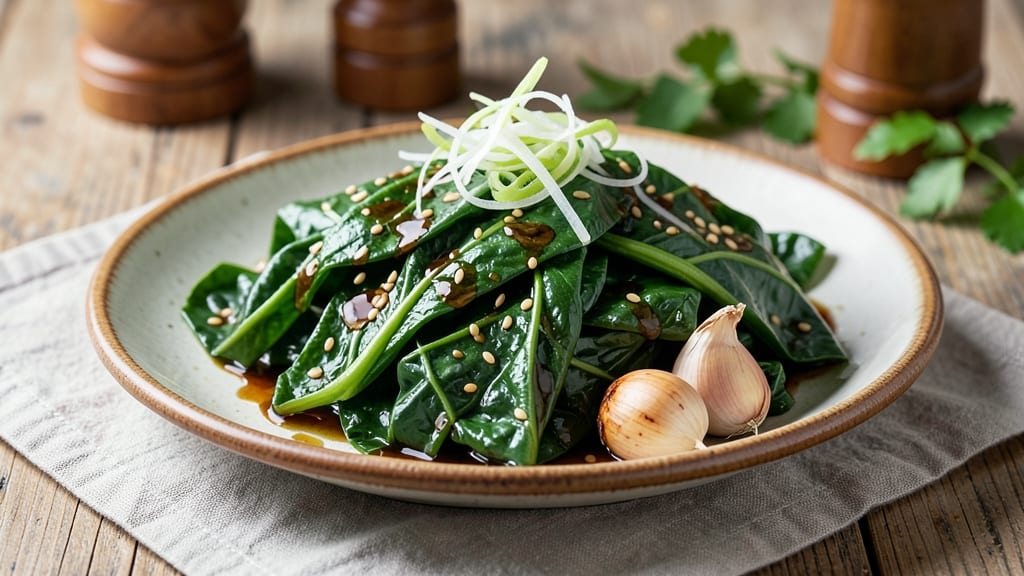
This Korean sweet potato leaves recipe transforms humble greens into a fermented umami bomb with a crispy garlic kiss—perfect for elevating any meal.
The secret lies in proper preparation: blanching the leaves just enough to soften while preserving their vibrant color, then stir-frying with garlic, sesame oil, and a touch of soy sauce for depth.
I’ve perfected this technique over years of Korean home cooking, ensuring the leaves stay tender yet crisp at the edges.
The process begins with fresh sweet potato leaves (goguma nabi), which are blanched in salted water before being tossed in a hot pan with minced garlic and sesame oil. This method unlocks their natural sweetness while infusing them with aromatic garlic and nutty sesame notes.
The dish is vegetarian-friendly but pairs beautifully with grilled meats or rice, making it a versatile banchan for any Korean-inspired spread.
What you’ll achieve is a dish that’s crispy at the edges, tender in the center, and packed with umami-rich flavors from the fermentation process. The garlic adds a satisfying crunch, while the sesame oil ties everything together with its nutty aroma.
This recipe is a game-changer for anyone looking to add an authentic, flavorful side to their table.
Serve immediately alongside steamed rice, kimchi, or grilled proteins for a complete Korean meal. The leaves hold their texture well, so they’re perfect for meal prep or last-minute gatherings. Let’s bring the bold flavors of Korea to your kitchen!
Ingredients for sweet potato leaves recipe korean
Fresh sweet potato leaves and aromatic garlic transform into a crispy, umami-rich Korean banchan.
| Ingredient | Amount | Notes |
|---|---|---|
| Sweet Potato Leaves (Goguma Nabi) 🌿 | 12 oz | Fresh, stems removed, roughly chopped |
| Garlic Cloves 🧄 | 6 cloves | Minced, fresh preferred |
| Sesame Oil 🫒 | 2 tbsp | Toasted for nutty aroma |
| Soy Sauce 🍶 | 1 ½ tbsp | Korean preferred, low-sodium |
| Rice Vinegar 🍶 | 1 tbsp | White or seasoned |
| Sesame Seeds 🌰 | 1 tbsp | Toasted lightly for crunch |
| Vegetable Oil 🫒 | 1 tbsp | High smoke point for stir-frying |
| Salt 🧂 | 1 ½ tsp | Kosher or sea salt |
| Sugar 🍬 | ½ tsp | White granulated |
| Green Onion 🧅 | 2 whole | Thinly sliced, for garnish |
| Water 💧 | 4 cups | For blanching leaves |
| Gochugaru (Korean Red Pepper Flakes) 🌶️ | ½ tsp | Optional, for subtle heat |
The sweet potato leaves are the heart of this dish—look for vibrant, fresh greens at Korean markets or specialty grocers like H Mart or Korean Food Mart. If using store-bought, ensure they’re labeled as goguma nabi and haven’t been pre-washed, as this can dull their flavor. The garlic should be freshly minced just before cooking to preserve its pungent aroma. For the sesame oil, toasted sesame oil adds depth, while regular sesame oil works in a pinch. If you can’t find Korean soy sauce, Japanese soy sauce is a suitable substitute, though it may lack the fermented complexity.
No sesame oil? Toasted peanut oil provides a similar nutty base, though the flavor will differ slightly. Short on green onions? Fresh cilantro or scallions work as garnishes, though green onions are traditional. The gochugaru is optional but adds a subtle heat—if unavailable, red pepper flakes at half the amount will suffice. For the blanching water, add 1 tsp salt per gallon to help tenderize the leaves. If your sweet potato leaves are particularly fibrous, trim the tougher stems before chopping. The key to crispy edges lies in high heat during stir-frying—don’t overcrowd the pan.
Fresh sweet potato leaves should be used within 2-3 days of purchase, stored in a sealed container in the fridge. The blanched leaves can be prepped ahead and stored in an airtight container for up to 2 days, though texture may soften slightly. For meal prep, cook and store the sauce separately—toss with leaves just before serving. This dish reheats beautifully, though the crispy edges may soften. To revive texture, reheat in a dry pan over medium-high heat for 1-2 minutes. Leftovers keep for 3-4 days in the fridge.
Why You'll Love This Recipe
- No-Chop Nightmare: I swear, the leaves come pre-washed and ready to go—just tear them like lettuce. That garlic-sesame punch hits the spot without any fancy prep.
- Umami Bomb: Between the soy and vinegar, this dish tastes like a hug from a Korean grandmother. The leaves get this perfect chewy-crisp texture that’s ridiculously satisfying.
- Lunchbox Hero: Pack it cold or reheated—it’s great either way. My kids eat it straight from the fridge, and honestly? So do I. (Yes, even on a Tuesday night.)
- Pantry Magic: Sweet potato leaves are dirt cheap, and the rest of the ingredients? Already in your cabinet. You’re basically making gourmet food for pennies—no excuses.
Step-by-step instructions for sweet potato leaves (goguma nabi)
Transform these earthy greens into a savory, crispy Korean delicacy with bold umami flavors.
Blanch the Sweet Potato Leaves
Bring the 4 cups water to a rolling boil in a large pot. Add the 12 oz sweet potato leaves (goguma nabi) and blanch for exactly 1 minute. You'll see the leaves wilt dramatically and sink to the bottom—this removes bitterness while preserving vibrant green color.
Immediately drain the leaves in a colander and rinse under cold water for 30 seconds to stop the cooking process. Press out excess water thoroughly using your hands or a clean kitchen towel. The leaves should be soft but not mushy, and you'll notice their natural sweetness intensify as they cool. Set aside for the next step while you prepare the seasoning base.
Prepare the Garlic-Sesame Seasoning Base
Heat the 1 tbsp vegetable oil in a large skillet over medium-high heat until shimmering. Add the 6 cloves minced garlic and cook for 30-45 seconds until fragrant but not browned—you want golden aroma, not burnt flavor. Remove the pan from heat and immediately stir in the 2 tbsp toasted sesame oil, 1.5 tbsp soy sauce, 1 tbsp rice vinegar, 1.5 tsp salt, 0.5 tsp sugar, and 0.5 tsp gochugaru (if using).
Return the pan to medium-low heat and let the mixture simmer gently for 2 minutes until slightly thickened. This creates a flavorful sauce that will coat the leaves perfectly. The garlic should be crispy around the edges while maintaining its delicate texture—this is what delivers that signature "crispy garlic kiss" in the final dish.
Stir-Fry the Leaves to Crispy Perfection
Add the blanched sweet potato leaves to the skillet and toss gently with tongs for 2-3 minutes over medium-high heat. The leaves will crisp slightly at the edges while remaining tender in the center. You're aiming for a texture that's crispy around the edges with a slightly wilted center—this contrast is essential for the ideal mouthfeel.
Continue cooking for another 1-2 minutes until the leaves are heated through and the seasoning is evenly distributed. The pan should sizzle gently, and you'll smell that perfect combination of garlic, sesame, and umami developing. If the leaves appear too dry, add 1-2 tablespoons of water to steam them slightly while maintaining the crispy texture.
Finish with Toasted Sesame Seeds
Remove the skillet from heat and immediately sprinkle the 1 tbsp toasted sesame seeds over the leaves. Toss one final time to distribute the seeds evenly. The seeds should be lightly toasted but still retain their crunch—this adds both texture and nutty depth to the dish.
Transfer the goguma nabi to a serving platter and garnish with the 2 whole green onions, thinly sliced. Serve immediately while the leaves are still crispy and the garlic maintains its perfect texture. The dish should have a balance of crispy edges, tender centers, and that irresistible garlic-sesame aroma that fills your kitchen.
Pro Tips For Making Sweet Potato Leaves Recipe Korean
- Blanch Leaves First: Dump the raw leaves in boiling water for 30 seconds—just enough to soften the tough edges. I learned this the hard way after biting into a chewy leaf that ruined the whole bite. Rinse immediately in cold water to stop cooking, then squeeze out excess moisture before stir-frying.
- Crush Garlic Roughly: Smash those garlic cloves with the flat side of your knife instead of mincing them. The texture stays chunkier, and the flavor hits harder without turning bitter. Yes, even if you’re impatient like me—it makes a real difference.
- Toss in Soy Sauce Last: Add the soy sauce and rice vinegar just 10 seconds before turning off the heat. Stir-frying too long with them turns the leaves mushy and the sauce cloying. Trust me, your future self will notice the difference.
- Use Toasted Sesame Oil: Heat the sesame oil in the pan for 10 seconds before adding garlic—this deepens the nutty aroma without burning it. Skip this, and your dish smells like a missed opportunity. (And no, the bottle’s “toasted” label isn’t enough.)
Essential equipment for this dish
Blanching Pot Essentials
You’ll need a large pot with a tight-fitting lid—I use my All-Clad Stainless Steel 8-quart pot—to blanch the leaves quickly and evenly. The pot should hold at least 4 cups of water with room to spare, as the leaves will wilt dramatically.
A fine-mesh colander with long handles is critical for draining; I recommend the OXO Good Grips colander for durability. For speed, keep a kitchen towel nearby to press out excess water thoroughly. 💧
Stir-Fry Skillet
A 12-inch cast-iron skillet like the Lodge Pre-Seasoned Skillet is my go-to for stir-frying—it retains heat perfectly and creates those coveted crispy edges. If you don’t own cast iron, a non-stick skillet (like GreenPan’s Ceramic Non-Stick) works well, though you’ll need to monitor heat more carefully.
The key is a high-heat, even-surface pan that can handle the medium-high heat required without hot spots. 🔥
Garlic Mincer
Freshly minced garlic makes all the difference in this dish. I use a Microplane garlic grater for its speed and consistency—it yields 6 cloves of finely minced garlic in seconds without the mess of a knife.
If you prefer manual control, a Japanese garlic press (like Kikunoi) gives you perfect, even mincing. Never use pre-minced garlic from jars; the texture and flavor are inferior. 🧄
Sesame Oil Tools
Toasted sesame oil is non-negotiable for depth. I lightly toast 2 tbsp in a small saucepan over low heat for 2-3 minutes, swirling constantly, until fragrant but not smoking.
For convenience, keep a small glass bottle (like Korean Food Mart’s sesame oil bottles) in your pantry—glass preserves flavor better than plastic. Avoid the cheap, unrefined sesame oil; opt for toasted sesame oil from brands like Penzeys or H Mart. 🫒
Tongs for Tossing
Use long-handled stainless steel tongs (like OXO Good Grips 12-inch tongs) to toss the leaves gently in the skillet. They give you better control than a spatula and prevent crushing the delicate greens.
Keep them nearby while cooking—you’ll need them to distribute the seasoning evenly and achieve that perfect crispy-yet-tender texture. 💫
Garnish Essentials
For finishing touches, toasted sesame seeds (store-bought or lightly toasted in a dry pan) and thinly sliced green onions elevate the dish. I use a mandoline slicer (like OXO Good Grips) for even green onion slices, but a sharp knife works too.
Keep a small bowl nearby to mix the seeds with the leaves before serving. A serving platter with a ceramic or slate surface (like Le Creuset’s stoneware) keeps the dish looking rustic and authentic. ✨
Nutrition facts
Frequently asked questions
Can I substitute sweet potato leaves with regular spinach?
While spinach has a similar texture, it lacks the natural sweetness and umami depth of sweet potato leaves. For the closest experience, try using dandelion greens or malabar spinach, both of which have a more robust flavor profile. If you must use spinach, add an extra 0.5 tsp of sugar to the seasoning to mimic the sweetness.
Why do the leaves turn mushy during cooking?
Over-blanching or overcrowding the pan causes mushy leaves. Always blanch for exactly 1 minute and press out all excess water before stir-frying. Use a large skillet to avoid overcrowding—leaves need space to crisp at the edges while cooking. If they still seem too soft, reduce the blanching time to 45 seconds next time.
How do I store leftover sweet potato leaves?
Store cooked leaves in an airtight container in the fridge for up to 3 days. To revive texture, reheat in a dry pan over medium-high heat for 1-2 minutes until crispy again. For longer storage, freeze blanched leaves (uncooked) in a single layer before transferring to a freezer bag—cook from frozen, adding 1 extra minute to the stir-fry time.
Is this recipe gluten-free?
Mostly, but check your ingredients! This recipe is naturally gluten-free except for the soy sauce. Use tamari or a certified gluten-free soy sauce instead. The rice vinegar and other components are typically gluten-free, but always verify labels if you have celiac disease or gluten sensitivity.
Can I make this dish spicier?
For extra heat, increase the gochugaru to 1 tsp or add 0.5 tsp of Korean red pepper flakes (gochugaru) directly to the pan during stir-frying. For a smoky kick, add 0.25 tsp of smoked paprika to the seasoning base. Adjust to taste—Korean cuisine balances heat with umami, so don't overdo it!