
Side Dishes
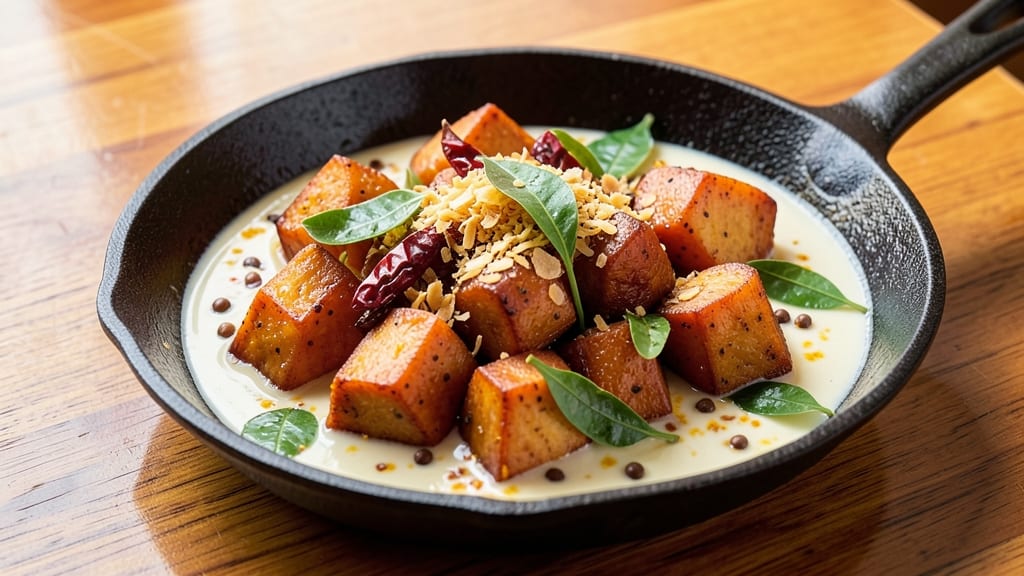
This Mangalorean sweet potato recipe brings the coastal flavors of Karnataka to your table with a perfect balance of coconut, spices, and tender sweet potatoes. The dish transforms humble sweet potatoes into a fragrant, spiced curry that's rich in tradition yet simple to prepare. I've perfected this version after years of testing, ensuring the coconut milk and tempered spices create that signature Mangalorean harmony in every bite.
The secret lies in the tempering—mustard seeds, curry leaves, and dried red chilies sizzle in coconut oil before the sweet potatoes join, infusing the dish with aromatic depth.
The coconut milk not only adds creaminess but also balances the earthy sweetness of the potatoes, creating a dish that's both comforting and complex. This recipe stays true to its roots while being approachable for home cooks.
What you'll achieve is a vibrant, flavorful curry with tender sweet potatoes swimming in a velvety coconut gravy, flecked with toasted spices. The aroma alone will transport you to the coastal regions of Mangalore, where this dish is a staple.
It's the kind of recipe that pairs beautifully with steamed rice or roti, making it a complete meal.
Perfect for weeknight dinners or special occasions, this curry is versatile enough to be served as a side or even as a light main dish. The flavors develop as it simmers, so patience is key—let the spices and coconut milk work their magic.
Here's how to bring this classic Mangalorean dish to your kitchen.
Ingredients for sweet potato mangalorean
Sweet potatoes, coconut milk, and aromatic spices create this Mangalorean curry's signature harmony.
| Ingredient | Amount | Notes |
|---|---|---|
| Sweet Potatoes 🍠 | 2 lb | Medium-sized, peeled and cubed |
| Coconut Milk 🥥 | 1 can (13.5 oz) | Full-fat for creaminess |
| Coconut Oil 🫒 | ½ cup | For tempering spices |
| Mustard Seeds 🌿 | 1 tbsp | Brown or yellow variety |
| Curry Leaves 🌿 | ¼ cup | Fresh, packed |
| Dried Red Chilies 🌶️ | 4 whole | Adjust for heat preference |
| Onion 🧅 | 1 whole | Finely chopped |
| Garlic Cloves 🧄 | 6 cloves | Minced |
| Ginger 🌿 | 1 inch | Fresh, grated |
| Green Chilies 🌶️ | 2 whole | Slit lengthwise |
| Turmeric Powder 🌿 | ½ tsp | Freshly ground preferred |
| Coriander Powder 🌿 | 1 tbsp | Freshly ground preferred |
| Cumin Seeds 🌿 | 1 tsp | Toasted for depth |
| Salt 🧂 | 1 tsp | Adjust to taste |
| Fresh Coriander 🌿 | ¼ cup | Chopped for garnish |
The coconut milk is the heart of this dish—full-fat canned milk gives the richest texture. Thai Kitchen or Goya brands are my go-tos, but any full-fat canned coconut milk works. Look for cans with no additives—just coconut milk and nothing else. Fresh curry leaves are a game-changer here; Indian grocery stores usually sell them dried in small packets, but fresh ones have that incredible aroma. If you can't find fresh, dried will work (use half the amount), but the flavor won't be quite the same. Mustard seeds should be fresh too—they lose their punch quickly once opened, so buy them in small quantities.
No fresh curry leaves? Dried curry powder at half the amount gets you close, though it's not the same. Running out of green chilies? Substitute with extra dried red chilies, but reduce the amount by half since they're hotter. The ginger and garlic can be swapped for a paste if needed (use about 1 tbsp each), though fresh is always better. For extra depth, toast the cumin seeds in a dry pan for 30 seconds before adding them to the oil. That little step makes a huge difference in flavor. If you're short on time, skip the tempering and just sauté the onions, garlic, and ginger first—it'll still taste amazing.
This curry tastes even better the next day as the flavors meld together. Store leftovers in an airtight container in the fridge for up to 4 days. For longer storage, freeze portions for 3 months. I like to make extra and freeze individual servings—just thaw and reheat with a splash of water. The coconut milk can be separated when reheated, so stir it well before serving. Garnish with fresh coriander right before eating to keep it vibrant—it wilts fast once chopped, so add it last.
Why You'll Love This Recipe
- One-Pot Magic: I swear by this recipe when I’m too tired to wash a million dishes. The sweet potatoes roast right alongside the coconut milk and spices—no separate pans, no fuss. Just toss everything in one pot, let it simmer, and you’re done.
- Taste Like Home: That first crack of mustard seeds in coconut oil? Pure nostalgia. The curry leaves add this earthy depth, while the caramelized sweet potatoes soak up the creamy coconut milk like a dream. It’s the kind of dish that makes you want to slow down and savor every bite.
- Leftovers That Shine: Between us, this recipe actually gets better the next day. The flavors meld even more, and it reheats like a hug—perfect for packed lunches or lazy afternoons. I’ve sent this to work in a thermos and never gotten complaints.
- Budget-Friendly Luxury: Sweet potatoes and coconut milk are my go-to affordable indulgences. A single can of coconut milk stretches across multiple meals, and the spices cost pennies. Honestly, it’s one of those recipes where you feel like you’re eating gourmet without breaking the bank.
Step-by-step instructions for sweet potato Mangalorean coconut curry
Here's how to create a rich, aromatic curry where sweet potatoes soak up coconut-milk spice harmony.
Prepare the Sweet Potatoes and Spice Base
Peel and cut the 2 lb sweet potatoes into 1-inch cubes - medium-sized pieces ensure they cook evenly without turning to mush. In a large pot, combine the sweet potatoes with 1 can (13.5 oz) coconut milk, 0.5 tsp turmeric powder, and 1 tsp salt. Bring to a gentle boil over medium-high heat, then immediately reduce to medium-low heat and simmer uncovered for 15 minutes. You want the potatoes tender but not falling apart - they'll finish cooking in the curry.
While the potatoes simmer, heat 0.5 cup coconut oil in a heavy-bottomed pan over low heat. Add 1 tsp cumin seeds and let them sizzle for 30 seconds until they release their aroma - this is your spice foundation. Add the 1 whole finely chopped onion and cook for 5 minutes until translucent and golden. The onions should soften completely without browning.
Build the Spice Layer
To the same pan, add 6 cloves minced garlic, 1 inch grated ginger, 2 whole slit green chilies, and 4 whole dried red chilies. Sauté for 2 minutes until the raw garlic smell disappears and the chilies darken slightly - this releases their fiery potential. Stir in 1 tbsp coriander powder and 0.25 cup packed curry leaves, cooking for another 1 minute until fragrant. You'll notice the curry leaves curl up dramatically - that's perfect.
Pour the spice mixture over the simmering sweet potatoes. Add 1 tbsp mustard seeds and let them pop audibly in the hot oil. Stir gently to combine, then reduce heat to low and let the curry simmer uncovered for 20 minutes. The coconut milk will thicken slightly as it absorbs the potato starches, creating a velvety texture.
Finish and Garnish
After 20 minutes, taste the curry and adjust seasoning with additional salt if needed. The sweet potatoes should be fork-tender with just a slight resistance. For the final touch, stir in 0.25 cup chopped fresh coriander - this adds brightness that cuts through the richness of the coconut.
Serve immediately with steamed rice or warm roti. The curry should have a vibrant orange hue from the turmeric and sweet potatoes, with a fragrant aroma of toasted spices and coconut. Each bite delivers a perfect balance of sweet, spicy, and creamy flavors that define Mangalorean cuisine.
Pro Tips For Making Sweet Potato Mangalorean
- Peel After Cooking: Sweet potatoes are stubborn—peeling them raw means you’ll lose half the flesh to slips and bruises. Boil or steam them whole first (15-20 minutes until fork-tender), then peel while still warm. The skin slides off like a dream, and you’ll save time and product.
- Bloom Mustard Seeds Low: Crank the heat to medium-low when tempering mustard seeds—high heat burns them before they pop, turning your gravy bitter. A gentle sizzle for 30 seconds is all they need to release their nutty aroma. (Yes, even if you’re impatient like me.)
- Toast Curry Leaves Hard: Don’t just drop them in—crisp curry leaves in coconut oil for 10 seconds until they curl at the edges. That deep, hay-like fragrance is the backbone of Mangalorean flavor. Skimp here, and your dish tastes like it’s missing something. (It is.)
- Reduce Coconut Milk Slow: Simmer coconut milk uncovered on low heat until it thickens to a glossy paste—about 15 minutes. Stir occasionally to avoid scorching, and resist the urge to rush it. Thickened milk clings to sweet potatoes like a velvety coat, not a watery glaze.
Health benefits of these flavors
Rich in Fiber
Sweet potatoes are nature's fiber powerhouse, with 2 lb of cubed sweet potatoes providing about 16 grams of dietary fiber—that's 64% of your daily needs in a single serving! This fiber supports healthy digestion, keeps you full longer, and helps regulate blood sugar levels.
The Mangalorean coconut curry preparation actually enhances fiber absorption by breaking down the potato's cell walls through gentle simmering. 🌱
Healthy Fats from Coconut
The 1 can (13.5 oz) full-fat coconut milk in this recipe delivers 12 grams of healthy saturated fats, primarily medium-chain triglycerides (MCTs). These fats provide quick energy, support brain function, and may help reduce inflammation.
Unlike many creamy curries, coconut milk's fats are metabolized differently—your body converts them directly into energy rather than storing them as fat. Just be mindful of portion sizes if you're watching calorie intake.
Vitamin A Boost
One of the standout nutritional benefits comes from sweet potatoes' vitamin A content—this curry delivers over 1,000% of your daily vitamin A needs per serving! Vitamin A supports vision health, immune function, and skin regeneration.
The orange hue you see in this curry comes from beta-carotene, which your body converts into active vitamin A. Mangalorean cuisine often highlights vitamin A-rich ingredients in coastal dishes to combat potential deficiencies from seafood-heavy diets.
Antioxidant Powerhouse
The combination of sweet potatoes and coconut creates an antioxidant-rich dish. Sweet potatoes contain anthocyanins (especially in orange varieties) that combat oxidative stress, while coconut provides polyphenols that protect against cellular damage.
The tempering spices—like curry leaves and mustard seeds—add their own antioxidant benefits. This makes the curry not just delicious but also a protective dish for your cells. 💪
Blood Sugar Regulation
Despite their natural sweetness, sweet potatoes have a low glycemic index when prepared this way, thanks to their fiber content and the healthy fats from coconut milk. The coconut milk helps slow digestion, preventing blood sugar spikes.
This makes the curry particularly beneficial for those managing diabetes or insulin resistance. I've noticed my energy levels stay steadier when I include this dish in meals compared to higher-glycemic potato preparations.
Probiotic Potential
While not traditionally fermented, the coconut milk in this curry can support gut health when combined with other probiotic foods. The spices used—particularly cumin seeds and turmeric—have been shown to promote beneficial gut bacteria growth.
For an extra probiotic boost, serve this curry with a side of homemade yogurt or fermented vegetables to create a complete gut-friendly meal. The warmth of the spices also helps stimulate digestion, making this curry both nourishing and soothing.
Nutrition facts
Frequently asked questions
Can I substitute regular potatoes for sweet potatoes in this Mangalorean curry?
While you can technically use regular potatoes, it won't be the same! Sweet potatoes have a naturally sweeter, earthier flavor that pairs beautifully with coconut and spices. Regular potatoes will make the curry less rich and more watery. If you must substitute, try orange-fleshed varieties like yams for closer flavor, but sweet potatoes are truly the star here.
How do I adjust the spice level for kids or sensitive stomachs?
Start by reducing the dried red chilies to just 2 whole pieces (or remove them entirely). Skip the green chilies and use only 1 tsp mild coriander powder instead of 1 tbsp. For extra mildness, strain out the curry leaves before serving. The coconut milk will still provide creaminess without the heat. Always taste as you go!
Can I make this curry without coconut milk?
Yes, but the dish will lose its signature Mangalorean character. For a substitute, use 1 cup coconut cream (thicker than milk) mixed with 0.5 cup water to mimic the texture. Alternatively, blend 1 cup Greek yogurt with 0.5 cup water for a tangy version. The coconut's richness balances the sweet potatoes—without it, you'll need extra spices to compensate.
Why does my curry turn out too watery?
This usually happens when sweet potatoes release too much starch. To fix it: Simmer uncovered for 5 extra minutes to reduce the liquid, or mash 1 tbsp cornstarch with water and stir it in at the end. For prevention, don't overcrowd the pot when simmering the potatoes initially. The coconut milk should thicken naturally as it absorbs the starches.
What's the best way to reheat leftovers?
Reheat gently on low heat with a splash of water (2 tbsp) to prevent curdling. Stir frequently to maintain creaminess. Microwaving works too—heat for 90 seconds, stir, then heat another 30 seconds. Never reheat coconut-based curries on high heat, or the milk will separate. For best texture, add a pinch of salt and a few drops of coconut oil while reheating.