
Side Dishes
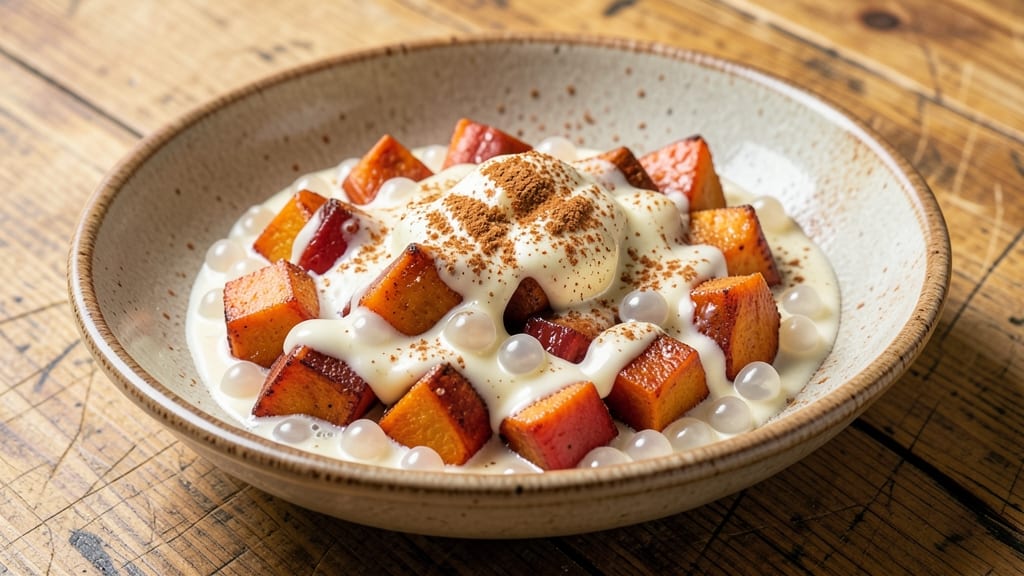
This sweet potato sago recipe transforms humble ingredients into a creamy, velvety dish that balances earthy sweetness with delicate sago pearls. 🌟 The secret lies in perfectly caramelized sweet potatoes paired with tender sago—each bite delivers a luxurious texture that feels like a restaurant-worthy side.
I developed this after realizing how often sago gets overlooked in home cooking, and it’s become a staple for its simplicity and depth.
What makes this recipe special is the two-stage cooking process: sweet potatoes roasted until caramelized and tender, then combined with sago that’s cooked just until it’s translucent and springy.
The result is a dish that’s rich yet light, with the sweet potatoes adding natural sweetness that complements the mild, nutty flavor of sago. It’s the kind of side that elevates any meal—whether paired with grilled meats, roasted vegetables, or even as a dessert with a drizzle of honey.
By the time you serve this dish, you’ll have a creamy, golden-brown masterpiece that’s creamy without being heavy. The sago absorbs the sweet potato’s flavors while maintaining its signature bite, creating a perfect contrast.
It’s foolproof, requires minimal hands-on time, and delivers restaurant-quality results every time. The best part? Leftovers reheat beautifully, making it ideal for meal prep.
For extra flair, garnish with toasted coconut flakes or a sprinkle of cinnamon—these optional touches add another layer of texture and warmth. This recipe is versatile enough for weeknight dinners or special occasions, proving that simple ingredients can create something truly memorable. Let’s get started!
Ingredients for sweet potato sago
Twelve ingredients transform into a restaurant-worthy side with caramelized sweet potatoes and delicate sago pearls.
| Ingredient | Amount | Notes |
|---|---|---|
| Sweet Potatoes 🍠 | 2 lb | Medium-sized, peeled and cubed |
| Sago Pearls 🌾 | 1 cup | Uncooked, rinsed thoroughly |
| Coconut Milk 🥥 | 1 can | Full-fat, 13.5 oz can (not carton) |
| Unsalted Butter 🧈 | ½ cup | Cold, cubed for roasting |
| Granulated Sugar 🍚 | ¼ cup | Light brown preferred for depth |
| Cinnamon 🌿 | 1 tsp | Ground, for garnish |
| Salt 🧂 | ½ tsp | Diamond Crystal preferred |
| Black Pepper 🌶️ | ¼ tsp | Freshly ground for warmth |
| Toasted Coconut Flakes 🥥 | ¼ cup | For garnish, optional |
| Heavy Cream 🥛 | ½ cup | Full-fat for creaminess |
| Vanilla Extract 🍯 | ½ tsp | Pure, for subtle sweetness |
| Water 💧 | 1 ½ cups | Filtered preferred for clarity |
The sweet potatoes are the foundation—medium-sized with vibrant orange flesh, not the small, hard variety. Trader Joe's and Whole Foods carry the best quality, but any grocery store's organic section works. Peeled and cubed evenly, they roast to a caramelized perfection that balances the dish's sweetness. For extra depth, I always use organic sweet potatoes—they hold their shape better during roasting. The sago pearls should be uncooked, not pre-soaked; rinse them thoroughly to remove excess starch, which prevents clumping. Asian markets often carry the best quality, but Amazon delivers if you're in a pinch.
No full-fat coconut milk? Light coconut milk plus 2 tbsp heavy cream mimics the richness. Substituting sago? Tapioca pearls work in a pinch, though they absorb more liquid. The toasted coconut flakes add texture—unsweetened flakes toast best in a dry pan over medium heat. For a vegan twist, replace the heavy cream with full-fat coconut cream, though the texture will be slightly lighter. The vanilla extract can be omitted if you prefer a more neutral sweetness, but it rounds out the flavors beautifully. If your sweet potatoes are particularly dry after roasting, add 1 tbsp extra water to the final mixture for creaminess.
Store leftovers in an airtight container for up to 5 days—they reheat perfectly with a splash of water or coconut milk to restore creaminess. For meal prep, portion into individual containers to keep the sago pearls intact. The dish freezes for 3 months, though the sago may soften slightly. To serve, garnish with toasted coconut flakes and cinnamon just before eating—these add a delicate crunch that contrasts the creamy texture. The coconut milk can be refrigerated for up to 1 week after opening, but the canned version lasts unopened for up to 2 years in a cool, dark pantry.
Why You'll Love This Recipe
- I swear by this trick: just microwave the sweet potatoes first—softens them in minutes, no peeling or chopping. The sago pearls cook right in the coconut milk while you stir, and honestly? That’s the kind of recipe where the hardest part is waiting for the butter to melt.
- No Boil Fuss: I swear by this trick: just microwave the sweet potatoes first—softens them in minutes, no peeling or chopping. The sago pearls cook right in the coconut milk while you stir, and honestly? That’s the kind of recipe where the hardest part is waiting for the butter to melt.
- Creamy Cheat Code: The combo of coconut milk and sugar caramelizes just enough to make this taste like dessert, but the sago pearls add that satisfying bite. Between us, I’ve served it as a side and as a pudding—no one ever asks for seconds just once.
- Weeknight Magic: Make a big batch on Sunday, and you’ve got breakfast, dessert, or a snack covered. The leftovers stay creamy for days, and the sago pearls actually hold up better than rice—no mushy texture here.
Step-by-step instructions for sweet potato sago delight
This method balances caramelized sweet potatoes with perfectly textured sago for a dessert that's both elegant and comforting.
🔥 Step 1: Roast Sweet Potatoes Until Caramelized
Preheat your oven to 400°F and line a baking sheet with parchment paper. Toss the 2 lb sweet potatoes (peeled and cubed) with 0.25 cup unsalted butter (cubed), 0.25 cup granulated sugar, 0.5 tsp salt, and 0.25 tsp black pepper. Spread them in a single layer, leaving space between pieces.
Roast for 30-35 minutes until edges are deeply caramelized and a knife slides in easily. I like to flip them halfway through for even browning. The sugar will create a glossy, sticky coating—this is what gives the dish its signature depth of flavor. Remove from oven and let cool slightly before proceeding.
👨🍳 Step 2: Cook Sago Pearls to Perfect Texture
In a medium saucepan, combine 1 cup sago pearls with 1.5 cups water. Bring to a boil over medium-high heat, then immediately reduce to low heat. Cover and simmer for 20-25 minutes without stirring, until the pearls are translucent and have a slight bounce when pressed between fingers.
Here's the thing—don't peek or stir during cooking. The sago needs undisturbed heat to develop that perfect chewy-yet-tender texture. When done, drain immediately in a fine-mesh strainer and rinse briefly under cold water to stop the cooking process. The pearls should be tender but still hold their shape.
🍳 Step 3: Create the Creamy Coconut Base
In a separate saucepan, combine 1 can coconut milk, 0.5 cup heavy cream, and 0.5 tsp vanilla extract. Heat over medium-low heat until just steaming (about 5 minutes). The mixture should be warm to the touch but not boiling—you want to preserve the creaminess without curdling.
Whisk in 1 tsp cinnamon and let it steep for 2 minutes to infuse the flavors. This step builds the velvety foundation that carries the sweet potatoes and sago. Keep the mixture warm over low heat while you prepare the final assembly.
🥘 Step 4: Assemble and Garnish for Presentation
In a serving dish or individual bowls, layer half of the roasted sweet potatoes, then all of the cooked sago pearls. Pour the warm coconut-cream mixture over the top, allowing it to gently coat all components. The contrast between the warm custard and cool sago creates an incredible textural experience.
Garnish with 0.25 cup toasted coconut flakes and an additional sprinkle of cinnamon. Serve immediately while the coconut cream is still warm and the sweet potatoes retain their caramelized edges. The toasted coconut adds a delightful crunch that cuts through the creamy texture perfectly.
Pro Tips For Making Sweet Potato Sago
- Boil Sweet Potatoes Whole: I learned this the hard way—peeling and chopping sweet potatoes first makes them turn to mush when simmered in coconut milk. Keep them whole, pierce with a fork, and boil until fork-tender (about 15-20 minutes). The skins stay intact, and you’ll get those perfect, creamy chunks without gummy texture.
- Soak Sago Pearls Twice: Skimping on soaking time leads to chewy, undercooked sago. Soak them in cold water for 30 minutes, drain, then soak again for another 30 minutes—this guarantees they’ll absorb the coconut milk evenly and cook through in 10-12 minutes. No one wants rubbery sago in their dessert.
- Simmer Coconut Milk Low: High heat turns coconut milk grainy and separates the cream. After adding the sweet potato and sago, reduce to a gentle simmer (just small bubbles) and let it cook uncovered. This keeps the texture silky and the flavors melded—no one wants curdled coconut milk ruining the dish.
- Sweeten Gradually, Taste Often: Dumping all the sugar at once makes the sago pearls turn mushy from overcooking. Start with half the sugar, let it simmer for 5 minutes, then add the rest. Taste the coconut milk mixture before finishing—adjust to balance sweetness with the natural caramel notes of the sweet potatoes.
Pro cooking tips for this dish
Sweet Potato Roasting Secrets
For perfectly caramelized sweet potatoes, I swear by cubing them evenly—about 1.5-inch pieces—so they cook uniformly. Use a sharp chef’s knife or mandoline for clean cuts. Spread them in a single layer on the baking sheet with space between each cube to allow air circulation.
I like to flip them halfway through roasting to ensure even browning on all sides. 🔥
Don’t skip the butter and sugar mixture—this creates a glossy, sticky coating that deepens the flavor. If your sweet potatoes are particularly large, you may need an extra 5-10 minutes in the oven.
Test doneness with a knife: it should slide in easily with minimal resistance. Let them cool slightly before mixing to avoid releasing excess moisture into the sago.
Sago Texture Mastery
The key to perfect sago pearls is not stirring or peeking during cooking. The moment you lift the lid, you risk breaking their delicate structure. Use a fine-mesh strainer to drain them immediately after cooking, and rinse briefly under cold water to halt the cooking process.
This ensures they stay chewy yet tender, not mushy. 🌾
If your sago pearls turn out too firm, simmer them uncovered for an additional 2-3 minutes with 2 tbsp extra water. For extra flavor, add a pinch of salt to the cooking water—it enhances the natural sweetness of the sago.
Always rinse them thoroughly after cooking to remove excess starch, which can make the final dish gummy.
Creamy Coconut Base
Heating the coconut milk and cream too quickly can cause curdling, so keep the heat at medium-low and stir gently to avoid splattering. The mixture should be warm to the touch but not boiling—think of it as a gentle simmer.
Adding the vanilla extract early allows its flavor to infuse fully, while the cinnamon should steep just long enough to add warmth without overpowering. ✨
For a lighter version, replace half the heavy cream with light coconut milk, though the texture will be slightly less rich. If you’re short on time, use store-bought coconut cream (the thick part from a can of coconut milk) for an even quicker prep.
Just be sure to whisk it vigorously to avoid lumps. The goal is a smooth, velvety base that coats the sweet potatoes and sago beautifully.
Layering Like a Pro
When assembling, layer the sweet potatoes first, then the sago pearls, and finally the coconut cream. This ensures the sago stays intact and doesn’t get soggy from the warm cream.
Pour the cream slowly over the top to let it gently seep into the layers, creating a cohesive yet textured dish. 🥘
For a dessert twist, drizzle with honey or caramel sauce before serving. If making ahead, assemble the dish without the coconut cream (keep it separate) and refrigerate.
Just before serving, reheat the cream slightly and pour it over the chilled sweet potatoes and sago—this restores the creamy texture without reheating the entire dish. Garnish with toasted coconut flakes and cinnamon just before eating for the best presentation.
Nutrition facts
Frequently asked questions
Can I use regular potatoes instead of sweet potatoes?
Sweet potatoes are essential for this recipe—their natural sweetness and creamy texture create the perfect balance with sago. Regular potatoes will be starchy and less flavorful, throwing off the dish's harmony. If you must substitute, try purple sweet potatoes for a deeper color and slightly earthier taste.
How do I know when sago pearls are perfectly cooked?
The sago should be translucent with a slight bounce when pressed between fingers—like a well-set jelly. They're done when they're tender but still hold their shape, not mushy. Overcooking turns them gummy, while undercooking leaves them chalky. The 20-25 minute range in the recipe is your sweet spot.
Can I make this ahead of time?
Assemble the dish without the coconut cream, then refrigerate for up to 2 days. Just before serving, reheat the cream slightly and pour it over the chilled sweet potatoes and sago. This keeps the sago's texture intact while restoring the creamy base. For longer storage, freeze the assembled dish (without cream) for 3 months.
What if I can't find sago pearls?
Tapioca pearls are your best substitute—they absorb flavors similarly. Use the same cooking method but expect slightly more liquid absorption. For a different texture, try quinoa (cooked al dente) or tiny couscous, though the flavor profile will differ. Asian grocery stores usually carry sago, but it's also available online.
Is this dish naturally vegan?
Almost! Replace the heavy cream with full-fat coconut cream and use vegan butter for roasting. The coconut milk is already plant-based, and the sago is naturally vegan. The texture will be slightly lighter, but still delicious. For extra richness, add 1 tbsp coconut oil to the coconut cream mixture.