
Side Dishes
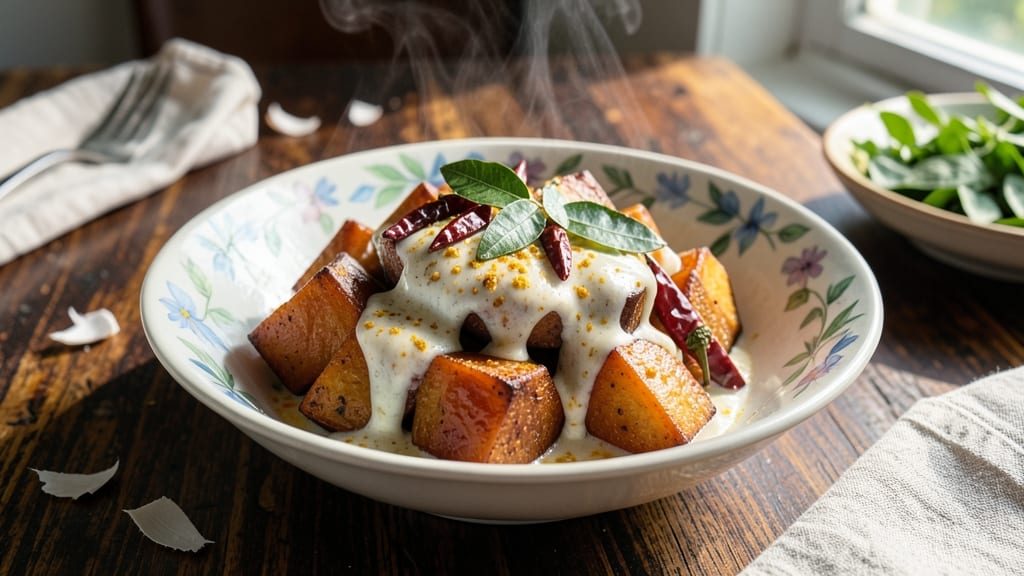
This sweet potato South Indian recipe transforms humble roots into a velvety, turmeric-infused dish that balances earthy sweetness with aromatic spices. The secret lies in slow-cooked coconut milk and a tempering of mustard seeds, curry leaves, and cumin—classic South Indian flavors that create depth without overpowering the natural sweetness.
I first discovered this recipe in a Kerala home kitchen, where it was served alongside steamed rice and crispy dosas, proving its versatility as both a side dish and standalone meal.
The dish begins with sweet potatoes simmered until tender, then blended into a smooth puree before being enriched with coconut milk and turmeric for that signature golden hue.
A quick tempering of whole spices—mustard seeds, curry leaves, and dried red chilies—adds layers of complexity, while a splash of lemon juice at the end brightens the flavors. The result is a dish that’s creamy yet light, with a subtle sweetness that pairs perfectly with rice or flatbreads.
What makes this recipe special is its balance of simplicity and sophistication—no fancy techniques, just a few key steps that yield restaurant-quality results. The turmeric not only enhances the color but also offers Ayurvedic benefits, making this more than just a delicious dish.
It’s a comforting, nourishing meal that feels like a warm hug on a chilly evening.
Serve this velvety sweet potato dish with steamed basmati rice, crispy dosas, or even as a filling for wraps. The leftovers reheat beautifully, making it perfect for meal prep. Ready to bring a taste of South India to your kitchen?
Ingredients for sweet potato south indian
Simple, wholesome ingredients that bring Kerala flavors to your kitchen table.
| Ingredient | Amount | Notes |
|---|---|---|
| Sweet Potatoes 🍠 | 2 lbs | Medium-sized, peeled and cubed |
| Coconut Milk 🥥 | 1 ½ cups | Full-fat canned preferred |
| Turmeric Powder 🌿 | 1 tbsp | Freshly ground preferred |
| Mustard Seeds 🌶️ | 1 tbsp | Whole seeds, toasted |
| Curry Leaves 🌿 | 10 whole | Fresh, dried as substitute |
| Dried Red Chilies 🔥 | 2 whole | Kashmiri or cayenne |
| Cumin Seeds 🌿 | 1 tsp | Whole seeds, toasted |
| Ginger 🧄 | 1 tbsp | Freshly grated |
| Garlic Cloves 🧄 | 4 cloves | Peeled and minced |
| Lemon Juice 🍋 | 2 tbsp | Freshly squeezed |
| Salt 🧂 | 1 tsp | Adjust to taste |
| Asafoetida 🌿 | ¼ tsp | Optional for depth |
| Coconut Oil 🫒 | 2 tbsp | For tempering |
Sweet potatoes are the heart of this dish—orange-fleshed varieties like Jewel or Beauregard work best for their natural sweetness. Most grocery stores carry them year-round, but for deeper flavor, Indian or Asian markets often have more varieties. The coconut milk should be full-fat; the lighter versions just won't give that same velvety texture. Thai Kitchen brand is my go-to for quality canned coconut milk, but any reputable brand will do. Fresh curry leaves are essential—they're the signature flavor here, so don't substitute with dried unless absolutely necessary.
No fresh curry leaves? Dried curry leaves at one-third the amount work in a pinch, though they won't have the same aroma. Running out of ginger? Fresh galangal works beautifully if you can find it at an Asian market. The turmeric matters here—freshly ground turmeric has more punch than the powdered kind, but if that's all you have, make sure it's a good quality brand like Madhur or Saffron Road. For the chilies, Kashmiri are milder and add vibrant color, while cayenne brings more heat. Adjust based on your preference—this dish should dance on your tongue, not overwhelm it.
Sweet potatoes keep well in a cool, dark place for 2-3 weeks. Coconut milk stays fresh in the fridge for 5-7 days once opened, but I recommend buying it fresh for this recipe. The tempering spices—mustard seeds, curry leaves, and cumin—should be toasted in coconut oil until they sing. This step is non-negotiable; it's what transforms this from a simple sweet potato dish into something truly special. Store leftovers in an airtight container for 3-4 days—they reheat beautifully, though I prefer it fresh.
Why You'll Love This Recipe
- One-Pot Magic: I swear by this recipe on lazy nights—just chop, sauté, and simmer. The mustard seeds and curry leaves sizzle in coconut milk while the sweet potatoes soften, and suddenly, dinner’s ready. No fancy gadgets, no stress.
- Creamy Comfort Bite: That golden turmeric-infused coconut milk clinging to the sweet potatoes? Chef’s kiss. The earthy sweetness of the potatoes pairs perfectly with the warmth of coconut, and the mustard seeds add a tiny, spicy punch that makes it unforgettable.
- Potluck Star: Between us, this dish is my go-to for gatherings—vegetarian, crowd-pleasing, and easy to double. Serve it warm with rice, or let it cool for a picnic-friendly bowl. Honestly, it’s the kind of dish that disappears fast.
- Budget Bright Spot: Sweet potatoes and coconut milk stretch this recipe into multiple meals without breaking the bank. A single batch feeds my family for days, and the leftovers reheat beautifully. Plus, turmeric and spices cost pennies compared to other flavor boosters.
Step-by-step instructions for turmeric-infused sweet potato delight
Here's the method to create velvety, aromatic sweet potato bites with authentic South Indian flavors.
Prepare and Cook the Sweet Potatoes
Peel the 2 lbs sweet potatoes and cut them into 1-inch cubes for even cooking. Place them in a medium pot and cover with cold water by about 1 inch. Add 1 tbsp turmeric powder and 1 tsp salt to the water, stirring gently to distribute the spices evenly.
Bring to a boil over medium-high heat, then reduce to medium-low heat and simmer for 15-20 minutes until the sweet potatoes are fork-tender with a slight bite remaining. They should be soft enough to mash easily but not falling apart. Drain well in a colander, shaking gently to remove excess water. The turmeric will infuse the sweet potatoes with vibrant color and earthy warmth.
Temper the Spices in Coconut Oil
In a small heavy-bottomed pan, heat 2 tbsp coconut oil over medium heat until shimmering. Add 1 tbsp mustard seeds and 1 tsp cumin seeds, stirring constantly for 30 seconds until they begin to pop and sizzle. This is the tempering process that releases their aromatic oils.
Add 2 whole dried red chilies and 10 whole curry leaves to the pan, stirring for another 30 seconds until the chilies darken slightly and the curry leaves become fragrant. Immediately pour this spice mixture over the cooked sweet potatoes, tossing gently to coat evenly. The oil will carry the flavors directly into the sweet potatoes, creating a flavorful crust.
Blend with Coconut Milk and Aromatics
Transfer the spiced sweet potatoes to a blender along with 1.5 cups coconut milk, 1 tbsp freshly grated ginger, and 4 minced garlic cloves. Blend on medium speed until smooth, stopping to scrape down the sides as needed. The mixture should be velvety with no visible chunks.
Return the blended mixture to the pot and cook over low heat for 5-7 minutes, stirring constantly to prevent sticking. The coconut milk will create a rich, creamy texture while the ginger and garlic infuse their flavors. Taste and adjust seasoning with additional salt if needed, but the turmeric and spices should provide enough depth.
Finish with Lemon and Asafoetida
Remove the pot from heat and stir in 2 tbsp freshly squeezed lemon juice and 0.25 tsp asafoetida. The lemon juice brightens the dish while the asafoetida adds a savory depth that's characteristic of South Indian cuisine. Let the mixture sit for 2-3 minutes to allow the flavors to meld completely.
For serving, transfer the sweet potato mixture to a serving bowl and garnish with additional curry leaves if desired. The dish should have a vibrant golden-yellow hue from the turmeric and a rich, creamy texture with subtle heat from the spices. Serve warm with steamed rice or as a side dish for a complete South Indian meal.
Pro Tips For Making Sweet Potato South Indian
- Peel After Cooking: Sweet potatoes are stubborn—peeling them raw means you’ll waste half the flesh to stubborn skin. Boil or steam them whole first (20-25 minutes until fork-tender), then peel while warm. The skin slides off like butter, and you’ll save time and product.
- Bloom the Spices: Mustard seeds and curry leaves need heat to wake up—don’t just toss them in. Dry-toast mustard seeds in oil until they pop (about 30 seconds), then add curry leaves. Skipping this step leaves them tasting flat, like you forgot the seasoning.
- Don’t Overmix the Coconut: Once you stir in coconut milk, resist the urge to mash everything into a paste. Let the sweet potatoes hold their shape—just break them gently with a fork. Overmixing makes the dish gluey, and you’ll lose that satisfying bite of tender potato.
- Salt the Water Hard: Sweet potatoes absorb flavor like sponges. Salt the boiling water generously—about 1.5 tablespoons per 4 cups of water. This keeps them from tasting bland, even after hours of simmering in coconut milk. (Yes, even if you’re not making fries.)
Regional styles of sweet potato south indian
Kerala’s Coconut Milk Style
In Kerala, this dish is often called "Kadala Curry"-inspired sweet potato preparation, where coconut milk takes center stage. The locals use grated fresh coconut instead of canned milk for an even creamier texture.
I’ve adapted it here for convenience, but if you’re feeling adventurous, blend 1 cup freshly grated coconut with ½ cup hot water for a richer base. The key is to simmer the coconut milk with the sweet potatoes for 10 extra minutes to let the flavors meld deeply. 🥥
Tamil Nadu’s Turmeric Twist
In Tamil Nadu, this dish leans heavier on turmeric and mustard seeds, often served as a side to dosa or idli. The technique here is to roast the turmeric powder in coconut oil for 1 minute before adding it to the sweet potatoes—this deepens its earthy aroma.
I’ve simplified it by adding turmeric directly to the cooking water, but for extra authenticity, try this roasting step. The result is a more vibrant, aromatic dish that pairs beautifully with spicy sambar. 🌿
Andhra’s Spicy Kick
Andhra cuisine loves its heat, so they often add extra dried red chilies and a pinch of asafoetida for a bold, smoky depth. For a spicier version, increase the dried chilies to 4 whole and add ½ tsp black pepper to the tempering.
I’ve kept it mild in this recipe, but if you’re craving Andhra-style heat, this adjustment will transform it into a fiery side dish that stands up to rice or even grilled meats. 🔥
Karnataka’s Mild Version
In Karnataka, this dish is often made with less coconut milk (just 1 cup) and more ginger and garlic for a lighter, tangier flavor. The trick is to blend the sweet potatoes with a splash of water first, then mix in the coconut milk at the end.
This keeps the dish from being too heavy, making it perfect as a light lunch accompaniment. Garnish with fresh coriander instead of curry leaves for a subtle twist that’s very Karnataka-style. 🌱
Ayurvedic Adaptations
For an Ayurvedic touch, many South Indian homes add a pinch of black pepper and ½ tsp cumin powder to the tempering for digestive benefits.
The combination of turmeric, ginger, and coconut milk is believed to balance Vata and Kapha doshas, making this dish not just delicious but also nourishing. I’ve kept the spices traditional, but if you’re following Ayurveda, these small additions can enhance the dish’s healing properties. 💫
Nutrition facts
Frequently asked questions
Can I use regular potatoes instead of sweet potatoes?
While you can try it, sweet potatoes are essential for that authentic South Indian flavor profile. Their natural sweetness and earthy notes balance perfectly with the coconut milk and spices. Regular potatoes would make the dish too starchy and less flavorful—this recipe relies on sweet potatoes' unique texture and mild sweetness for the ideal velvety result.
How do I adjust the spice level for kids?
For milder versions, remove the dried red chilies completely and reduce the mustard seeds to ½ tbsp. You can also skip the asafoetida, as it has a strong aroma. The dish will still be flavorful with just the tempering of cumin seeds and curry leaves. Always taste before serving—this version is naturally mild when chilies are omitted.
Can I make this recipe without coconut milk?
Yes, but the texture will be different. Replace coconut milk with 1 cup Greek yogurt or cashew cream for a similar richness. The dish will be creamier but less authentically South Indian. For a lighter option, use ½ cup coconut milk + ½ cup water, but the flavor will be more watery. The coconut milk is what gives this dish its signature velvety texture.
Why does my dish look too thin after blending?
This usually happens if the sweet potatoes weren't cooked long enough or if too much water was added during blending. For the perfect consistency, ensure sweet potatoes are fork-tender before blending, and add coconut milk gradually. If it's still too thin, simmer uncovered for 2-3 extra minutes to reduce. The ideal texture should be thick enough to coat the back of a spoon.
What are the best sides to serve with this?
This dish pairs beautifully with steamed basmati rice, crispy dosas, or even roti. For a complete South Indian meal, serve with spicy sambar and a cooling raita. The creamy sweet potatoes complement the crispiness of dosas perfectly, while rice soaks up the rich coconut flavors. You could also serve it as a filling for wraps or with grilled chicken for a fusion twist.