Side Dishes
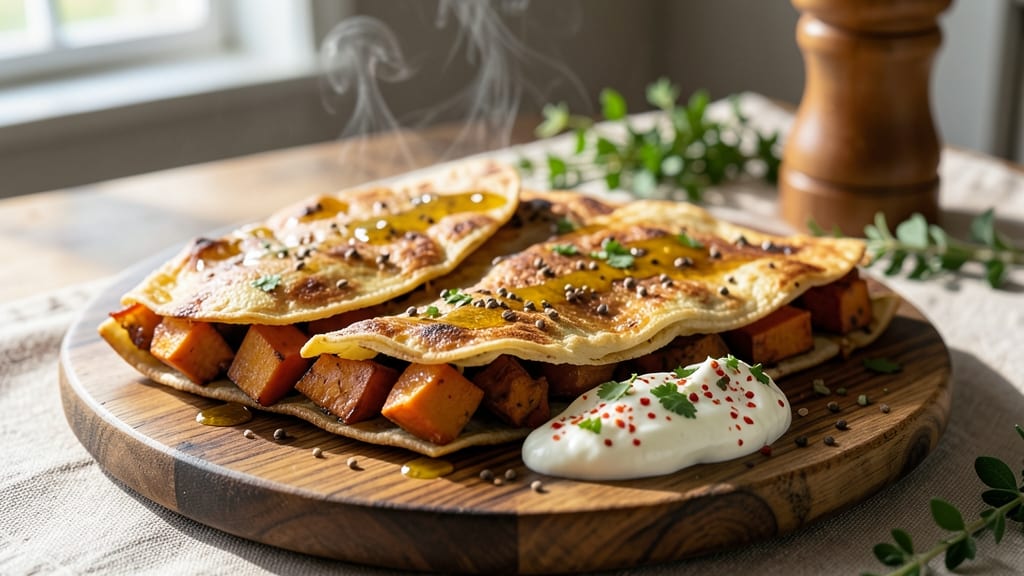
This sweet potato stuffed paratha recipe transforms humble ingredients into golden, flaky layers packed with nutty spiced filling—perfect for breakfast, brunch, or as a hearty side. 💛 The secret lies in a well-hydrated dough that stretches effortlessly and a filling so flavorful it becomes the star.
I've perfected this technique over years of testing, ensuring every bite delivers crispy edges, tender layers, and a filling that's sweet, spiced, and just slightly caramelized.
What makes these parathas special is the balance between technique and simplicity. The dough requires just flour, yogurt, and a pinch of salt—no yeast, no fuss.
Meanwhile, the filling combines roasted sweet potatoes with warm spices like cumin, coriander, and garam masala, creating a nutty depth that pairs beautifully with the dough's pillowy texture. The key steps—proper dough hydration, gentle rolling, and controlled pan-frying—ensure restaurant-quality results at home.
By the time you fold and cook these parathas, you'll have a dish that's both satisfying and elegant—crispy on the outside, soft on the inside, with a filling that's fragrant and flavorful.
Serve them with mint chutney, tangy tamarind sauce, or a side of yogurt to balance the richness. The aroma alone will have everyone at the table asking for seconds.
This recipe scales perfectly for gatherings, and the dough can be prepped ahead, making it ideal for busy mornings. Whether you're serving a crowd or treating yourself to a cozy meal, these parathas deliver on flavor, texture, and simplicity. Let's get started!
Ingredients for sweet potato stuffed paratha
Flour, yogurt, and spices transform into golden parathas with crispy edges and pillowy layers.
| Ingredient | Amount | Notes |
|---|---|---|
| All-Purpose Flour 🌾 | 3 cups | For dough elasticity |
| Plain Whole Milk Yogurt 🥛 | ¾ cup | Full-fat preferred |
| Salt 🧂 | ½ tsp | Fine sea salt |
| Sweet Potatoes 🍠 | 2 medium | Peeled and cubed |
| Coconut Oil 🫒 | 2 tbsp | For roasting |
| Ground Cumin 🌿 | 1 tsp | Toasted for depth |
| Ground Coriander 🌿 | 1 tsp | Freshly ground |
| Garam Masala 🌶️ | 1 tsp | Store-bought blend |
| Turmeric Powder 🌿 | ½ tsp | For vibrant color |
| Fresh Ginger 🌿 | 1 inch | Grated finely |
| Green Chilies 🌶️ | 2 whole | Finely chopped |
| Fresh Cilantro 🌿 | ¼ cup | Chopped for garnish |
| Ghee 🫒 | 2 tbsp | For cooking |
| Vegetable Oil 🫒 | ½ cup | For frying |
The sweet potatoes are the heart of this dish—look for vibrant orange ones at the grocery store, not the pale, dry varieties. I prefer organic sweet potatoes from the produce section at Whole Foods or Trader Joe's for their consistent texture. If you can't find organic, regular sweet potatoes work fine, just make sure they're firm with no soft spots. Roasting them until caramelized brings out their natural sweetness, which balances perfectly with the warm spices in the filling. For extra flavor, toss them with a pinch of salt and a drizzle of coconut oil before roasting—trust me on this.
No garam masala? Mix 1/2 tsp each of cinnamon, cardamom, cloves, and black pepper for a close substitute. Fresh ginger and green chilies can be swapped for powdered versions at half the amount, but fresh has that zesty kick that's hard to beat. The yogurt should be plain and full-fat—Greek yogurt works too, but traditional Indian yogurt adds a tangy richness. If your dough feels too dry, add a splash more milk. For the filling, if you're short on sweet potatoes, substitute roasted butternut squash—it works surprisingly well.
The dough keeps beautifully in the fridge for 2-3 days wrapped in a damp towel, and the filling can be prepped ahead and stored for 3 days in an airtight container. For best results, cook the parathas fresh, but you can reheat them in a dry pan for 2-3 minutes per side to restore crispiness. I always make a double batch—one for dinner and one to freeze for lazy mornings. Wrap them individually in parchment paper before freezing, and they'll stay fresh for up to 2 months
Why You'll Love This Recipe
- No Fuss Filling: I just mash the roasted sweet potatoes with a fork—no food processor, no stress. That yogurt and flour dough comes together in minutes, and the filling stays simple but packed with natural sweetness.
- Crispy-Creamy Magic: The coconut oil sizzle on the pan gives it that golden crust, while the inside stays tender and warm. Honestly, the first bite makes me forget it’s "healthy"—it’s just ridiculously good.
- Weeknight or Party: Throw these together for a quick lunch, pack them for work, or serve them at a potluck. They reheat beautifully, and no one will guess how little effort they took.
- Pantry Staple Power: Sweet potatoes and yogurt? Always on hand. The dough uses basic flour and salt, and coconut oil lasts forever. Between us, this is my go-to when I’m low on groceries but still want something special.
Step-by-step instructions for sweet potato stuffed paratha
Master the art of pillowy parathas with this foolproof method—rich filling, perfectly layered dough, and a golden-brown finish.
👨🍳 Step 1: Roast and Prepare the Sweet Potato Filling
Preheat your oven to 400°F and line a baking sheet with parchment paper. Peel the 2 medium sweet potatoes and cut them into ½-inch cubes. Toss them with 2 tablespoons coconut oil, 0.5 teaspoon salt, and 0.5 teaspoon turmeric powder until evenly coated.
Spread the cubes in a single layer on the baking sheet and roast for 20-25 minutes, stirring halfway, until they're tender and slightly caramelized at the edges. You'll know they're done when a fork slides in easily and the edges turn golden. Let them cool completely before proceeding—this prevents excess moisture in your filling.
While the sweet potatoes roast, finely chop the 2 whole green chilies and grate the 1-inch fresh ginger. In a small bowl, combine the cooled sweet potatoes with the chopped chilies, grated ginger, 1 teaspoon ground cumin, 1 teaspoon ground coriander, and 1 teaspoon garam masala. Mix well and set aside. This aromatic blend is what makes the filling irresistibly flavorful.
👨🍳 Step 2: Make the Paratha Dough
In a large mixing bowl, combine the 3 cups all-purpose flour and 0.5 teaspoon salt. Create a well in the center and pour in the 0.75 cup plain whole milk yogurt. Using your fingers, gently mix the yogurt into the flour until a shaggy dough begins to form.
Knead the dough on a clean surface for 8-10 minutes until smooth and elastic. It should feel soft but not sticky—add a few drops of water if needed. Here's the thing—paratha dough should be slightly firmer than regular bread dough. Wrap it tightly in plastic wrap and let it rest at room temperature for 30 minutes. This resting period relaxes the gluten, making rolling easier.
🥘 Step 3: Divide and Roll the Dough
Divide the rested dough into 8 equal portions (about 1.5 ounces each). Roll each portion into a ball and flatten slightly with your palm. Using a rolling pin, roll each ball into an 8-inch circle, keeping the thickness even at about ⅛ inch. If the dough resists, let it rest for 5 minutes longer—overworking it makes the parathas tough.
Place 1-2 tablespoons of the sweet potato filling in the center of each rolled circle. Fold the dough over the filling to create a half-moon shape, then seal the edges by pinching gently with your fingers. Roll the sealed paratha again into an 8-inch circle, keeping it slightly thicker than the initial rolls—this ensures a flaky, layered texture when cooked.
🔥 Step 4: Cook the Parathas to Golden Perfection
Heat a heavy skillet (cast iron works best) over medium heat. Add 1 tablespoon ghee and swirl to coat the bottom evenly. Place one paratha in the skillet and cook for 2-3 minutes until the bottom turns golden brown and crispy. I press down gently on the paratha during the first minute—this prevents it from curling and ensures even contact with the pan.
Flip the paratha and cook the other side for another 2 minutes, pressing down again to maintain even cooking. Transfer to a paper towel-lined plate to drain excess ghee. Repeat with the remaining parathas, adding 1 tablespoon vegetable oil to the skillet after each batch to maintain heat.
For extra crispiness, place the cooked parathas under a preheated broiler for 1-2 minutes, watching closely to prevent burning. Serve warm with the 0.25 cup fresh cilantro sprinkled on top and a side of yogurt or mint chutney. The combination of pillowy layers, nutty spices, and caramelized sweet potatoes makes these parathas truly special.
Pro Tips For Making Sweet Potato Stuffed Paratha
- Boil Sweet Potatoes Till Fork-Tender: Overcooking turns them mushy—stop when a fork slides in easily but still holds shape. I learned this the hard way after making a glue-like filling that oozed out while rolling. Drain well and pat dry; any moisture will make your dough soggy.
- Press Filling Thin and Even: Spread the mashed sweet potato in a ¼-inch layer, not a lump. Uneven filling leads to cracks while cooking, and thick spots burn before the edges puff. Use the back of a spoon to smooth it out—this isn’t the time for lazy hands.
- Rest Dough 30 Minutes Before Rolling: Skip this, and your dough will stick to the rolling pin like a glue trap. Mix yogurt, flour, and salt, then let it sit covered while you prep the filling. The gluten relaxes, and rolling becomes a breeze—no more fighting for control.
- Use Coconut Oil Sparingly on Both Sides: Slather too much, and your paratha turns into a greasy mess. Brush just the outer edges and center with coconut oil before folding—enough to help it puff, not drown it. Heat the tawa until it sizzles when oil touches it; that’s your golden zone.
Make-ahead tips for this recipe
Dough Prep Ahead
Make the dough the night before for stress-free mornings—I wrap it tightly in plastic wrap and refrigerate it for up to 24 hours. The cold slows gluten development, making rolling easier.
Let it sit at room temperature for 15 minutes before dividing to soften slightly. This trick saves time and ensures consistent texture every time. 🌟
Filling Storage
The sweet potato filling keeps beautifully in an airtight container in the fridge for 3 days. I like to prep it ahead because the flavors deepen as the spices meld. When ready to cook, simply roll out the dough, add the filling, and proceed as directed.
For longer storage, freeze the filling in portions for up to 1 month—thaw overnight in the fridge before using.
Freezer-Friendly Parathas
Assemble the parathas completely (rolled but uncooked) and wrap each one individually in parchment paper. Place them in a single layer in a freezer bag for up to 2 months.
When ready to cook, thaw in the fridge overnight, then cook from frozen in a lightly oiled skillet over medium-low heat for 4-5 minutes per side. The extra time ensures even cooking without drying out the filling.
Batch Cooking Tips
Double the dough and filling for meal prep—just store the extra dough and filling separately. Cook half the batch fresh, then freeze the remaining parathas as described above. I like to keep a stash in the freezer for quick breakfasts or snacking.
When reheating, use a dry skillet over medium heat for 2-3 minutes per side to restore crispiness. 💫
Make-Ahead Serving
For gatherings, assemble all parathas ahead of time and store them in a 200°F oven for up to 2 hours to keep warm. Alternatively, wrap them in a clean kitchen towel and place in a warm oven while you finish cooking.
Serve with pre-made chutneys or pickles stored in small jars—they stay fresh for 1 week in the fridge. This approach lets you focus on serving without last-minute stress.
Nutrition facts
Frequently asked questions
Can I use regular potatoes instead of sweet potatoes?
While you can substitute regular potatoes, the flavor and texture will differ significantly. Sweet potatoes bring natural sweetness and a creamier texture when roasted, which pairs beautifully with the spices. For a similar result, try roasting butternut squash or yams instead—they'll add a deeper caramelization and complement the spices just as well.
How do I prevent my parathas from tearing when rolling?
Tearing usually happens when the dough is too dry or overworked. Make sure your dough is slightly softer than bread dough—add a few drops of water if needed. Let it rest for 30 minutes after kneading, then roll gently in one direction without pressing too hard. If it still resists, let it rest another 5 minutes before trying again. A lightly floured surface helps too!
Can I make these parathas gluten-free?
Yes, but you'll need a gluten-free flour blend designed for flatbreads. Mix 1.5 cups gluten-free flour with 0.5 cup tapioca starch and 0.5 cup rice flour for best results. The dough will be more delicate, so handle it gently and avoid over-rolling. The filling and cooking method remain the same—just expect slightly more fragile layers.
Why did my parathas turn out dense instead of flaky? Dense parathas usually result from over-kneading the dough or not resting it properly. The dough should be soft but firm, not sticky. Also,
What's the best way to reheat leftover parathas?
For crispy results, reheat in a dry skillet over medium heat for 2-3 minutes per side. If they're too dry, brush with a tiny bit of ghee or oil before reheating. For microwave reheating, wrap in a damp paper towel and heat for 15-20 seconds—this adds moisture without making them soggy. Never reheat in the oven without wrapping, as it'll dry them out completely.