
Side Dishes
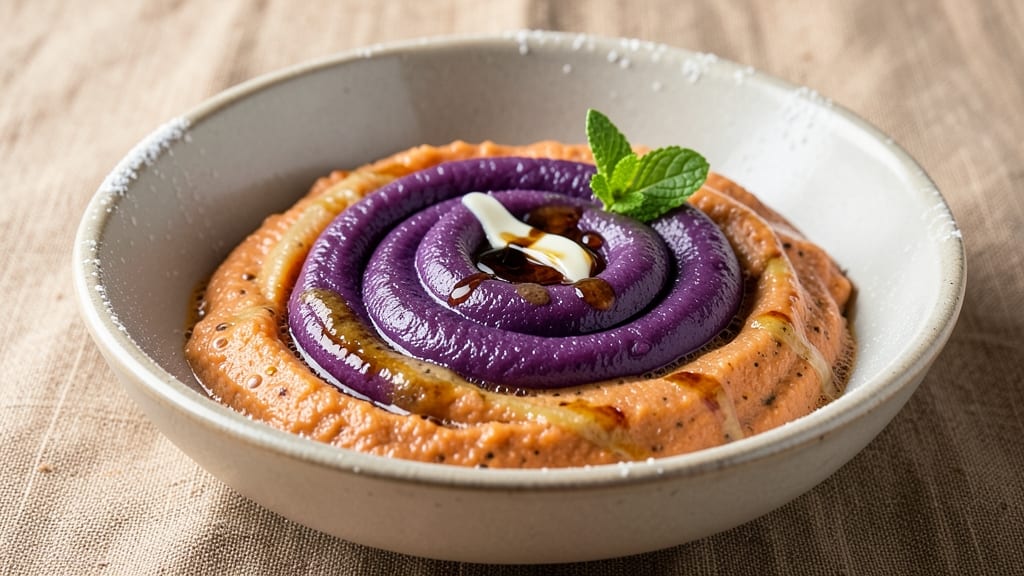
This sweet potato ube halaya recipe transforms simple ingredients into a luscious purple dessert that tastes like Filipino comfort food. The vibrant color comes from ube (purple yam), while sweet potatoes add natural sweetness and a velvety texture.
I've perfected the slow simmering technique that creates that signature caramelized depth without burning the sugar.
What makes this recipe special is the balance—rich enough to stand alone, yet light enough to pair with rice or cheese. The process is straightforward: cook the sweet potatoes and ube until tender, blend into a smooth purée, then simmer with sugar until thick and glossy.
No special equipment needed, just patience for the slow reduction that develops those complex caramel notes.
By the time you're done, you'll have a dessert that's creamy yet firm enough to slice, with those beautiful purple swirls throughout. The flavor is a perfect marriage of sweet potato's earthy warmth and ube's floral richness, finished with a hint of vanilla.
It's the kind of treat that disappears quickly but leaves everyone asking for seconds.
Serve it chilled with a dusting of powdered sugar, or spread it on toast for breakfast. The possibilities are endless—whether you're making it for a family gathering or just treating yourself to something special. Here's how to create this vibrant Filipino classic at home.
Ingredients for sweet potato ube halaya
Nine simple ingredients transform into a vibrant purple dessert with caramelized sweetness and velvety texture.
| Ingredient | Amount | Notes |
|---|---|---|
| Sweet Potatoes 🍠 | 2 lbs | Medium-sized, peeled and cubed |
| Ube (Purple Yam) 🍠 | 1 lb | Fresh, peeled and cubed |
| Granulated Sugar 🍚 | 2 cups | White or brown preferred |
| Water 💧 | 2 cups | Filtered or spring water |
| Pure Vanilla Extract 🌿 | 1 tbsp | Bourbon preferred for depth |
| Unsalted Butter 🧈 | ½ cup | Cold, cubed for swirling |
| Powdered Sugar 🍚 | ¼ cup | For dusting and garnish |
| Salt 🧂 | ¼ tsp | Fine sea salt |
| Ground Cinnamon 🌿 | ½ tsp | Optional for warmth |
| Toasted Coconut Flakes 🥥 | ¼ cup | For garnish (optional) |
The ube is the heart of this recipe, so fresh is non-negotiable. Look for vibrant purple yams at Asian markets—they should feel firm and heavy for their size. If you can't find fresh ube, ube halaya paste from brands like Goya or Filipino stores works in a pinch, but fresh gives that authentic floral depth. Sweet potatoes should be uniform in size for even cooking—orange-fleshed varieties work best. The sugar is where the magic happens; turbinado or muscovado adds caramel notes, but white sugar works perfectly fine for a classic version.
No ube? Purple sweet potatoes or beets can mimic the color, though flavor will differ. Running short on butter? Coconut oil or vegan butter keeps it dairy-free while maintaining richness. The vanilla extract can be swapped for vanilla bean paste if you're feeling fancy—just reduce the amount by half. For a spiced variation, add a pinch of nutmeg or cardamom. The coconut flakes are optional but add a lovely crunch; toast them lightly in a dry pan for extra flavor. If you're making this ahead, the halaya actually improves overnight as flavors meld.
Store the halaya in an airtight container in the fridge for up to 5 days, though it's best enjoyed within 2-3 days for optimal texture. For longer storage, transfer to a sealed jar and freeze for up to 3 months. When ready to serve, let it sit at room temperature for 20 minutes before slicing—this prevents it from crumbling. The powdered sugar dusting is optional but adds a beautiful finish. Serve chilled with a scoop of vanilla ice cream or alongside steamed rice for a Filipino-style breakfast.
Why You'll Love This Recipe
- One-Pot Magic: I swear by this—just peel, chop, and simmer. The sweet potatoes and ube soften together in the same pot, and honestly? That’s half the battle won before you even taste it.
- Velvet Swirl Appeal: That deep purple hue from the ube isn’t just pretty—it’s ridiculously flavorful. The vanilla ties it all together, giving you this luscious, caramelized sweetness that tastes like dessert but isn’t. (Yes, even on a Tuesday night.)
- Budget Bright Spot: Ube and sweet potatoes stretch far, and you’re basically turning them into a showstopper dessert. I’ve made this for holidays, potlucks, and just because—it’s my go-to when I want to impress without breaking the bank.
Step-by-step instructions for sweet potato ube halaya
This method transforms simple ingredients into a luxurious dessert with perfect texture and vibrant color.
Prepare the Sweet Potatoes and Ube
Peel and cut the 2 lbs sweet potatoes into 1-inch cubes, ensuring even-sized pieces for consistent cooking. Place them in a large pot with the 2 cups water. Bring to a boil over medium-high heat, then reduce to a simmer for 10-12 minutes until fork-tender but not mushy. Drain well, reserving ½ cup of the cooking liquid for later.
While the sweet potatoes cook, peel and cube the 1 lb ube (purple yam). Add it to the same pot with fresh 2 cups water and simmer for 8-10 minutes until soft. Drain thoroughly, squeezing out excess moisture with your hands. The ube should be completely tender—press a piece between your fingers to confirm it breaks easily. This step ensures the vibrant purple color and sweet flavor infuse perfectly.
Cook the Halaya Base
In a heavy-bottomed saucepan, combine the cooked sweet potatoes, ube, 2 cups granulated sugar, and 0.25 tsp salt. Stir well to distribute the sugar evenly. Cook over medium-low heat, stirring frequently with a wooden spoon, for 20-25 minutes. The mixture will thicken gradually, forming a smooth, glossy paste.
Here's the thing—you want the halaya to reach 165°F internally while maintaining a thick, spreadable consistency. If it starts to stick, add 1-2 tablespoons of the reserved cooking liquid to loosen it. The sugar will caramelize slightly, deepening the flavor and creating those beautiful swirls. Watch closely in the last 5 minutes to prevent burning.
Finish with Butter and Vanilla
Remove the pan from heat and let the halaya cool slightly for 2 minutes. Stir in the 0.5 cup unsalted butter, cubed, and the 1 tbsp pure vanilla extract. The butter will melt into the warm mixture, creating a silky texture. If using, add the 0.5 tsp ground cinnamon now for warmth. For extra richness, you can also whisk in 1-2 tablespoons of the reserved cooking liquid to adjust consistency.
This is where the magic happens—the butter adds a velvety finish while the vanilla enhances the natural sweetness. Taste and adjust sweetness if needed, though the recipe should be perfectly balanced. The halaya should be thick enough to hold its shape when spooned but still spreadable. If it's too thick, thin with more reserved liquid; if too thin, simmer uncovered for 1-2 minutes to reduce.
Swirl and Garnish
Transfer the halaya to a serving dish and let it cool to room temperature (about 30 minutes). While it cools, lightly dust a plate with 0.25 cup powdered sugar to prevent sticking. Using a spoon, create swirls in the halaya by dragging it through the mixture in circular motions. This technique creates the signature marbled effect that makes this dessert visually stunning.
Garnish with 0.25 cup toasted coconut flakes for texture and contrast. Serve at room temperature or chilled, paired with a dollop of whipped cream or a scoop of vanilla ice cream. The halaya keeps well in the refrigerator for up to 5 days, though it's best enjoyed within 24 hours for optimal texture.
Pro Tips For Making Sweet Potato Ube Halaya
- Peel and Cube Small: Cut sweet potatoes into 1-inch chunks—no bigger, no smaller. I learned this the hard way: larger pieces turn mushy while smaller ones caramelize unevenly. Uniform size means even cooking, so take the extra 2 minutes to measure them against each other.
- Roast Ube First: Toss peeled ube chunks with a tiny bit of oil and roast at 400°F (200°C) for 20 minutes before simmering. This deepens the flavor and softens it faster—no more waiting 45 minutes for it to break down. (Yes, even if you’re impatient like me.)
- Simmer, Don’t Boil: Keep the sugar-water mixture at a gentle bubble—just enough to see tiny ripples at the edges. Boiling burns sugar into a bitter mess, and you’ll end up with a sticky, grainy halaya instead of silky perfection. Lower the heat if it’s too lively.
- Strain Twice: After simmering, strain the mixture through a fine-mesh sieve twice—once to catch ube strings, then again to remove sweet potato starch. I skipped this once and got a gummy texture that ruined the whole batch. The extra 30 seconds saves you from regret.
Common mistakes when making this dish
Skipping the Simmer
One of the biggest mistakes is rushing the simmering process. The halaya needs that 20-25 minute cook time at medium-low heat to develop its signature caramelized depth and thick texture.
I've seen people try to speed this up by cranking the heat, but that leads to burnt sugar and a grainy consistency. Patience is key—the slow reduction is what creates those beautiful swirls and rich flavor. 🌡️
Using Old Ube
Fresh ube is non-negotiable for authentic flavor and vibrant color. If you use old or dried-out ube, your halaya will taste bland and lack that floral, slightly earthy depth. I always check for firm, heavy yams at Asian markets—they should be vibrant purple with no soft spots.
If you can't find fresh ube, ube halaya paste from brands like Goya works, but the texture won't be as smooth.
Overmixing After Cooking
Once the halaya reaches 165°F and thickens, resist the urge to stir vigorously. Overmixing after cooking can introduce air bubbles and make the texture uneven. I let it cool slightly before gently folding in the butter and vanilla.
This keeps the swirls intact and maintains that silky, spreadable consistency. A light hand here makes all the difference! 🥄
Ignoring Reserved Liquid
That ½ cup reserved cooking liquid isn't just for show—it's your secret weapon for adjusting consistency. If your halaya starts to stick or gets too thick, a splash of this liquid loosens it without diluting the flavor.
I've seen people skip this step and end up with a dry, crumbly mess. Keep it nearby and use it sparingly to maintain that perfect spreadable texture.
Not Cooling Properly
Rushing to swirl and serve the halaya while it's still hot is a common mistake. Letting it cool to room temperature (about 30 minutes) allows the flavors to meld and the texture to set properly.
I've had halaya crumble apart when sliced too soon. The powdered sugar dusting also works best on a cooled surface—it adheres better and creates that professional-looking finish. 💫
Burning the Sugar
Watching the halaya too closely in the final minutes can lead to burning. The sugar caramelizes quickly, and once it starts to darken, it's hard to fix. I recommend giving it 5 minutes of uninterrupted cooking time before checking.
If it starts to look too dark, immediately remove it from heat and stir in a little reserved liquid to cool it down. The goal is a glossy, golden-brown color—not charred sugar.
Nutrition facts
Frequently asked questions
Can I make this halaya without fresh ube?
Yes, but the texture and flavor will differ. For color, use 1 cup ube halaya paste (like Goya brand) or substitute with 1 cup mashed purple sweet potatoes. For flavor, add ½ tsp vanilla bean paste or extra vanilla extract. The result won't be identical, but it'll still be delicious!
How do I know when the halaya is done?
It's ready when it reaches 165°F internally and thickens to a spreadable consistency that holds its shape when spooned. The mixture should coat the back of a spoon smoothly without being runny. Look for those beautiful caramelized swirls forming at the edges—this is your visual cue!
Can I make this halaya ahead of time?
This dessert actually improves overnight as flavors meld. Store in an airtight container in the fridge for up to 5 days. For longer storage, freeze for 3 months. Let it sit at room temperature for 20 minutes before serving to restore its perfect texture.
What's the best way to serve this halaya?
Serve chilled or at room temperature with steamed rice for a Filipino-style breakfast, or alongside vanilla ice cream for a decadent treat. You can also spread it on toasted brioche or use it as a filling for pastries. The options are endless!
Why did my halaya turn out grainy?
This usually happens from overcooking or insufficient blending.