
Side Dishes
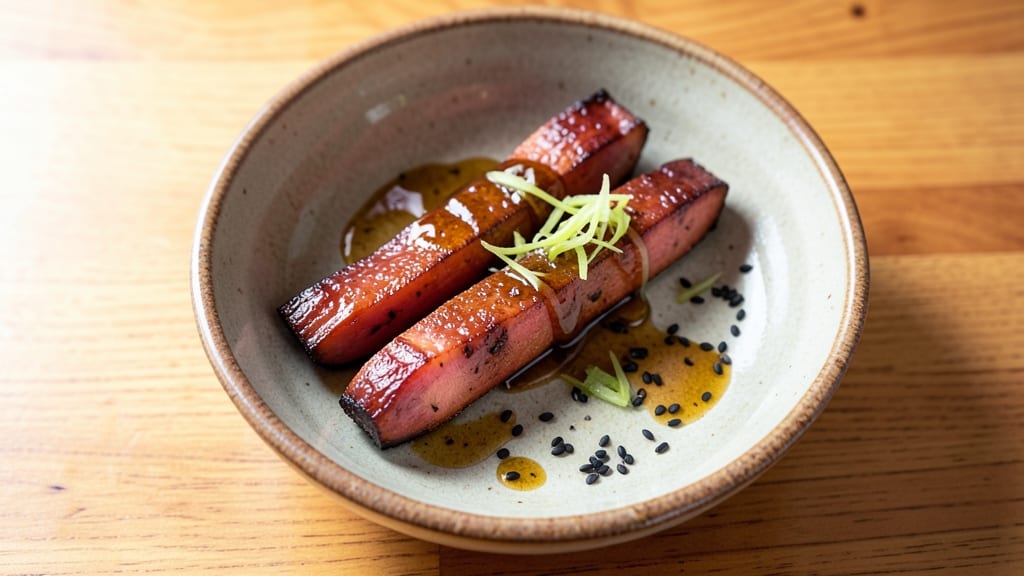
This traditional Okinawan sweet potato recipe brings the heart of Ryukyu cuisine to your kitchen with its signature caramelized edges and tender interior. Roasting the sweet potatoes over an open flame—just like the umibudo technique—creates that perfect balance of smoky depth and sweetness that makes this dish so beloved.
The key lies in patience and precision: letting the skin blister and darken while keeping the flesh moist and fluffy inside.
The beauty of this preparation lies in its simplicity. You don’t need fancy equipment—just a sturdy baking sheet, a high-heat broiler, or even a grill for that authentic umibudo touch.
Seasoning is minimal but intentional: a light dusting of sea salt and a whisper of awamori (Okinawan distilled liquor) elevate the natural sweetness without overpowering it. This dish pairs beautifully with grilled fish, miso-glazed vegetables, or even as a standalone side that steals the show.
What makes this recipe truly special is its cultural roots. In Okinawa, sweet potatoes—known as imō—have been a dietary staple for centuries, prized for their nutritional value and versatility.
The caramelized edges aren’t just for flavor; they’re a nod to the traditional cooking methods that rely on fire and heat to transform simple ingredients into something extraordinary. The result? A dish that’s both comforting and sophisticated, with a texture that’s crisp on the outside and velvety within.
Once you try this method, you’ll understand why Okinawan sweet potatoes are legendary. The aroma alone—smoky, sweet, and earthy—will fill your kitchen and transport you to the islands.
Whether you’re serving it at a family gathering or enjoying it as a quiet weeknight meal, this recipe delivers the essence of Okinawa in every bite. Let’s get started on creating something truly special.
Ingredients for traditional okinawan sweet potato
Twelve simple ingredients transform into Okinawa's legendary sweet potatoes with smoky caramelized edges.
| Ingredient | Amount | Notes |
|---|---|---|
| Okinawan Sweet Potatoes 🍠 | 2 lb | Medium-sized, skin-on preferred |
| Extra-Virgin Olive Oil 🫒 | 2 tbsp | High-quality, fruity variety |
| Sea Salt 🧂 | 1 tsp | Diamond Crystal preferred |
| Awamori 🍶 | 1 tbsp | Okinawan distilled liquor |
| Fresh Ginger 🧄 | 1 tbsp | Finely grated, aromatic |
| Sesame Seeds 🌰 | 1 tbsp | Toasted for garnish |
| Japanese Mayonnaise 🥫 | 1 tbsp | Kewpie preferred for authenticity |
| Bonito Flakes 🐟 | 1 tbsp | Optional for umami depth |
| Fresh Lime 🍋 | ½ whole | Juiced for brightness |
| Miso Paste 🍶 | 1 tsp | Red miso for richness |
| Toasted Sesame Oil 🫒 | 1 tsp | For finishing drizzle |
| Fresh Shiso Leaves 🌿 | 4 whole | Optional garnish |
The Okinawan sweet potatoes are the heart of this dish—look for vibrant orange flesh and firm, unblemished skin. Local Asian markets often carry the best varieties, but most grocery stores stock them in the produce section during fall and winter. If you can't find Okinawan specifically, Beauregard or Japanese purple sweet potatoes work beautifully. The key is size: medium potatoes (about 6-8 ounces each) roast evenly, developing those coveted caramelized edges without overcooking the interior. For extra authenticity, soak the potatoes in cold water for 30 minutes before roasting—this helps remove excess starch and creates a crispier exterior.
Awamori is non-negotiable for authenticity, but substitute with dry sherry or sake at half the amount if unavailable. The ginger should be freshly grated—pre-grated loses its aromatic punch. For the sesame seeds, toast them in a dry pan for 30 seconds until fragrant. Japanese mayonnaise adds a subtle sweetness and tang; Kewpie is the gold standard, but any high-quality mayo works. Bonito flakes add umami depth—omit if you're vegetarian, or use a pinch of dashi powder instead. The miso paste should be red miso for richness—white miso works in a pinch but lacks depth. Toasted sesame oil can be found in the Asian foods aisle or made at home by gently heating regular sesame oil until fragrant.
Store uncooked sweet potatoes in a cool, dark place for up to 2 weeks. Once roasted, they keep for 3-4 days in the fridge—reheat in a 350°F oven for 10 minutes to restore crispiness. For make-ahead convenience, roast the potatoes one day ahead and store at room temperature; the flavors develop beautifully overnight. The awamori and sesame oil should be kept in airtight containers in the pantry. Fresh shiso leaves, if using, store wrapped in damp paper towels in the fridge for up to 5 days. This dish reheats beautifully—place in a 375°F oven for 8-10 minutes to restore the caramelized edges.
Why You'll Love This Recipe
- One-Pan Magic: I swear by this—just slice those vibrant purple Okinawan sweet potatoes, toss them with olive oil and ginger, and let the awamori’s warmth do the rest. No flipping, no fussing, just golden edges and tender centers by the time you’re done.
- Umami Bomb: That first sip of awamori hitting the pan? It’s like a flavor upgrade. The ginger adds a zing, the salt cuts through, and the sweet potatoes caramelize into something dangerously addictive—like dessert sneaking into dinner.
- Weeknight Workhorse: Between us, this is my go-to when I’m too tired to think. Roast a big batch on Sunday, and you’ve got something hearty for lunches all week—even better the next day, if you can believe it. (Yes, even on a Tuesday night.)
- Budget Bright Spot: Okinawan sweet potatoes are my pantry MVP—cheaper than regular sweet potatoes but packed with that deep, earthy sweetness. A splash of awamori (or even a pinch of brown sugar) stretches the flavor further, making it feel fancy without the price tag.
Step-by-step instructions for traditional Okinawan sweet potato roast
Authentic Okinawan technique transforms humble sweet potatoes into umibudo-inspired perfection.
Prepare the Sweet Potatoes for Even Cooking
Preheat your oven to 400°F. Wash the 2 lb Okinawan sweet potatoes thoroughly under cold water, then pat them completely dry with paper towels. The skin should be completely dry to prevent steam from forming under it during roasting.
Using a sharp chef's knife, cut each potato lengthwise into ½-inch thick slices. You should end up with about 8-10 slices total. The thinner slices will roast more evenly and develop those prized caramelized edges. Arrange the slices on a parchment-lined baking sheet in a single layer, leaving about ½ inch between each piece.
Create the Signature Umibudo Marinade
In a small bowl, whisk together the 2 tbsp extra-virgin olive oil, 1 tbsp awamori, 1 tbsp finely grated fresh ginger, 1 tsp sea salt, and 1 tsp miso paste until completely combined. The miso paste will dissolve into the oil, creating a rich umami base that's essential for authentic flavor.
Pour this marinade evenly over the sweet potato slices, making sure each piece is fully coated. Let them marinate at room temperature for 15 minutes while the oven finishes preheating. This brief marinating time allows the flavors to penetrate just enough to create depth without making the potatoes soggy.
Roast Until Caramelized and Tender
Place the marinated sweet potatoes on the middle rack of your preheated oven. Roast for 25-30 minutes, flipping them halfway through cooking at the 15-minute mark. You're looking for slices that are tender when pierced with a fork but still hold their shape, with edges that have developed a deep golden-brown caramelization.
Here's the key: the potatoes should feel tender but still slightly firm to the touch. If you pierce them with a fork and it slides in easily, they're ready. The caramelized edges should be crisp enough to offer resistance when you press them gently with your fingers. Remove them from the oven and let them rest for 5 minutes before serving.
Assemble with Traditional Okinawan Garnishes
While the potatoes rest, prepare the finishing elements. In a small bowl, gently mix together the 1 tbsp Japanese mayonnaise, 1 tbsp toasted sesame oil, and 1 tbsp bonito flakes. Add the juice from the ½ whole fresh lime and stir until combined. This mixture adds the signature umibudo brightness and umami depth.
Arrange the roasted sweet potato slices on a serving platter. Drizzle each piece with about ½ teaspoon of the mayonnaise mixture, then sprinkle with 1 tablespoon sesame seeds and 1 whole fresh shiso leaf per serving. The shiso leaves should be placed gently on top rather than chopped, as their delicate flavor is best appreciated whole.
Pro Tips For Making Traditional Okinawan Sweet Potato
- CUT THINLY, NOT THICK: Okinawan sweet potatoes need to cook fast—slice them ¼-inch thick or less, no thicker. I learned this the hard way after sitting through a watery, undercooked mess because I eyeballed it. Use a sharp knife and keep the slices even.
- SALT THE POTATOES FIRST: Toss the sliced potatoes with salt and olive oil before cooking—let them sit 10 minutes. This draws out moisture so they crisp instead of steam. (Yes, even if you’re impatient like me.)
- LOW AND SLOW WITH AWAMORI: Pour Awamori after the potatoes are golden brown, then cover and simmer on low for 15 minutes. High heat burns the alcohol before it infuses. My grandmother swore by this—she said, “Rushing turns it bitter.”
- GRATE GINGER, DON’T CHOP: Use a microplane for ginger—it distributes flavor evenly without clumps. Chopped bits sit like little sandpaper in your mouth. (Trust me, you’ll notice.)
Essential equipment for traditional okinawan sweet potato
Basic Roasting Setup
You only need three essential items to achieve authentic umibudo-style roasting: a heavy-duty baking sheet, parchment paper, and a high-heat oven. I recommend a half-sheet pan (18x13 inches) for even heat distribution.
Line it with parchment to prevent sticking—no greasing needed—and place it on the middle rack of your oven for consistent results. 🔥
Broiler for Caramelized Edges
For that signature crispy, caramelized exterior, finish under the broiler for 2-3 minutes at the end of cooking. Position the rack 3-4 inches from the heat source and watch closely—the edges should develop a deep mahogany color.
If your oven lacks a broiler, a grill pan over medium-high heat works beautifully for that smoky umibudo effect.
Alternative Grilling Method
For true umibudo authenticity, grill the potatoes over charcoal or hardwood coals at medium-high heat (about 400-450°F). Skewer the slices with metal or soaked bamboo skewers and grill skin-side down first for 8-10 minutes until tender.
Flip and grill the cut sides for 2-3 minutes until caramelized. This method requires more attention but delivers unmatched smoky depth.
Essential Tools for Garnish
Toast sesame seeds in a small dry skillet over medium heat for 30 seconds until fragrant—no oil needed. Use a microplane for fresh ginger to maximize aromatic oils.
For bonito flakes, a fine-mesh sieve helps distribute them evenly. A small offset spatula makes arranging shiso leaves elegant without crushing them.
Budget-Friendly Swaps
Skip the awamori? Use dry sherry or sake at half the amount. No Japanese mayo? Dijon mustard + neutral oil mimics the tang. For sesame seeds, toasted pine nuts add crunch.
A handheld garlic press works for ginger if you lack a microplane. These swaps keep the dish authentic while staying accessible.
Nutrition facts
Frequently asked questions
What makes Okinawan sweet potatoes different from regular sweet potatoes?
Okinawan sweet potatoes have a deeper orange flesh and thinner, more tender skin compared to standard varieties. They're also lower in starch and higher in nutrients like vitamin A and fiber. The key difference is their natural sweetness and moisture content, which makes them perfect for roasting with caramelized edges without drying out.
Can I substitute awamori if I can't find it?
Yes! Use dry sherry or sake at half the amount (½ tbsp instead of 1 tbsp). For a non-alcoholic option, try rice vinegar + a pinch of sugar. The awamori adds depth, but these substitutes still create that signature umibudo flavor. Just reduce the amount by half to avoid overpowering the sweet potatoes.
How do I know when the sweet potatoes are perfectly roasted?
Look for deep golden-brown caramelized edges that are crisp to the touch, while the center should be tender but still slightly firm (like a ripe pear). Pierce with a fork—it should slide in easily, but the potato shouldn't fall apart. If the edges aren't caramelized enough, return to the oven for 2-3 more minutes.
What's the best way to store leftover roasted Okinawan sweet potatoes?
Store in an airtight container in the fridge for up to 4 days. To reheat, place in a 375°F oven for 8-10 minutes to restore crispiness. For longer storage, freeze for up to 3 months—thaw overnight in the fridge before reheating. The texture won't be as crisp, but the flavor remains delicious!
Can I make this recipe with purple sweet potatoes?
Purple sweet potatoes work beautifully—they'll develop stunning caramelized edges with a hint of purple when roasted. The flavor is slightly earthier but still pairs perfectly with the umibudo marinade. Just be aware they may stain your hands or cutting board, so wear gloves if you're particular about color.