
Soups & Stews
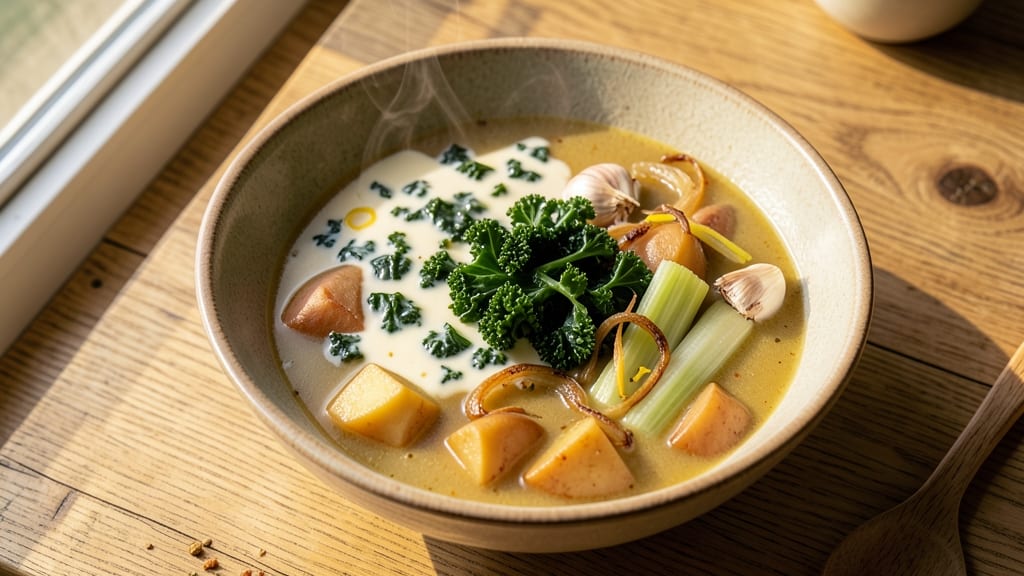
This vegan potato kale soup delivers earthy comfort with a creamy coconut base that replaces dairy without sacrificing richness. The secret lies in balancing hearty potatoes, robust kale, and aromatic spices—creating a soup that feels indulgent yet plant-based.
I developed this recipe during a particularly chilly winter when I needed warmth in a bowl, and it became an instant staple.
The beauty of this soup is its simple yet sophisticated flavor profile. Sautéing onions, garlic, and celery forms a flavorful base before potatoes and kale transform into a velvety, comforting broth.
Coconut milk adds natural creaminess while keeping the dish light, and a touch of miso paste deepens the umami without overpowering the vegetables.
What you’ll end up with is a creamy, satisfying soup that’s packed with nutrients and flavor—perfect for cozy nights or meal prep. The texture is luxurious yet balanced, with tender potatoes and slightly crisp kale leaves adding contrast.
Each spoonful delivers warmth and comfort, proving plant-based meals can be just as indulgent as traditional versions.
The best part? This soup scales beautifully for crowds or leftovers, making it ideal for busy weeks. Whether you’re serving it as a main dish or pairing it with crusty bread, this recipe delivers restaurant-quality results at home. Let’s get cooking!
Ingredients for vegan potato kale soup
Earthy potatoes, vibrant kale, and creamy coconut create this vegan soup's soulful comfort.
| Ingredient | Amount | Notes |
|---|---|---|
| Yellow Onions 🧅 | 1 whole | Diced, medium size preferred |
| Celery Stalk 🥬 | 3 whole | Diced, including leaves |
| Garlic Cloves 🧄 | 4 cloves | Minced, fresh preferred |
| Russet Potatoes 🥔 | 2 lb | Peeled, cubed evenly |
| Curly Kale Leaves 🥬 | 12 oz | Stemmed, chopped coarsely |
| Full-Fat Coconut Milk 🥥 | 13 ½ oz | Canned, unsweetened |
| White Miso Paste 🍶 | 2 tbsp | Aged 1-2 years preferred |
| Vegetable Broth 💧 | 4 cups | Low-sodium preferred |
| Extra-Virgin Olive Oil 🫒 | ¼ cup | For sautéing |
| Ground Cumin 🌿 | ½ tsp | Toasted for depth |
| Ground Turmeric 🌿 | ¼ tsp | Freshly ground preferred |
| Sea Salt 🧂 | 1 ½ tsp | Diamond Crystal preferred |
| Black Pepper 🌶️ | ½ tsp | Freshly cracked |
| Lemon Juice 🍋 | 1 tbsp | Freshly squeezed |
The kale and potatoes are your flavor anchors—look for deep green kale with no wilt and firm russet potatoes (they hold up better than waxy types). I grab organic kale from Trader Joe's when it's on sale, but any grocery store's fresh bin works. For the potatoes, 2 pounds yields perfect texture—don't skimp. The miso paste? White miso adds subtle sweetness while red would overpower; Marukome is my go-to brand. Coconut milk should be full-fat for that luxurious creaminess—no light versions here. The vegetable broth is non-negotiable for that clean base; Imagine or Pacific Foods are my pantry staples.
No fresh kale? Frozen chopped kale works perfectly—no need to thaw first. Running low on miso? Soy sauce at half the amount adds umami, though it won't be identical. The cumin and turmeric are flavor bombs—toast the cumin seeds whole in a dry pan for 30 seconds before grinding for deeper aroma. No extra-virgin olive oil? Avocado oil works too, just use the same amount. The lemon juice brightens everything—don't skip this. For a smoky twist, add ½ tsp smoked paprika with the spices. And if you're prepping ahead, make the base first—it keeps beautifully in the fridge for 3 days before adding the coconut milk.
This soup tastes even better the next day as flavors meld. Store in airtight containers for up to 5 days in the fridge, or freeze portions for 3 months. I double the batch and freeze half—perfect for lazy weeknights. The coconut milk separates when chilled, so give it a quick stir before reheating. For serving, I always add extra lemon wedges and toasted pumpkin seeds—they bring out the soup's earthy notes. And trust me, the first bowl is always the best—save the last spoonful for yourself.
Why You'll Love This Recipe
- No-Fuss Pantry Staples: I swear by this recipe because it uses what I always have: onions, celery, garlic, and potatoes. Throw in some kale, and boom—you’ve got a meal without needing a shopping list.
- Garlic-Kissed Comfort: That first bite of creamy potato meets caramelized garlic? It’s the kind of flavor that makes you pause mid-spoonful. The kale adds a satisfying chew, but the real magic is in the slow-simmered onion base—deep, savory, and impossible to resist.
- Lunchbox Hero: Between us, this soup is my secret weapon for meal prep. I make a big batch on Sundays, and it’s still delicious reheated for lunches all week. The potatoes hold their shape, and the kale softens just enough to be edible cold—no sad, mushy leftovers here.
- Budget Meal That Feeds: Russets are cheap, kale lasts forever in the fridge, and celery stays fresh for ages. For under $10, I feed four people a hearty, filling meal that actually tastes like it cost more. Plus, the veggies stretch so well—no one will guess it’s budget-friendly.
Step-by-step instructions for vegan potato kale soup
Here's how to craft a velvety coconut-infused soup that balances earthy kale with creamy texture.
Sauté the Aromatic Base
Heat the 0.25 cup extra-virgin olive oil in a large pot over medium heat until shimmering. Add the 1 whole diced yellow onion and 3 whole diced celery stalks, cooking for 5-6 minutes until softened and translucent. You'll notice the onions release their moisture and the celery leaves begin to crisp slightly at the edges.
Add the 4 cloves minced garlic, 0.5 teaspoon ground cumin, and 0.25 teaspoon ground turmeric, stirring constantly for 30 seconds until fragrant. The turmeric will infuse the oil with its golden hue, while the cumin adds a warm, earthy depth. This aromatic base forms the flavor foundation for your entire soup.
Build the Potato Foundation
Increase heat to medium-high and add the 2 lb cubed russet potatoes, stirring to coat them evenly with the aromatic oil. Pour in the 4 cups vegetable broth and bring to a gentle boil. Once boiling, reduce heat to medium-low and let the potatoes simmer for 12-15 minutes until fork-tender but not falling apart.
Here's the thing—you want the potatoes to break down just enough to thicken the soup naturally, but not so much that they turn to mush. Test doneness by piercing a potato cube with a fork; it should slide in easily with slight resistance. The potatoes should be soft enough to mash between your fingers but still hold their shape.
Incorporate the Creamy Elements
Reduce heat to low and stir in the 2 tablespoons white miso paste and 13.5 ounces full-fat coconut milk. The miso will dissolve slowly, adding umami depth while the coconut milk creates a luxurious, velvety texture. Let the soup simmer gently for 5 minutes, stirring occasionally to prevent the coconut milk from separating.
Add the remaining 1.5 teaspoons sea salt and 0.5 teaspoon black pepper, adjusting to taste. The salt should enhance all the flavors without being overpowering, while the pepper adds a subtle warmth. You'll notice the soup take on a richer, more complex character as the flavors meld together during this simmering time.
Add and Wilt the Kale
Stir in the 12 ounces chopped curly kale leaves and simmer for another 3-4 minutes until just wilted but still vibrant green. The kale should soften enough to be easily incorporated but retain its color and texture. Overcooking will turn it mushy and dull the soup's visual appeal.
Remove from heat and stir in the 1 tablespoon freshly squeezed lemon juice. This bright, acidic note cuts through the richness of the coconut milk and enhances all the other flavors. The lemon juice also helps balance the earthy notes from the kale and potatoes, creating a harmonious flavor profile that's both comforting and refreshing.
Adjust and Serve
Taste and adjust seasoning if needed, adding more salt, pepper, or lemon juice as necessary. The soup should be well-seasoned but not salty. For the perfect texture, you can use an immersion blender to puree about half the soup, leaving the other half slightly chunky for contrast. This creates a beautiful visual presentation while maintaining the satisfying texture of both smooth and textured elements.
Serve immediately with crusty bread or warm rolls to soak up every last drop of that creamy, comforting broth. Each spoonful should deliver a perfect balance of creamy coconut, earthy kale, and hearty potatoes—proof that vegan comfort food can be just as satisfying as its traditional counterparts.
Pro Tips For Making Vegan Potato Kale Soup
- Sweat, Don’t Burn: When cooking onions and celery, keep the heat medium-low and stir often—you’re aiming for translucent, not caramelized. I learned this after one batch tasted bitter; patience here pays off in flavor.
- Peel Potatoes Fast: Run Russet potatoes under cold water first, then use a paring knife to slice off the skin in one smooth motion. Skipping the water makes them slippery and turns peeling into a frustrating battle.
- Add Kale Late: Toss curly kale in only during the last 5 minutes of simmering—it wilts faster and keeps its texture instead of turning to mush. I used to add it early and ended up with soup that tasted like kale smoothie.
- Salt the Potatoes Early: Toss diced Russet potatoes with ½ teaspoon salt before adding them to the pot. This guarantees they absorb flavor from the broth, not just the surface. (Yes, even if you’re impatient like me.)
Storing and reheating your vegan potato kale soup
Fridge Storage Tips
Let your soup cool to room temperature (about 30-45 minutes) before transferring to airtight glass containers. I use Pyrex 32-ounce containers because they stack neatly in my fridge. Store for up to 5 days—the flavors actually deepen as the miso and coconut milk meld together.
Freezer Prep Secrets
For freezing, divide the soup into quart-sized freezer bags or silicone molds—they thaw faster than bulky containers. Press out excess air to prevent freezer burn, and label with the date. This soup keeps its quality for 3 months without losing texture. I like to freeze it in 2-cup portions for easy single servings. When ready to eat, thaw overnight in the fridge for best results. ❄️
Stovetop Reheating
My preferred method is stovetop reheating—it preserves the creamy texture beautifully. Pour soup into a pot over medium-low heat and add 2-3 tablespoons water or broth to prevent sticking. Heat for 8-10 minutes, stirring occasionally, until steaming throughout.
Taste and adjust seasoning—you might need a pinch more salt or a splash of lemon juice to brighten flavors. The coconut milk will re-emulsify naturally during reheating. 🔥
Microwave Shortcuts
For quick meals, use the microwave with caution. Transfer soup to a microwave-safe bowl and heat on 50% power in 2-minute intervals, stirring between each. Total heating time should be 4-6 minutes. Add 1 tablespoon water or broth if the soup looks too thick.
The texture won't be as silky as stovetop, but it's still delicious. Stir vigorously before serving to redistribute any separated coconut milk. ⚡
Serving Suggestions
This soup tastes even better the second day, so I often make a big batch. Serve with toasted sourdough bread or crusty baguette slices for dipping. Garnish with toasted pumpkin seeds and extra lemon wedges—they add crunch and brightness.
For extra richness, drizzle with chili oil or smoked paprika before serving. The contrast of textures makes every spoonful more satisfying. 💛
Make-Ahead Pro Tips
Prep the base (everything except coconut milk and kale) up to 3 days ahead and store in the fridge. When ready to serve, simply stir in the coconut milk, heat gently, then add the kale. This shortcut saves time without sacrificing flavor.
For meal prep, I also make a double batch and freeze half—perfect for those nights when you don't feel like cooking. The frozen version reheats beautifully for quick lunches. 📅
Nutrition facts
Frequently asked questions
Can I substitute sweet potatoes for russet potatoes?
Yes, you can use sweet potatoes, but the flavor and texture will change. Sweet potatoes add natural sweetness and a deeper orange color, which pairs beautifully with the kale's earthiness. For best results, reduce the coconut milk to 10.5 ounces since sweet potatoes release more moisture when cooked. The soup will have a slightly sweeter profile, so adjust the lemon juice to 1.5 tablespoons to balance flavors.
What if I don't have coconut milk?
Don't worry—there are great alternatives! For a neutral creaminess, use cashew cream (blend 1 cup soaked cashews with 1 cup water) or silken tofu blended with ½ cup water. For a richer option, try ½ cup oat cream (blend ½ cup oats with 1 cup water and 1 tbsp olive oil). The texture will be slightly different, but the soup will still be delicious and satisfying.
How do I make this soup spicier?
Easy! Add heat with ½ teaspoon cayenne pepper or 1 teaspoon chili flakes when sautéing the aromatics. For smoky depth, stir in ½ teaspoon smoked paprika with the cumin and turmeric. If you love fresh heat, top each bowl with chopped jalapeños or a drizzle of hot sauce before serving. Start with small amounts—you can always add more!
Why did my coconut milk separate?
This happens when the soup sits too long or cools too quickly. To fix it, gently reheat the soup over low heat while stirring constantly until smooth. For prevention, stir in 1 teaspoon arrowroot powder or cornstarch mixed with 1 tbsp water when adding the coconut milk. This helps stabilize the emulsion. Also, avoid rapid temperature changes—cool the soup gradually before refrigerating.
Can I make this soup in an Instant Pot?
Sauté the onions, celery, garlic, and spices as directed, then add potatoes, broth, and miso. Seal the lid and cook on high pressure for 8 minutes, then quick-release. Stir in coconut milk and kale, then simmer for 3-4 minutes until kale is tender. The Instant Pot version cooks faster and locks in flavors—perfect for busy weeknights!