
Side Dishes
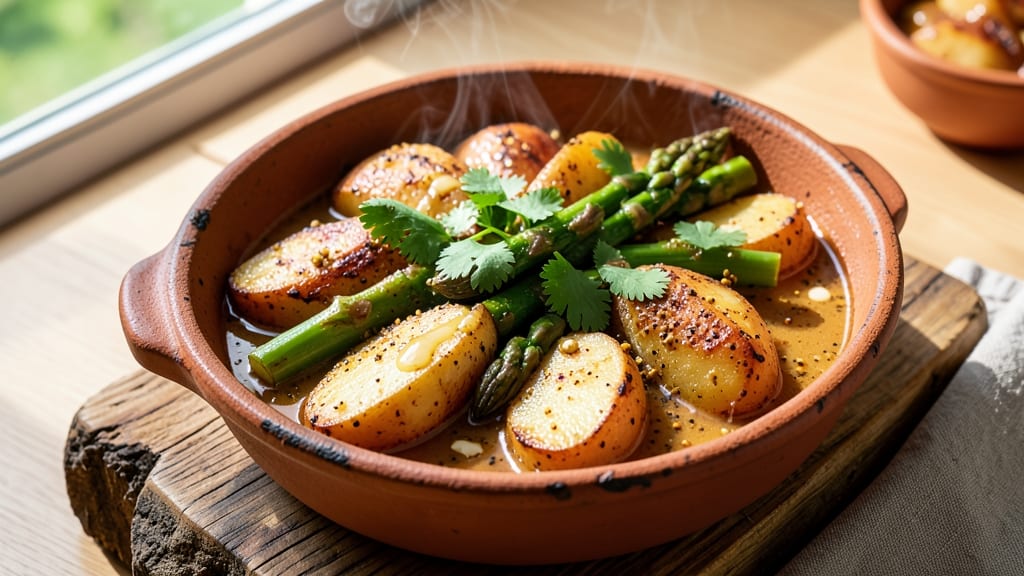
This turmeric-spiced asparagus and potato Indian recipe transforms humble vegetables into a vibrant, aromatic dish with crispy edges and tender centers. The secret lies in a warm spice tempering—cumin, mustard seeds, and curry leaves sizzle in ghee before embracing the vegetables, creating layers of flavor that build as they roast.
I developed this recipe after discovering how well asparagus holds up to Indian-style roasting, its natural sweetness complementing the earthy potatoes perfectly.
The dish draws inspiration from North Indian roasted vegetable preparations, where turmeric, coriander, and garam masala create a warm, earthy backbone. Unlike traditional curries, this version relies on dry roasting for maximum crispiness while keeping the interior tender.
The spices are toasted just until fragrant—never burned—to preserve their delicate flavors. This method delivers restaurant-quality results with minimal effort, making it ideal for weeknight dinners or festive spreads.
What makes this recipe stand out is the balance of textures: crispy asparagus tips contrast with the fluffy potatoes, while the spice crust adds depth in every bite. The dish pairs beautifully with mint chutney or a cooling cucumber raita to cut through the richness.
Perfect as a standalone vegetarian main or alongside grilled meats, this recipe proves Indian flavors don't require meat to shine.
Ready in 30 minutes with just 10 ingredients, this dish is foolproof yet impressive. The key is patience during roasting—don't rush the crisping process, or you'll lose that satisfying crunch. Once mastered, you'll reach for this recipe whenever you crave bold, aromatic vegetables with minimal fuss.
Ingredients for asparagus and potato indian
Ten ingredients transform humble vegetables into a vibrant, aromatic Indian roast with crispy edges and tender centers.
| Ingredient | Amount | Notes |
|---|---|---|
| Asparagus Spears 🌱 | 1 lb | Medium thickness, trimmed ends |
| Baby Potatoes 🥔 | 1 ½ lb | Halved lengthwise, skin-on |
| Ghee 🧈 | ½ cup | Clarified butter for rich flavor |
| Yellow Turmeric Powder 🌿 | 1 tsp | Freshly ground preferred |
| Ground Cumin Seeds 🌶️ | ½ tsp | Toasted for deeper aroma |
| Mustard Seeds 🌿 | ½ tsp | Whole, for tempering |
| Curry Leaves 🌿 | ¼ cup | Fresh, lightly crushed |
| Garam Masala 🌶️ | ½ tsp | Freshly ground blend |
| Ground Coriander 🌿 | ½ tsp | Freshly toasted preferred |
| Kosher Salt 🧂 | 1 tsp | Diamond Crystal preferred |
| Fresh Lemon Juice 🍋 | 1 tbsp | Bright, freshly squeezed |
The ghee is non-negotiable here—it creates that signature Indian richness while allowing the spices to bloom properly. Whole Foods or your local Indian grocery will have the best quality, but any brand works if it's 100% pure. Mustard seeds and curry leaves are essential for that authentic North Indian flavor profile; Patel Brothers or Madras Spices carry them in bulk. For the turmeric, opt for freshly ground powder—it's more vibrant and potent than pre-ground. The potatoes should be small and firm; Yukon Golds work beautifully, but any waxy variety will do. Asparagus is best when medium-thick—thin spears burn too quickly, while thick ones stay tough. Trim the ends carefully; they're woody and won't roast well.
No mustard seeds? Asafoetida (hing) at one-quarter teaspoon adds depth without the same texture. Curry leaves hard to find? Dried thyme at one-eighth teaspoon mimics some of their earthy notes. The ghee can be swapped for avocado oil if you're avoiding dairy, though the flavor will be subtler. For the potatoes, red-skinned varieties hold their shape better than russets. If you can't find baby potatoes, use regular potatoes cut into even-sized chunks—just parboil them for 3 minutes first to ensure tenderness. The turmeric can be replaced with saffron at one-eighth teaspoon for a luxurious twist, though it's far more expensive. Fresh lemon juice is ideal, but bottled works in a pinch—just add a pinch of salt to mimic freshness.
This dish tastes even better the next day once the flavors meld. Store leftovers in an airtight container for up to 4 days, though I recommend reheating portions to maintain crispiness. For best results, roast the vegetables fresh—pre-cut potatoes darken quickly and lose their texture. If prepping ahead, keep the spices and ghee in a separate jar until ready to cook. The asparagus can be trimmed and stored in the fridge for 2 days wrapped in a damp towel, but roast it the same day for peak texture. Garnish with fresh cilantro or chopped mint just before serving to brighten the dish.
Why You'll Love This Recipe
- One-Pan Magic: I swear by this recipe when I’m too tired to scrub a million dishes—just toss the potatoes and asparagus on one sheet, let the ghee work its golden spell, and boom. Done.
- Golden Earthy Richness: That first bite? The turmeric and cumin seep into the potatoes until they’re tender but still hold shape, while the asparagus gets a smoky char from the ghee. It’s the kind of flavor that lingers like a good memory.
- Weeknight to Potluck: Serve it warm with naan for dinner, pack it cold for lunch the next day, or bring it to a picnic—it’s that adaptable. Honestly, I’ve even reheated leftovers straight from the fridge, and it still tastes solid.
- Budget-Friendly Luxury: Baby potatoes and asparagus stretch further than you’d think, especially when you’re using ghee (a little goes a long way). Plus, the spices cost pennies but make it feel like a restaurant dish. My wallet approves.
Step-by-step instructions for turmeric-spiced roasted asparagus and potatoes
This method delivers perfectly crispy edges while keeping interiors tender and infused with aromatic spices.
Prep and Parboil the Vegetables
Preheat your oven to 425°F for the final roasting stage. In a large pot, bring 4 cups of water to a rolling boil and add ½ teaspoon of the kosher salt. Add the 1.5 lb baby potatoes (halved lengthwise) and cook for 5 minutes until they begin to soften slightly but remain firm to the touch.
Using a slotted spoon, transfer the potatoes to a colander to drain. In the same boiling water, add the 1 lb asparagus spears (trimmed ends) and cook for 2 minutes until they brighten in color but stay crisp. Drain thoroughly and pat both vegetables dry with clean kitchen towels—this step is crucial for achieving crispy edges later.
Create the Spice-Tempered Ghee
In a small heavy-bottomed skillet, heat 0.25 cup ghee over medium-low heat. Add the 0.5 teaspoon mustard seeds and let them sizzle for 30 seconds until they begin to pop. Immediately add the 0.25 cup curry leaves and stir for 1 minute until the leaves darken slightly and release their aroma.
Remove the skillet from heat and stir in the 1 teaspoon yellow turmeric powder, 0.5 teaspoon ground cumin seeds, 0.5 teaspoon ground coriander, and remaining 0.5 teaspoon kosher salt. Let the mixture cool for 5 minutes—this allows the spices to fully infuse with the ghee while preventing scorching when added to the vegetables.
Roast with Spiced Ghee for Crispy Edges
Arrange the drained potatoes and asparagus on two separate rimmed baking sheets lined with parchment paper. Drizzle half of the spice-tempered ghee evenly over the potatoes, tossing gently to coat. Repeat with the asparagus, ensuring each spear is lightly glazed. Roast for 20 minutes, flipping the vegetables halfway through, until the potatoes develop golden-brown spots and the asparagus edges begin to crisp.
For the final 5 minutes, increase the oven temperature to 450°F and broil the vegetables until they achieve deep golden-brown color and crisp texture. Watch closely to prevent burning—you're aiming for a perfect balance between caramelization and crispness.
Finish with Garam Masala and Lemon
Remove the vegetables from the oven and transfer them to a serving platter. Immediately sprinkle evenly with the 0.5 teaspoon garam masala and toss gently to distribute. Drizzle with the 1 tablespoon fresh lemon juice and toss again to brighten the flavors and enhance the crispy texture.
Serve immediately while the vegetables are at their peak of crispness. The potatoes should have tender interiors with crispy golden edges, while the asparagus should be bright green with slightly charred tips. The aromatic spice blend and lemon finish create a perfect balance of earthy warmth and tangy brightness.
Pro Tips For Making Asparagus And Potato Indian
- CHAR THE POTATOES FIRST: Baby potatoes take forever to soften if tossed in raw. Boil them whole for 8–10 minutes until a knife slides in—then halve or quarter them. This cuts cooking time by half and keeps their shape intact. (Yes, even if you’re impatient like me, resist the urge to skip this.)
- DON’T OVERCROWD THE PAN: Asparagus and potatoes need space to crisp, not steam. Spread them in a single layer when searing in ghee, and work in batches if needed. I learned this the hard way—my first batch turned soggy because I crammed everything in.
- TOAST THE CUMIN LOW: Ground cumin burns in seconds. Bloom it in ghee over low heat for 30 seconds until fragrant, then turn up the heat for the rest. This prevents bitter flavors and lets the spices sing. (Your future self will notice the difference.)
- SALT THE POTATOES IN THE WATER: Baby potatoes soak up salt like sponges. Add 1 tsp salt to the boiling water—they’ll absorb it while cooking, saving you from over-salting later. Skip this, and you’ll end up chasing flavor with extra spices.
Best sauces and condiments for asparagus and potato indian
Spiced Yogurt Sauce
This cooling mint-coriander yogurt sauce balances the dish's warmth perfectly. Mix ½ cup plain Greek yogurt with 1 tbsp fresh lemon juice, 1 tsp ground cumin, ½ tsp garam masala, and 2 tbsp finely chopped cilantro.
Add a pinch of Kosher salt and ¼ tsp red chili powder for subtle heat. Serve at room temperature to let flavors meld—it pairs beautifully with the roasted vegetables' crispy edges. 🌿
Tangy Tamarind Chutney
For a sweet-tangy contrast, whip up a quick tamarind chutney using ¼ cup tamarind paste, 2 tbsp jaggery or brown sugar, 1 tsp mustard seeds, and 2 green chilies (lightly toasted).
Simmer with ½ cup water until thickened, then blend with 1 tbsp coconut oil for richness. Drizzle over the roasted vegetables just before serving—its bright acidity cuts through the ghee's richness. 🍋
Coconut-Curry Leaf Oil
Infuse ½ cup coconut oil with 1 tbsp curry leaves and ½ tsp black peppercorns by gently heating on low for 5 minutes. Strain and drizzle 1-2 tbsp over the finished dish for an aromatic, nutty depth.
This oil adds a luxurious texture and enhances the Indian flavor profile without overpowering the vegetables. 🥥
Lemon-Herb Dressing
Brighten the dish with a simple lemon-herb dressing made from 3 tbsp olive oil, 2 tbsp fresh lemon juice, 1 tbsp honey, 1 tsp chopped mint, and ½ tsp black salt (kala namak).
Toss the roasted vegetables lightly with this dressing just before serving—it adds a refreshing finish that complements the spiced ghee. 🍋
Spiced Tomato Relish
For a vibrant topping, blend ½ cup tomatoes, ½ tsp cumin seeds, ¼ tsp asafoetida (hing), and 1 green chili into a chunky relish.
Simmer for 3 minutes, then cool and serve alongside the roasted vegetables. The smoky-sweet flavor bridges the gap between the earthy potatoes and asparagus. 🍅
Creamy Coconut Drizzle
Elevate the dish with a coconut drizzle** by blending ¼ cup coconut milk, 1 tsp honey, and ½ tsp cardamom powder. Warm gently and drizzle over the roasted vegetables just before serving.
The creamy texture contrasts beautifully with the crispy edges, while the cardamom adds a fragrant warmth. 🥥
Nutrition facts
Frequently asked questions
Can I substitute regular potatoes for baby potatoes in this recipe?
Yes, but with one key adjustment: cut regular potatoes into 1-inch chunks and parboil them for 3 minutes first to ensure even cooking. Baby potatoes have thinner skins and cook faster, so larger pieces need the extra time to reach tenderness while still developing crispy edges.
What makes this dish different from other Indian vegetable roasts?
The spice-tempered ghee technique is the game-changer—it creates a flavorful crust on the vegetables while keeping them moist inside. Unlike traditional Indian roasts that often use yogurt marinades, this method relies on dry roasting with aromatic spices like mustard seeds and curry leaves for maximum crispiness and depth.
How do I know when the asparagus is done roasting?
The asparagus is perfectly done when the tips are deep golden-brown and slightly charred, while the stalks remain tender. Roast for 20 minutes total, flipping halfway, then watch closely during the final 5-minute broil—it should take just 2-3 minutes to crisp. Overcooking turns them tough and bitter.
Can I make this recipe ahead of time?
Roast the vegetables fresh for best texture, but you can prep components ahead: trim asparagus and store in the fridge for 2 days (wrapped in a damp towel), or make the spiced ghee mixture and keep it refrigerated. Reheat portions in a 350°F oven for 10 minutes to restore crispiness. The flavors actually improve overnight!
What's the best way to serve this dish?
This roast shines as a vegetarian main course, but it also pairs beautifully with grilled meats like chicken or lamb. Serve with mint chutney or cucumber raita to balance the richness, and accompany with warm roti or naan for scooping up the flavorful ghee. The crispy edges make it perfect for sharing!