
Soups & Stews
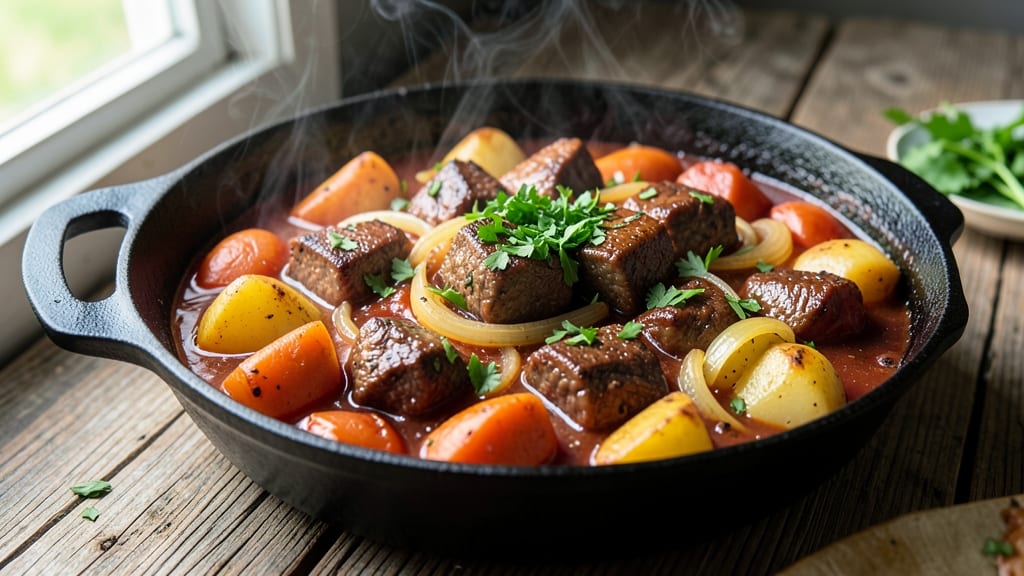
This beef and potato goulash recipe delivers the comforting, paprika-rich flavors of a classic Hungarian stew in one satisfying pot. The secret lies in searing beef for deep flavor and letting it slow-simmer until tender, transforming tough cuts into melt-in-your-mouth bites.
I've perfected this version to balance rich meat, hearty potatoes, and aromatic spices—no fancy techniques required, just time and patience. What sets this apart is the layered approach: browning the beef first creates a flavorful crust, while simmering with tomatoes and paprika develops that signature depth.
The potatoes soften just enough to soak up the savory sauce, creating a dish that feels indulgent yet balanced. This is the kind of meal that tastes even better the next day, when flavors meld perfectly.
By the time you're done, you'll have a steaming pot of goulash with tender beef, creamy potatoes, and a sauce thickened just enough to coat every bite. The aroma alone will have everyone gathering at the table—no fancy plating needed, just good, honest comfort food.
Ready in about 2 hours, it's the perfect solution for weeknight dinners or meal prep. Serve with crusty bread to soak up every last drop of that flavorful sauce. Here's how to make it—step by step, with tips to ensure success every time.
Ingredients for beef and potato goulash
Pantry staples plus a few fresh ingredients for that rich, paprika-spiced goulash flavor.
| Ingredient | Amount | Notes |
|---|---|---|
| Chuck Roast 🥩 | 1 ½ lb | Cut into 1-inch cubes |
| Yellow Onion 🧅 | 1 whole | Diced, medium size |
| Garlic Cloves 🧄 | 4 cloves | Minced for aroma |
| Carrots 🥕 | 3 medium | Peeled and sliced into rounds |
| Russet Potatoes 🥔 | 2 lb | Cut into 1-inch chunks |
| Tomato Paste 🍅 | ½ cup | Smooth, not chunky |
| Paprika 🌶️ | 2 tbsp | Sweet or smoked |
| Ground Black Pepper 🌶️ | 1 tsp | Freshly cracked |
| Salt 🧂 | 1 ½ tsp | Kosher or sea salt |
| Beef Broth 💧 | 2 cups | Low-sodium preferred |
| Bay Leaves 🌿 | 2 whole | For subtle flavor |
| Olive Oil 🫒 | 2 tbsp | For searing beef |
| Fresh Thyme 🌿 | 1 tbsp | Chopped, or 1 tsp dried |
| Tomatoes 🍅 | 1 can | Diced, 14.5 oz |
The beef is everything here. Chuck roast is your best bet—it's flavorful and stays tender. If you can't find it, round roast works too, but trim off any excess fat. I grab mine from Costco when I'm doing a big batch, but the regular supermarket chuck roast is fine for a weeknight dinner. Look for good marbling—it means more flavor. For the potatoes, Russets are ideal because they hold up well to long cooking, but Yukon Golds work too if you prefer creamier texture. The carrots can be baby carrots if that's what's in the fridge, but regular carrots are fine too.
No paprika? Smoked paprika plus a pinch of cayenne gets you close. Fresh thyme is ideal, but dried works at one-third the amount. The tomato paste can be those little squeeze tubes from Trader Joe's—no waste, keeps for months. If you're short on time, pre-diced onions and garlic from the freezer section save minutes. The beef broth? Low-sodium is key—you don't want to over-salt the whole dish. And if you're worried about the potatoes getting mushy, add them halfway through cooking so they absorb the sauce without falling apart.
This reheats beautifully—honestly tastes better the next day once everything melds. Keeps in the fridge for 4-5 days and freezes for 3 months. I portion mine into containers so lunches are sorted for the week. The sauce thickens as it cools, so a splash of broth when reheating helps loosen it up. And if you have leftovers, crusty bread is mandatory for soaking up every last drop of that flavorful sauce.
Why You'll Love This Recipe
- One-Pot Magic: I swear by this—dump everything in one pot and walk away. The chuck roast practically melts into tender shreds while the potatoes soften just enough to soak up that rich, paprika-spiced sauce. No fancy steps, no stress.
- Paprika Kiss: That smoky paprika? It’s the star. The onions caramelize into sweetness, the garlic cloves deepen into warmth, and the carrots add just enough bite to keep it lively. Honestly, the first bite makes me want to eat it straight from the pan.
- Leftovers for Days: Between us, this recipe doubles as tomorrow’s lunch. The flavors only get better after sitting overnight—the beef gets even more tender, and the sauce thickens into something heartier. I freeze portions too; it’s my go-to for lazy Mondays.
- Budget Hero: Chuck roast stretches for miles, potatoes fill you up, and the rest of the ingredients won’t break the bank. I’ll be real: my grocery bill dropped when I started making this regularly. Plus, it’s the kind of dish that makes simple meals feel special.
Step-by-step instructions for beef and potato goulash
Here's how to make a rich, comforting goulash that brings all the flavors together in one flavorful pot.
Sear the Chuck Roast for Deep Flavor
Heat the 2 tablespoons olive oil in a large, heavy pot over medium-high heat until shimmering. Add the 1.5 lb chuck roast, cut into 1-inch cubes, and sear in batches for 3-4 minutes per side until deeply browned. This step develops the rich, meaty foundation of your goulash—don't rush it, even if it takes a few minutes per batch.
As the beef browns, you'll notice the fat rendering out and sizzling in the pot. That's the golden crust forming, which carries so much flavor. Once all the beef is browned, transfer it to a plate and set aside. You'll want to keep it warm until the other ingredients are ready to join.
Build the Aromatic Base with Onions and Garlic
In the same pot, add the 1 whole yellow onion, diced, and cook over medium heat for 5-6 minutes until softened and starting to caramelize at the edges. This step adds sweetness that balances the paprika's warmth, so don't skip it.
Next, add the 4 cloves garlic cloves, minced, along with the 1 tablespoon fresh thyme and 1.5 teaspoons salt. Stir for 1 minute until the garlic becomes fragrant—you'll smell it filling your kitchen. This aromatic base is what makes the entire dish sing with flavor. If you're using dried thyme, now's the time to add it instead.
Add Carrots, Potatoes, and Tomato Paste
Toss in the 3 medium carrots, sliced into rounds, and the 2 lb russet potatoes, cut into 1-inch chunks. Stir everything together and cook for 3-4 minutes until the vegetables begin to soften slightly. This helps them absorb the flavors you've built so far.
Now add the 0.5 cup tomato paste and the 2 tablespoons paprika, stirring well to coat everything evenly. The paprika will turn the mixture a beautiful reddish-brown color, signaling it's working its magic. Cook for another 2 minutes, stirring occasionally, until the tomato paste darkens slightly and the spices are fully incorporated.
Simmer the Goulash to Perfection
Pour in the 2 cups beef broth and the 1 can tomatoes, then return the seared beef to the pot. Stir gently to combine, then add the 2 whole bay leaves and 1 teaspoon ground black pepper. Bring the mixture to a gentle simmer over medium-low heat, then reduce the heat to maintain a steady simmer.
Cover the pot and let it cook for 1.5 to 2 hours, stirring occasionally. You'll know it's ready when the beef is fork-tender and the potatoes are soft enough to pierce easily with a knife. The longer it simmers, the deeper the flavors become, so resist the urge to rush this step. If the liquid reduces too much before the beef is tender, add a splash of water or broth to keep it moist.
Adjust Seasoning and Serve
Once the goulash is fully cooked, remove the bay leaves and taste for seasoning. Adjust with additional salt or pepper if needed—this is your chance to tailor the flavors to your liking. The goulash should be rich, hearty, and perfectly balanced between the tender beef, earthy potatoes, and aromatic spices.
Serve the goulash hot, straight from the pot, with crusty bread to soak up every last bit of that delicious sauce. The flavors will only get better as it sits, so don't hesitate to make extra—it reheats beautifully and tastes even more comforting the next day.
Pro Tips For Making Beef And Potato Goulash
- CRUSH THE ONIONS: Don’t just chop—smash those yellow onions with the flat side of your knife first. This breaks down their fibers faster and gets them tender before they even hit the pot, so they melt into the goulash instead of sitting as chewy chunks. (Yes, it’s extra work, but your future self will notice.)
- SEAR THE CHUCK IN BATCHES: Chuck roast releases a ton of liquid when seared, and if you dump it all in at once, you’ll just steam the meat instead of browning it. Work in 2-inch-thick slices, sear each side until deep golden, then set aside. The crust makes the difference between "meat in sauce" and "restaurant-quality goulash."
- PEEL AND CUBE POTATOES UNIFORMLY: Russets break down at different rates if they’re not the same size. Cut them into 1-inch cubes—no smaller, or they’ll turn to mush—and skip the peel if you’re impatient. The skin adds texture, but even- sized pieces guarantee they’ll cook through together, not some turning to glue while others stay firm.
- DON’T SKIP THE DEGLAZE: After searing the beef, those browned bits stuck to the pot are flavor gold. Splash in a splash of red wine (or broth) and scrape aggressively with a wooden spoon—this lifts up all the fond and turns it into a rich base for the goulash. Ignore it, and you’re missing half the depth of flavor. (I know, I know, it’s an extra 30 seconds.)
Flavor customization for these flavors
Sweet vs. Smoked Paprika
Sweet paprika gives your goulash that classic, vibrant red hue and mild warmth, perfect for beginners. I recommend Penzeys Hungarian Sweet Paprika—it's a cult favorite with consistent quality.
For a deeper, slightly smoky profile, swap in smoked paprika (like McCormick) and add ¼ tsp cayenne for a slow-building heat. 🌶️
Pro tip: Toast 1 tsp of sweet paprika in a dry skillet for 30 seconds before adding to intensify its flavor. This works wonders when you want that restaurant-quality depth without extra spices.
Spice Level Control
Want to dial up the heat? Add ½ tsp crushed red pepper flakes with the paprika, or finish with 1 tbsp hot honey at serving. For a subtle kick, 1 tsp gochujang (Korean chili paste) blends beautifully into the sauce.
I keep a jar of Penzeys Gochujang in my pantry specifically for goulash upgrades.
Mild? Boost umami with 1 tsp Worcestershire sauce or 1 tbsp soy sauce—both add complexity without heat. The key is balancing: start with less spice, then adjust to taste at the end.
Herb Variations
Fresh thyme is classic, but don't be afraid to experiment. Swap in 1 tbsp chopped rosemary for a piney depth, or 1 tsp dried marjoram for a floral note. I love adding 1 bay leaf + 2 sprigs fresh parsley at the end for brightness—just remove before serving.
For a Mediterranean twist, add 1 tsp dried oregano with the paprika. If you're using fresh herbs, add them in the last 10 minutes of cooking to preserve their vibrant color and aroma.
Umami Boosters
For extra richness, stir in 1 tbsp tomato paste (beyond the recipe) or 2 tbsp soy sauce after simmering. I also love adding 1 tsp fish sauce (just ½ tsp) for an unexpected depth—trust me, it works. Save the Mame brand from Asian markets for this trick.
Another secret? A splash of red wine (like Chianti) when deglazing the pot after searing the beef adds layers of flavor. Even ¼ cup makes a difference—just reduce it down before adding broth.
Acid Balance
Brighten the dish with 1 tbsp apple cider vinegar or 1 tsp lemon juice at the end. This cuts through the richness and balances the paprika's sweetness. I keep a bottle of Bragg Apple Cider Vinegar on hand for this exact purpose.
For tang, add ½ cup sour cream or crème fraîche off the heat—it cools the spices slightly while adding creaminess. Stir in just before serving to keep it smooth.
Texture Twists
Add ½ cup diced bell peppers (any color) with the onions for natural sweetness and crunch. Or toss in ½ cup frozen peas in the last 15 minutes of cooking—they add color and texture without overpowering.
For a heartier stew, include ½ cup chopped mushrooms (cremini or shiitake) with the carrots. They absorb flavors beautifully and add an earthy contrast to the beef.
Nutrition facts
Frequently asked questions
Can I use ground beef instead of chuck roast for this goulash?
Ground beef works in a pinch, but chuck roast is ideal for texture and flavor. If you must substitute, use 1 lb lean ground beef (85/15 blend) and brown it thoroughly. The result will be more tender but less rich. For best results, add 1 tbsp tomato paste to compensate for the lack of deep flavor from searing larger cuts.
How do I prevent the potatoes from turning mushy?
Add potatoes halfway through cooking (after 1 hour of simmering) so they absorb flavor without overcooking. For extra structure, parboil them for 5 minutes first. Russets hold up best—if using Yukon Golds, reduce simmering time by 15 minutes to avoid breakdown.
Can I make this goulash in an Instant Pot?
Sear the beef first, then add all ingredients (except potatoes) and cook on high pressure for 30 minutes. Quick-release the pressure, stir in potatoes, and cook another 5 minutes on sauté mode. The Instant Pot cuts cooking time to about 45 minutes while keeping flavors rich.
What's the best way to reheat leftover goulash?
Reheat gently on the stovetop over low heat with 2 tbsp broth to loosen the sauce. Avoid microwaving—it makes potatoes gummy. For best results, cover and simmer for 10-15 minutes. If the sauce thickens too much, add a splash of water or broth while reheating.
Why does my goulash taste bland?
Most likely, you skipped the searing step or didn't brown the beef enough. The crust from searing carries deep flavor. Also check your paprika—use sweet Hungarian paprika for authentic taste. Boost umami by adding 1 tsp soy sauce or ½ tsp fish sauce at the end, or a splash of red wine when deglazing.