
Soups & Stews
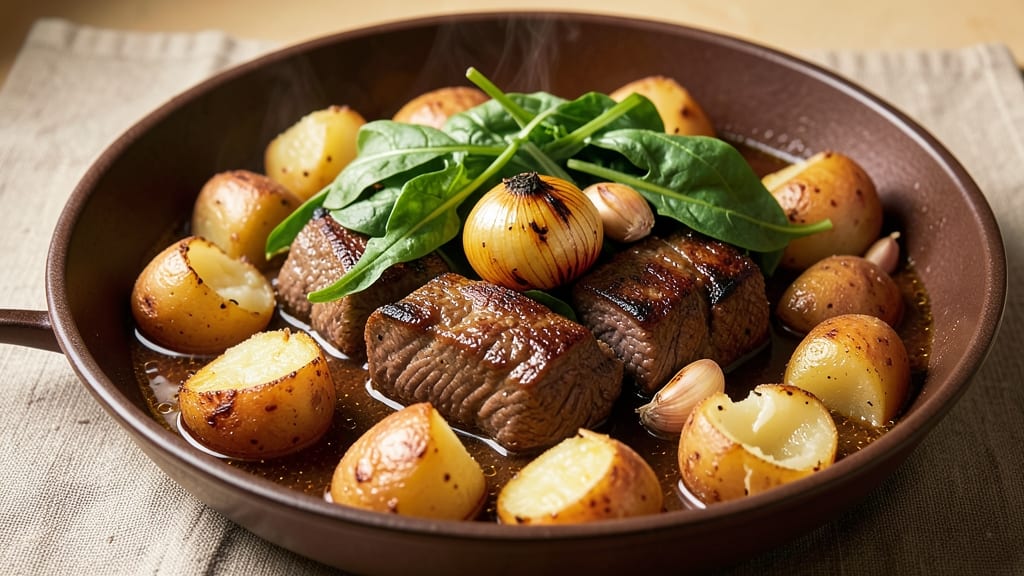
This beef spinach potato recipe transforms humble ingredients into a hearty one-pan stew that delivers restaurant-quality depth with minimal effort. The secret lies in slow-braising beef until tender, then folding in crisp-tender potatoes and wilted spinach at the perfect moment. I developed this during a particularly chilly week when I needed a meal that would warm both body and soul—no leftovers to worry about, just a single pot that does it all.
The beauty of this dish is its balance—rich, savory beef cuts through the earthiness of spinach while potatoes soak up the flavorful broth. We start with a simple sear to build flavor, then let everything simmer until the beef practically falls apart.
The spinach wilts just enough to maintain its vibrant color, adding freshness to each bite. This isn't just a stew; it's a complete meal that feels indulgent yet remains approachable for weeknight cooking.
What you'll end up with is a steaming pot of golden-brown potatoes, fork-tender beef chunks, and bright green spinach all bathed in a rich, aromatic sauce.
The textures contrast perfectly—crisp edges on the potatoes, tender beef, and just-wilted spinach—while the flavors meld into a harmonious blend of savory, earthy, and slightly sweet notes. Serve it with crusty bread to soak up every last drop of that flavorful broth.
This recipe scales beautifully for families or meal prep, and the leftovers reheat just as well as the first serving. The one-pan method means less cleanup, and the combination of ingredients ensures every bite is satisfying. Let's make this hearty stew that brings comfort to your table.
Ingredients for beef spinach potato
Fork-tender beef, crisp potatoes, and vibrant spinach—this one-pan stew delivers restaurant flavor with minimal effort.
| Ingredient | Amount | Notes |
|---|---|---|
| Chuck Roast Beef 🥩 | 1 ½ lb | Cut into 1-inch cubes, boneless |
| Yellow Onion 🧅 | 1 whole | Diced, medium size |
| Garlic Cloves 🧄 | 4 cloves | Minced, fresh preferred |
| Russet Potatoes 🥔 | 1 ½ lb | Cut into 1-inch chunks |
| Fresh Spinach 🌿 | 5 oz | Baby spinach, loosely packed |
| Beef Broth 💧 | 2 cups | Low-sodium preferred |
| Tomato Paste 🍅 | 2 tbsp | Smooth, not chunky |
| Red Wine 🍷 | ½ cup | Dry, like Cabernet |
| Olive Oil 🫒 | 2 tbsp | Extra-virgin for richness |
| Salt 🧂 | 1 ½ tsp | Kosher or sea salt |
| Black Pepper 🌶️ | ½ tsp | Freshly ground preferred |
| Dried Thyme 🌿 | 1 tsp | Or 1 tbsp fresh |
| Bay Leaves 🍃 | 2 whole | Remove before serving |
| Crusty Bread 🍞 | 4 slices | For serving, optional |
The chuck roast is the star here—look for good marbling at Costco or your local butcher for the best texture. Pre-cubed beef saves time, but if you're buying a whole roast, ask for chuck and cube it yourself. Fresh spinach makes all the difference; baby spinach wilts beautifully without turning to mush. For the potatoes, Russets are ideal—they hold their shape while soaking up flavor. If you can't find them, Yukon Golds work too, but they'll break down faster. The beef broth should be low-sodium to control seasoning; Swanson or Pacific Foods are reliable brands.
No red wine? Substitute beef broth with a splash of balsamic vinegar—it mimics the depth. Fresh thyme is ideal, but dried works at one-third the amount. If tomato paste feels like overkill, use 1/4 cup crushed tomatoes instead. The potatoes can be baby potatoes if that's what's available, but they'll take longer to cook. For extra richness, add 1 tbsp butter at the end. And if you're short on time, parboil the potatoes for 5 minutes before adding them to the pot.
This stew tastes even better the next day—reheats beautifully in the microwave or on the stove. Store leftovers in an airtight container for 4-5 days or freeze for 3 months. The broth thickens as it cools, so add a splash of water when reheating. For meal prep, double the recipe and freeze portions—just thaw and warm through. The crusty bread? Store it in a paper bag to keep it fresh longer, and toast it before serving for maximum crunch.
Why You'll Love This Recipe
- One-Pan Magic: I swear by this trick—just toss everything on a sheet pan, roast until golden, and call it dinner. No pots, no pans, no stress. The potatoes caramelize right next to the beef, and the spinach wilts in minutes from the residual heat.
- Deep Flavor Boom: That chuck roast? It’s the star—tender, rich, and packed with beefy goodness. Sear it first, and you’ll get this incredible crust that melts into your mouth, while the garlic and onions build layers of warmth. Honestly, it’s the kind of dish that makes you go back for seconds without even thinking.
- Leftovers That Shine: This recipe actually tastes better the next day. The potatoes get even softer, the beef more flavorful, and you can reheat it all together. Between us, I’ve taken it to work lunches, packed it for my kid’s soccer practice, and even served it cold in wraps when I was too tired to reheat.
- Budget-Friendly Feast: Chuck roast is my go-to for stretching meals without breaking the bank. A single cut feeds four, and the potatoes and spinach keep it hearty and filling. Plus, you’re not sacrificing taste—this is the kind of meal that makes you forget it’s also economical. (Yes, even on a Tuesday night.)
Step-by-step instructions for hearty one-pan beef stew
This method delivers deep flavor and tender textures through careful layering and timing.
Sear the Beef and Build the Flavor Base
Heat the 2 tablespoons olive oil in a large Dutch oven over medium-high heat until shimmering. Working in batches to avoid crowding, add the 1.5 pounds chuck roast beef cut into 1-inch cubes. Sear for 3-4 minutes per side until deeply browned—this creates the rich foundation for your stew. Remove the beef and set aside.
In the same pot, add the 1 whole diced yellow onion and cook for 4-5 minutes until softened and golden. Stir in the 4 minced garlic cloves and cook for 30 seconds until fragrant. This quick cooking prevents the garlic from burning while developing its sweet, nutty flavor. Sprinkle with 1 teaspoon dried thyme and 2 whole bay leaves, then stir for 10 seconds to coat the aromatics in oil.
Develop the Sauce and Add Potatoes
Reduce heat to medium and add the 2 tablespoons tomato paste, stirring to combine. Let it cook for 1 minute until slightly darkened. Pour in the 0.5 cup red wine and scrape up any browned bits from the bottom—this releases all the flavor locked in the sear. Simmer for 2-3 minutes until the wine reduces by half.
Add the 2 cups beef broth and bring to a gentle simmer. Stir in the 1.5 pounds russet potatoes cut into 1-inch chunks, ensuring they're submerged. Return the seared beef to the pot, season with 1.5 teaspoons salt and 0.5 teaspoon black pepper, then cover. Simmer for 20 minutes until the potatoes begin to soften but aren't falling apart.
Finish with Spinach and Rest Before Serving
Stir in the 5 ounces fresh spinach and cook uncovered for 2-3 minutes until just wilted. The spinach should brighten the stew with its freshness while absorbing the rich beef flavors. Taste and adjust seasoning—you may need a pinch more salt or pepper depending on your broth.
Remove the 2 whole bay leaves before serving. Let the stew rest for 5 minutes off the heat—this allows the flavors to meld and the juices to redistribute throughout the meat and potatoes. Serve with 4 slices crusty bread to soak up the hearty sauce and complete the meal.
Pro Tips For Making Beef Spinach Potato
- Sear the Chuck Roast First: I learned this the hard way—skipping the sear means bland beef. Pat the chuck roast very dry, then hit it with high heat in a heavy pot for 3-4 minutes per side until deep brown. That crust locks in flavor when it braises later.
- Parboil Potatoes Until Fork-Tender: Russets need a head start. Cut them into even chunks, then boil in salted water for 8-10 minutes until they pierce easily with a fork. Drain and toss with a little oil—this guarantees they’ll finish cooking without turning mushy.
- Sauté Onions Low and Slow: After 10 minutes of browning the beef, add onions and garlic. Keep the heat low—I mean low—or they’ll turn to paste. A gentle simmer for 10-12 minutes caramelizes them without burning, which is where the sweetness hides.
- Add Spinach Last, Off Heat: Spinach wilts in seconds, but tossing it in at the end while the pan’s still hot just makes it sad and limp. Instead, turn off the heat, let the pan cool for 30 seconds, then stir it in. The residual heat wilts it perfectly without overcooking.
Essential equipment for this dish
Dutch Oven
A 6-quart Dutch oven is my go-to for this recipe—it's deep enough to handle the beef and potatoes without boiling over, and its heavy base distributes heat evenly.
I use the Le Creuset Stoneware Dutch Oven because its thick walls prevent hot spots, but any quality brand like All-Clad or Lodge works perfectly. If you don’t own one, a heavy-bottomed pot with a tight-fitting lid will do. Just avoid thin, flimsy pans that can’t maintain consistent temperatures. 🔥
Heavy-Duty Tongs
For searing the beef, heavy-duty tongs are essential to handle the chunks without crushing them. I prefer OXO Good Grips for their sturdy build and comfortable grip—they’re also dishwasher-safe. If you’re working in batches, tongs are safer than a fork, which can puncture the meat and release juices prematurely.
Keep them nearby while searing to avoid overcrowding the pan.
Measuring Cups and Spoons
Precision matters with this recipe, so invest in stainless steel measuring cups and spoons—they’re durable and accurate. I use Farberware for their clear markings and ergonomic design. For the 2 tbsp tomato paste, a small rubber spatula helps scrape every last bit from the container.
A fine-mesh strainer also comes in handy if you need to drain or rinse ingredients, though it’s not required here.
Wooden Spoon
A wooden spoon is perfect for stirring the stew without scratching the Dutch oven’s surface. I reach for a long-handled one to avoid burns while simmering. Avoid metal spoons—they can react with acidic ingredients like tomato paste or wine over time.
For deglazing, a silicon spatula is ideal because it’s heat-resistant and flexible enough to scrape up browned bits without damaging your pot.
Kitchen Timer
Timing is everything in this recipe, so a kitchen timer is non-negotiable. I use a simple digital timer with a loud alarm—like the Cuisinart CT-100—to avoid missing the 20-minute simmer or the 2-3 minutes for wilting spinach.
Set it before you start searing so you can focus on cooking without constantly checking the clock. Pro tip: Place it near your stove so you hear it clearly over any background noise.
Chef’s Knife and Cutting Board
A sharp chef’s knife (I use an 8-inch Wüsthof) and a stable cutting board are critical for prepping ingredients efficiently. Dice the onion and potatoes into 1-inch chunks for even cooking. For the garlic, a microplane or garlic press saves time over mincing by hand.
A non-slip mat under your cutting board prevents accidents—trust me, you don’t want a knife slipping mid-chop while handling raw beef. 💡
Nutrition facts
Frequently asked questions
Can I use ground beef instead of chuck roast?
You can substitute 1 pound ground beef for the chuck roast, but the texture will be different. Ground beef cooks much faster and won't develop the same tender, fork-shreddable quality. If you choose this option, brown the meat thoroughly first, then proceed with the recipe as written. For best results, use 85% lean ground beef to maintain richness.
How do I prevent the potatoes from turning mushy?
To keep potatoes firm and flavorful, cut them into even 1-inch chunks and add them to the stew after the beef has simmered for 15 minutes (instead of all at once). This ensures they cook through without absorbing too much liquid. Also, avoid overcrowding the pot—cook in batches if needed, and always use a heavy-bottomed pot like a Dutch oven for even heat distribution.
Can I make this ahead of time?
This stew tastes even better the next day! Let it cool completely, then store in an airtight container in the fridge for 4-5 days or freeze for 3 months. When reheating, add a splash of water or beef broth to restore moisture. The flavors deepen as it sits, making it perfect for meal prep. Just stir in fresh spinach when reheating to keep it vibrant.
What if I don't have red wine?
No problem! Replace the 0.5 cup red wine with 0.5 cup beef broth plus 1 tablespoon balsamic vinegar. The vinegar adds depth similar to wine's acidity. Alternatively, use 0.5 cup apple cider for a slightly sweeter profile. The dish will still be delicious—just slightly less complex.
How can I make this dish vegetarian?
Swap the beef for 1.5 pounds extra-firm tofu or 1.25 pounds mushrooms. Press and cube the tofu, then pan-fry until golden before adding to the pot. For mushrooms, use cremini or portobello cut into chunks and sautéed first. Boost umami with 1 tablespoon soy sauce or 1 teaspoon miso paste when developing the sauce. The rest of the recipe remains the same!