
Desserts
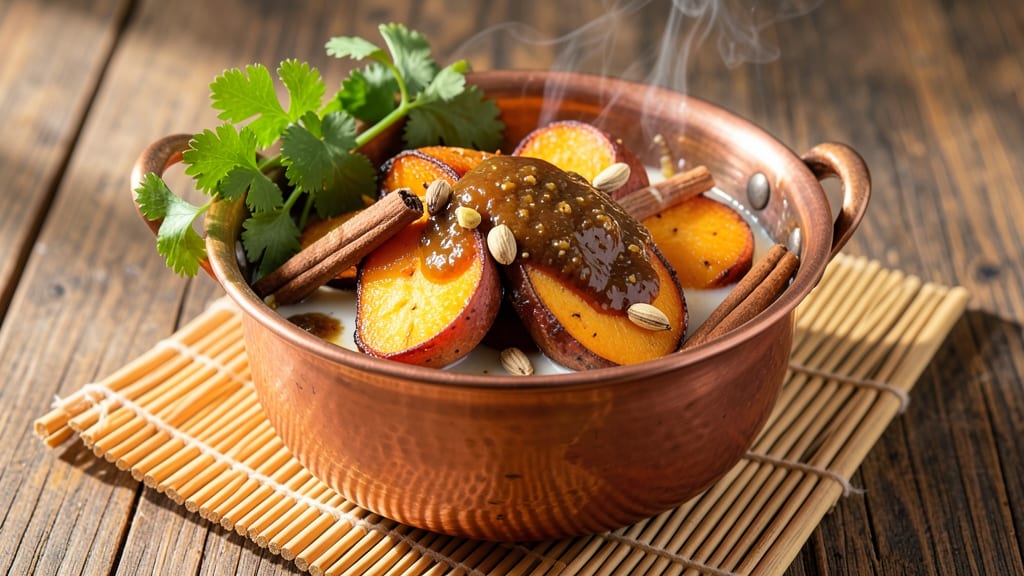
This coconut-tamarind halwa transforms humble sweet potatoes into a velvety, cardamom-spiced dessert that’s been a staple in Tamil homes for generations. 💛 The secret lies in slow-cooking the sweet potatoes until they’re tender enough to blend into a silky paste, then balancing their natural sweetness with the tang of tamarind and the nutty richness of coconut.
I first tried this recipe during a visit to my grandmother’s kitchen in Madurai, where she’d make it for Pongal—a dish that’s as much about tradition as it is about taste.
What makes this recipe special is how it captures the essence of Tamil sweets: rich, aromatic, and just sweet enough to satisfy without being overwhelming. The cardamom-infused coconut topping adds a delicate crunch that contrasts beautifully with the soft halwa, while the tamarind provides that signature tangy depth.
Unlike many desserts that require hours of simmering, this version comes together in about 45 minutes, making it perfect for festive occasions or when you want to impress with minimal effort.
The result is a dessert that’s creamy, fragrant, and impossible to resist—each spoonful bursts with the warm spices of cardamom and cinnamon, the bright acidity of tamarind, and the buttery richness of coconut.
It’s the kind of treat that feels like a hug in edible form, perfect for sharing with family or serving as a showstopper at gatherings. The best part? It keeps well for days, so you can make it ahead and enjoy it whenever the craving strikes.
Whether you’re celebrating a festival or simply craving something sweet, this recipe delivers the comforting flavors of home. The method is straightforward, but the result is anything but ordinary—think of it as a love letter to Tamil cuisine, where every bite tells a story. Let’s get started!
Ingredients for sweet potato recipe in tamil
Sweet, spiced, and deeply comforting—this halwa brings Tamil tradition to your kitchen in just 45 minutes.
| Ingredient | Amount | Notes |
|---|---|---|
| Orange Sweet Potatoes 🍠 | 2 ½ lbs | Medium size, peeled and cubed |
| Unsweetened Coconut Milk 🥥 | 1 ½ cups | Full-fat for creaminess |
| Tamarind Paste 🍈 | ½ cup | Or 4 tbsp tamarind pulp |
| Ghee 🧈 | ½ cup | For rich flavor |
| Cardamom Pods 🌿 | 10 whole | Lightly crushed |
| Cinnamon Sticks 🌿 | 2 whole | For aromatic depth |
| Gram Flour (Chickpea Flour) 🌾 | ¼ cup | For thickening |
| Ghee (for topping) 🧈 | ¼ cup | For crispy finish |
| Toasted Coconut Flakes 🥥 | ½ cup | For crunchy topping |
| Sugar 🍚 | ¾ cup | Adjust to taste |
| Salt 🧂 | ½ tsp | To balance sweetness |
| Water 💧 | 1 cup | For blending |
Sweet potatoes are the heart of this dessert, so pick vibrant orange ones—they’re sweeter and creamier. Madurai markets often carry the best varieties, but any medium-sized sweet potato works. Peel and cube them evenly for consistent cooking. The tamarind is non-negotiable for that signature tang—look for pulp in jars at Indian grocery stores or use fresh tamarind if you can find it. For the coconut milk, full-fat canned versions like Gopala or Aroy-D give the richest texture, but don’t stress if you only have light coconut milk. The cardamom and cinnamon should smell fragrant when crushed—buy whole pods and grind them fresh for maximum aroma.
No tamarind paste? Lemon juice or vinegar can mimic the tang in a pinch, though it won’t be as authentic. Running low on ghee? Coconut oil works too, but the flavor will be slightly different. For a quicker version, microwave the sweet potatoes first to soften them before blending. The gram flour is key for that signature halwa texture—don’t skip it, even if you’re in a hurry. If you can’t find toasted coconut flakes, toast regular flakes in a dry pan for 2-3 minutes until golden. The sugar amount is flexible—add more if you love it sweeter, but traditional Tamil desserts balance sweetness with spices.
This halwa tastes even better the next day as the flavors meld. Store it in an airtight container for up to 5 days at room temperature or 2 weeks in the fridge. For serving, warmth is key—reheat gently in a pot with a splash of water. The topping stays crispy for about 2 hours, so make it fresh before serving. Leftovers? It freezes beautifully for up to 3 months—just thaw at room temperature before reheating. Perfect for festivals or unexpected guests!
Why You'll Love This Recipe
- Five-Ingredient Magic: I swear by this combo—just sweet potatoes, coconut milk, tamarind, ghee, and cardamom. That’s it. No hidden spices, no last-minute grocery runs. Honestly, the tamarind’s tang cuts through the sweetness so well, it’s like nature’s balance.
- Creamy-Tang Twist: Between us, the coconut milk makes this dish ridiculously smooth, while the tamarind paste adds that bright, almost citrusy kick. The ghee? It turns every bite into pure satisfaction—like a hug for your taste buds.
- Weeknight & Weekend: Make it for dinner when you’re wiped, or serve it at a potluck when you want to impress. The leftovers reheat like a dream, and the flavors only get better the next day. (Yes, even on a Tuesday night.)
- Budget-Friendly Luxury: Sweet potatoes and coconut milk stretch far—this feeds four for under $10, and the cardamom and ghee add that restaurant-worthy touch without breaking the bank. My secret weapon for feeling fancy without the price tag.
Step-by-step instructions for coconut-tamarind sweet potato halwa
This traditional Tamil dessert comes together with rich layers of flavor and texture—let's bring it to life.
🍳 Step 1: Cook the Sweet Potatoes Until Tender
In a heavy-bottomed pot, combine the 2.5 lbs orange sweet potatoes (cubed), 1 cup water, and 0.5 tsp salt. Bring to a boil over medium-high heat, then reduce to medium-low and simmer uncovered for 15-20 minutes until the sweet potatoes are fork-tender with no resistance. You'll know they're ready when a knife slides in easily and the edges start to soften.
Drain the sweet potatoes thoroughly in a colander, pressing gently to remove excess water. This step is crucial—too much moisture will make your halwa watery. While they're still warm, mash them lightly with a potato masher or fork until they reach a coarse, rustic texture. You want some slight lumps remaining for authentic texture.
👨🍳 Step 2: Build the Flavorful Base
In the same pot, melt 0.5 cup ghee over medium heat until it shimmers and smells nutty. Add the 10 whole cardamom pods and 2 whole cinnamon sticks, letting them sizzle for 30 seconds until fragrant. This is where the aromatic magic begins—don't skip this step, as it forms the halwa's signature depth.
Add the mashed sweet potatoes and cook for 2-3 minutes, stirring constantly, until they're well-coated in the ghee. Pour in 1.5 cups unsweetened coconut milk and 0.5 cup tamarind paste, stirring vigorously to combine. The mixture will look thick and uneven at first—that's normal. Bring to a gentle simmer and cook for 5 minutes, stirring frequently to prevent sticking.
🔥 Step 3: Thicken and Sweeten the Mixture
Gradually whisk in 0.75 cup sugar and 0.25 cup gram flour, mixing continuously to prevent lumps from forming. The gram flour will help thicken the mixture beautifully. Cook over medium-low heat for 8-10 minutes, stirring constantly, until the halwa pulls away from the sides of the pot and reaches a thick, fudge-like consistency.
Here's the thing—you want it to coat the back of a spoon but still be pourable. If it thickens too quickly, add 1-2 tablespoons water at a time until you reach the perfect texture. The halwa should be smooth yet slightly glossy, with a rich orange color from the sweet potatoes.
🥘 Step 4: Create the Crispy Topping
In a small saucepan, melt 0.25 cup ghee for topping over low heat. Remove from heat and stir in 0.5 cup toasted coconut flakes until they're evenly coated. Spread this mixture over the cooked halwa, pressing down gently with a spatula to create an even layer. The coconut will crisp up beautifully as it cools, adding that perfect textural contrast.
For extra authenticity, I like to sprinkle a pinch of cardamom powder (from the pods you cooked) over the top. Cover the halwa with a clean kitchen towel and let it rest for 15 minutes—this allows the flavors to meld and the topping to set properly. The contrast between the creamy halwa and crispy coconut topping is what makes this dessert truly special.
Pro Tips For Making Sweet Potato Recipe In Tamil
- Peel After Cooking: Orange sweet potatoes are stubborn—peeling them raw means you’ll waste half the flesh. Boil or steam them whole first (15-20 minutes until fork-tender), then slip off the skin. The vibrant color stays put, and you’ll have perfect cubes every time.
- Bloom the Tamarind: Tamarind paste is thick and clumpy. Before adding it to the coconut milk, mix it with 2 tablespoons of warm water first—this dissolves the fibers and prevents grainy lumps. Trust me, your sauce will thank you.
- Low and Slow for Ghee: Ghee burns faster than you think. Once the tamarind-coconut mixture simmers, reduce the heat to just a whisper and let it cook uncovered. You’re not rushing this—you’re building flavor. Walk away for 10 minutes if you can.
- Toast Cardamom Whole: Crack open those cardamom pods first—don’t crush them—and toast them dry in the ghee for 30 seconds until fragrant. Then, gently crush them after they’ve cooled slightly. This keeps the essential oils intact, giving your dish that proper spice punch.
Storing and reheating your leftovers
Room Temperature Storage
This halwa keeps beautifully at room temperature for up to 5 days when stored in an airtight container. I use glass jars with tight-sealing lids—I love the Ball Mason jars because they’re sturdy and let me see the gorgeous orange color.
The coconut topping stays crisp for about 2 hours at room temperature, so I recommend adding it fresh before serving if you’ve stored the halwa overnight. The flavors actually deepen over time, making it perfect for making ahead for festivals. 💛
Fridge Preservation
For longer storage, transfer the halwa to an airtight container and refrigerate for up to 2 weeks. The cold helps preserve the coconut topping’s crunch for a bit longer, though it’ll soften slightly. When ready to serve, let it sit at room temperature for 30 minutes before reheating.
I’ve found that microwaving it for 20-30 seconds with a splash of water restores its creamy texture beautifully. The tamarind’s tang becomes more pronounced after refrigeration, adding another layer of flavor. ❄️
Freezing for Later
This halwa freezes exceptionally well for up to 3 months, making it ideal for prepping ahead for Diwali or Pongal celebrations. Portion it into quart-sized freezer bags or airtight containers, leaving 1 inch of headspace for expansion.
When ready to enjoy, thaw it overnight in the fridge, then reheat gently in a pot with 1-2 tablespoons water over low heat until warmed through. The texture remains creamy, though the coconut topping may need refreshing with a quick toast in the oven or pan. 🧊
Reheating Like a Pro
For the best results, I always reheat halwa on the stovetop. Place it in a heavy-bottomed pot with 2-3 tablespoons water and warm over medium-low heat, stirring constantly until it reaches 160°F. The water prevents burning and helps restore the silky texture.
If the topping looks dry, sprinkle a little melted ghee over it and warm for 30 seconds to revive the crunch. Never microwave—it makes the halwa rubbery and dulls the coconut’s flavor. 🔥
Serving Suggestions
Serve this halwa warm or at room temperature in small bowls with a dusting of cardamom powder and extra toasted coconut flakes. For a festive touch, garnish with edible silver leaf or a drizzle of rose water syrup.
Pair it with a cup of masala chai or filter coffee to balance the sweetness. I love serving it at room temperature during summer evenings when the coconut’s crunch contrasts perfectly with the creamy base. The tamarind’s tang cuts through the richness beautifully. 🌸
Nutrition facts
Frequently asked questions
Can I use regular potatoes instead of sweet potatoes?
No, sweet potatoes are essential for this recipe! Their natural sweetness and vibrant color create the perfect balance with the tamarind and coconut. Regular potatoes would make the dessert taste starchy and less flavorful. If you absolutely must substitute, try yams—but they won’t have the same rich sweetness.
What if I can't find tamarind paste?
You can use lemon juice or vinegar (about 2 tablespoons) as a substitute, but it won’t be as authentic. For the closest flavor, mix 1 tablespoon lemon juice + 1 teaspoon sugar to mimic tamarind’s tangy-sweet profile. The dish will still taste delicious, just with a slightly brighter acidity.
How do I adjust the sweetness for kids?
Reduce the sugar to 0.5 cup and add 1 extra tablespoon of cardamom powder to enhance the natural sweetness of the sweet potatoes. Kids often prefer milder flavors, so the spices will help balance the reduced sugar while keeping it comforting. Always taste as you go!
Can I make this halwa without ghee?
Yes! Use coconut oil for a similar flavor, though the aroma will be slightly different. For the topping, melt 0.25 cup coconut oil with the coconut flakes instead. If you want to stay closer to tradition, butter works too, but it may burn more easily—keep the heat low.
Is this halwa suitable for a vegan diet?
Not traditionally, but you can adapt it! Replace ghee with coconut oil and use vegan gram flour (chickpea flour is usually vegan). For the topping, use vegan coconut flakes (check for dairy-free labels). The tamarind and cardamom remain fully plant-based, so the core flavors stay intact.