
Desserts
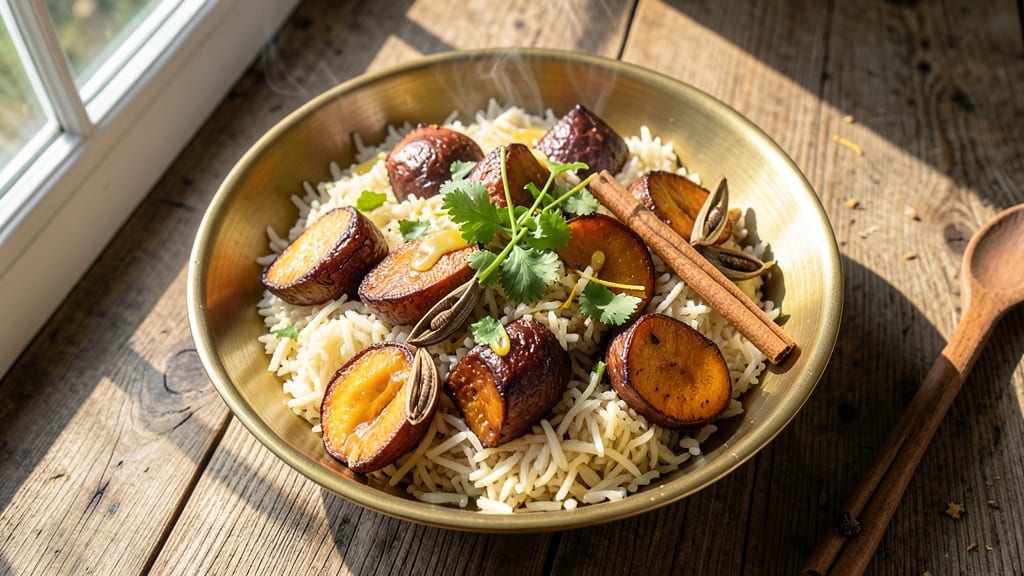
This Indian sweet potato rice recipe transforms humble ingredients into a fragrant, coconut-infused pilaf that tastes like a celebration in every bite. The secret lies in slow-cooked sweet potatoes that caramelize beautifully, paired with basmati rice simmered in spiced coconut milk and finished with a delicate cardamom kiss.
I first discovered this dish at a Kerala temple festival, where it was served as both a savory and sweet offering—proof that great food transcends categories.
The magic begins with pressure-cooked rice that stays perfectly fluffy, infused with cinnamon, cloves, and a touch of saffron for golden depth. Sweet potatoes are roasted until tender and slightly caramelized, then folded into the rice along with toasted coconut and warm spices.
The dish balances earthy sweetness with aromatic warmth, making it equally comforting as a main course or dessert—especially when served with a cooling mint yogurt raita on the side.
What makes this recipe special is its versatility—it works as a festive centerpiece or a weeknight staple, depending on how you serve it. The coconut milk lends a velvety richness, while cardamom and fennel seeds add layers of complexity that elevate simple ingredients.
Each grain of rice and bite of sweet potato carries the essence of South Indian home cooking, where spices are celebrated rather than overpowering.
For those who love texture contrasts, try adding toasted cashews or a sprinkle of fried shallots before serving. The dish also reheats beautifully, making it perfect for meal prep.
Whether you're hosting a gathering or craving a taste of home, this spiced coconut pilaf delivers warmth, tradition, and a touch of magic—all in one bowl.
Ingredients for sweet potato rice recipe indian
These aromatic ingredients blend earthy sweetness with fragrant spices for an Indian-inspired pilaf that feels like a celebration.
| Ingredient | Amount | Notes |
|---|---|---|
| Basmati Rice 🍚 | 1 cup | Uncooked, long-grain preferred |
| Sweet Potatoes 🍠 | 1 ½ lb | Medium, peeled and cubed |
| Coconut Milk 🥥 | 13 ½ oz | Full-fat canned preferred |
| Cardamom Pods 🌿 | 6 whole | Lightly crushed for aroma |
| Cinnamon Sticks 🌿 | 2 whole | Broken into small pieces |
| Cloves 🌿 | 4 whole | Lightly crushed |
| Fennel Seeds 🌿 | 1 tsp | Toasted for depth |
| Saffron Threads 🌼 | ⅛ tsp | Soaked in 1 tbsp warm water |
| Unsalted Butter 🧈 | 2 tbsp | For rice cooking |
| Shallots 🧅 | 2 whole | Finely chopped |
| Unsweetened Coconut Flakes 🥥 | ¼ cup | Toasted for crunch |
| Salt 🧂 | 1 tsp | Adjust to taste |
| Ghee 🫒 | 1 tbsp | For roasting sweet potatoes |
| Fresh Mint Leaves 🌿 | ¼ cup | Chopped for garnish |
| Plain Yogurt 🥛 | ½ cup | For raita (optional) |
The sweet potatoes are the heart of this dish—look for vibrant orange ones with smooth skin. Whole Foods or your local Indian grocery will have the best selection, but regular supermarkets work too. Peeled and cubed evenly, they roast until tender with a caramelized edge. For extra flavor, rub them with a pinch of salt and 1 tbsp ghee before roasting. The basmati rice should be long-grain and aromatic—Lotus Foods or Tilda brands are excellent choices. Rinse it well before cooking to remove excess starch, which keeps the grains separate and fluffy.
No cardamom pods? Ground cardamom at half the amount works, but the whole pods infuse more flavor. Running short on coconut milk? Light coconut milk plus 1 tbsp coconut cream mimics the richness. The saffron is non-negotiable for that golden hue—use real saffron threads, not the powdered kind. For the raita, plain yogurt should be thick and unsweetened—Fage or Siggi's are great options. If you can't find fresh mint, dried mint at one-third the amount is a decent swap, though fresh is ideal. The fennel seeds should be toasted in a dry pan for about 30 seconds until fragrant—this brings out their natural sweetness and depth.
Store the cooked pilaf in an airtight container for up to 4 days in the fridge, though it reheats beautifully with a splash of water or coconut milk. The roasted sweet potatoes can be prepped ahead and refrigerated for 3 days before cooking. For meal prep, portion the pilaf into containers with a side of raita—it keeps well for 3 days. The toasted coconut flakes stay crisp for about 2 days if stored in a sealed container. Freeze the pilaf without the garnishes for up to 3 months—just thaw overnight in the fridge before reheating.
Why You'll Love This Recipe
- One-Pot Magic: I swear by this recipe when I’m too tired to wash pots—just chop, simmer, and let the coconut milk and cardamom do their work. The rice and sweet potatoes cook together, so no separate timers or fussing over textures.
- Spiced Comfort in Every Bite: That first whiff of cinnamon and cardamom steeping in warm coconut milk? It’s like a hug for your taste buds. The sweet potatoes add natural sweetness, but the real star is how the spices balance everything—creamy, warm, and just a little bit magical.
- Weeknight to Weekend: I make this for lazy Mondays when I don’t want to think, and it’s also my go-to for potlucks because it’s hearty enough to feed a crowd but still feels special. The leftovers? Even better the next day—if there are any.
- Budget-Friendly Luxury: Sweet potatoes and basmati rice are pantry staples, and a can of coconut milk stretches far. Honestly, it’s one of those rare dishes where you get restaurant-quality flavors without breaking the bank—or spending hours in the kitchen.
Step-by-step instructions for sweet potato rice Indian: spiced coconut pilaf
This aromatic pilaf combines roasted sweet potatoes with fragrant basmati rice for a hearty South Indian-inspired dish.
Roast the Sweet Potatoes with Spices
Preheat your oven to 400°F. In a large bowl, toss the 1.5 lb sweet potatoes with 1 tbsp ghee, 1 tsp salt, and 1 tsp toasted fennel seeds. Spread them evenly on a rimmed baking sheet and roast for 25-30 minutes, stirring once halfway through, until tender with slightly caramelized edges.
While they roast, crush the 6 cardamom pods, 2 cinnamon sticks, and 4 cloves lightly in a mortar or with the bottom of a heavy pan. This releases their essential oils for maximum flavor infusion. The sweet potatoes should be fork-tender but still hold their shape when done.
Prepare the Spiced Coconut Base
In a medium saucepan, melt the 2 tbsp unsalted butter over medium heat. Add the 2 finely chopped shallots and sauté for 3-4 minutes until soft and translucent. Stir in the crushed spice mixture and cook for 30 seconds until fragrant—you should smell warm cardamom and cinnamon immediately.
Pour in the 13.5 oz coconut milk and bring to a gentle simmer. Let it reduce by half, about 5-7 minutes, until it thickens slightly and coats the back of a spoon. This concentrated coconut flavor forms the rich foundation of the pilaf. Remove from heat and stir in the soaked 0.125 tsp saffron threads with their warm water.
Cook the Basmati Rice
Rinse the 1 cup basmati rice thoroughly under cold water until the water runs clear. This removes excess starch that would make the rice mushy. In a separate pot, combine the rice with 2 cups water and bring to a boil. Once boiling, reduce heat to low, cover, and simmer for 12-15 minutes until the water is absorbed and rice is tender.
Gently fold the cooked rice into the coconut-spice mixture, stirring carefully to combine. The rice should absorb the rich coconut flavor while maintaining its distinct texture. If the mixture seems too thick, add 1-2 tablespoons water to achieve a moist but not soupy consistency.
Combine and Garnish
Transfer the spiced rice to a serving dish and arrange the roasted sweet potatoes on top. The contrast between the caramelized sweet potatoes and fragrant rice creates the perfect balance of textures and flavors. Sprinkle with 0.25 cup toasted unsweetened coconut flakes and 0.25 cup chopped fresh mint leaves for freshness.
For the optional raita, whisk the 0.5 cup plain yogurt with a pinch of salt and a few mint leaves. Serve alongside the pilaf for a cooling contrast. The dish should have warm, aromatic spices balanced by the natural sweetness of the sweet potatoes and creamy coconut.
Pro Tips For Making Sweet Potato Rice Recipe Indian
- PARBOIL SWEET POTATOES FIRST: I learned this the hard way—roasting sweet potatoes whole until tender takes forever. Instead, cut them into even 1-inch cubes, boil in salted water for 8-10 minutes until fork-tender, then drain. This cuts cooking time in half and keeps them from turning to mush when mixed with rice later.
- TOAST THE SPICES LOW: Cardamom and cinnamon burn faster than you’d think. Lightly toast whole pods and sticks in a dry pan over medium-low heat for 2-3 minutes—just until fragrant, not browned. Crush the cardamom pods after toasting, or you’ll get bitter, overpowering flavor. (And yes, even if you’re impatient like me.)
- USE HALF COCONUT MILK: Full-fat coconut milk makes the rice heavy and cloying. Split the can: use 1 cup for cooking the rice and save the rest for garnish or drizzling at the end. This keeps the texture light while still giving that rich, creamy finish. (Your future self will thank you.)
- SIMMER RICE COVERED, NOT BOILING: After adding the coconut milk and rice, reduce heat to the lowest setting that keeps a gentle simmer—no rolling boil. I used to crank the heat, and the rice always came out gummy. A steady, barely-there simmer lets the rice absorb liquid evenly without turning into porridge. (Does it look weird? Yes. Does it work? Every single time.)
Regional styles of sweet potato rice recipe indian
Kerala-Style Coconut Pilaf
The South Indian state of Kerala is famous for its coconut-infused dishes, and this sweet potato rice is no exception. Here, the coconut milk is reduced to a thick, fragrant base that clings to each grain of rice.
I always add a pinch of turmeric to the coconut mixture for that signature golden hue—it’s a Kerala kitchen staple. The dish is often served during Onam, the state’s harvest festival, where it’s paired with avial (a yogurt-based vegetable stew) and injipuli chutney (ginger-tamarind relish). 🥥
North Indian Masala Twist
In North India, this dish takes on a spicier profile with garam masala and kasuri methi (dried fenugreek leaves) folded into the rice. The sweet potatoes are often cooked with cumin seeds and black pepper instead of fennel, giving it a warm, earthy depth.
I like to finish it with a drizzle of mango pickle for a tangy contrast—this version is more common in Punjabi and Rajasthani households. The raita here might include roasted cumin powder and chopped cilantro instead of mint.
Tamil Nadu’s Sweet-Savory Balance
Tamil Nadu cooks often serve this dish as both a main course and a dessert, thanks to the natural sweetness of the sweet potatoes. The key difference? A generous sprinkle of sugar (about 1 tsp) is added to the coconut milk while reducing, creating a subtle caramelized sweetness.
The rice is also cooked with star anise and black cardamom for a deeper aromatic complexity. In Tamil homes, this dish is frequently paired with sambar (lentil stew) and papadams for a complete meal. 🌶️
Goan-Inspired Fusion
Goa’s Portuguese-influenced cuisine brings a unique twist with vinegar (about 1 tbsp) added to the coconut milk while reducing, giving it a bright, tangy edge. The sweet potatoes are often tossed with Goan coconut chili powder (a blend of coconut, chili, and spices) before roasting.
This version is lighter on the cardamom but includes grated coconut in the rice itself, adding texture. Serve it with Goan pork vindaloo for a fusion feast that’s popular in coastal Indian restaurants. The dish also works beautifully as a vegetarian option with coconut shrimp on the side.
Andhra’s Spicy Heat
Andhra cuisine loves bold flavors, so this dish gets a kick from red chili powder (about ½ tsp) and mustard seeds tempered in hot oil before adding the coconut milk. The sweet potatoes are roasted with dry red chilies and curry leaves for a smoky aroma.
The rice is cooked with mustard oil instead of butter, and the dish is finished with fried curry leaves for a crispy garnish. This version is often served with pachadi (a cooling yogurt dish) to balance the heat. 🔥
Nutrition facts
Frequently asked questions
Can I substitute regular potatoes for sweet potatoes in this recipe?
Sweet potatoes bring a unique caramelized sweetness and creamier texture that regular potatoes can't replicate. However, if you must substitute, use yellow potatoes (like Yukon Gold) and add ½ tsp cinnamon to the roasting mix to mimic the natural sweetness. The dish will be less rich but still delicious.
How do I make this dish vegetarian-friendly?
This recipe is already vegetarian, but you can enhance it by adding toasted cashews or pistachios for extra crunch. For a protein boost, stir in ½ cup cooked chickpeas or lentils with the rice. The coconut milk and spices provide plenty of flavor without any animal products.
What's the best way to reheat leftover sweet potato rice?
Reheat gently in a pot with 1-2 tablespoons water or coconut milk over medium-low heat for 3-4 minutes, stirring occasionally. Cover to trap steam and prevent drying. For microwave reheating, use 30-second intervals with 10 seconds rest between, adding a splash of water if needed. The coconut flavor actually improves after resting!
Can I make this dish without coconut milk?
Yes, but the dish will lose its signature richness. Replace coconut milk with full-fat milk plus 1 tbsp cream and add ½ tsp vanilla extract for depth. For a dairy-free option, use cashew cream (blend ½ cup soaked cashews + 1 cup water) or oat milk with 1 tbsp coconut cream. The texture will be lighter but still flavorful.
Why does my rice turn out mushy?
Mushy rice usually happens from overcooking or insufficient rinsing. Always rinse basmati rice 3-4 times until water runs clear to remove excess starch. Use 1:2 rice-to-water ratio and cook on low heat after boiling. If using a pressure cooker, cook for 1 whistle then 5 minutes off heat. Let the rice sit covered for 5 minutes after cooking before fluffing.