
Side Dishes
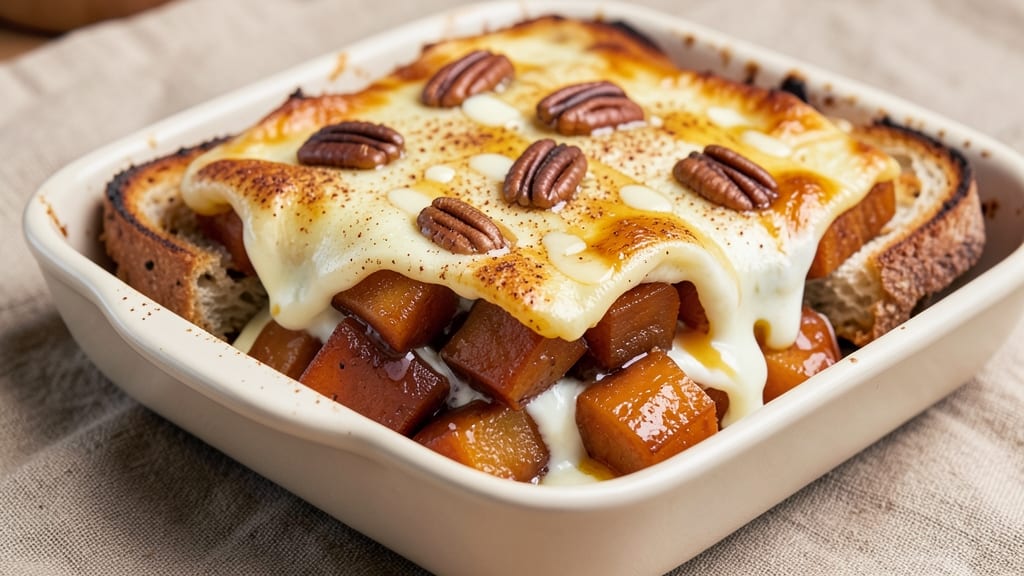
This sweet potato strata recipe transforms humble ingredients into a showstopping brunch centerpiece with its herb-infused egg custard and caramelized sweet potatoes. The secret lies in layering roasted sweet potatoes with cubed bread, eggs, and warm spices—creating a dish that's both hearty and elegant.
What makes this recipe special is how it balances sweet and savory, turning simple pantry staples into something restaurant-worthy without requiring advanced techniques.
The 30-minute prep (plus baking time) makes it perfect for weekend gatherings, while the creamy custard and tender sweet potatoes deliver comfort food at its finest. The dish bakes until golden and bubbly, with edges that crisp slightly—ideal for serving with a fresh salad or crusty bread.
I've tested this recipe countless times, and it never fails to impress, whether for a family brunch or a cozy weeknight dinner.
What you'll love most is the versatility—add cooked sausage, cheese, or fresh herbs to customize it to your taste. The 350°F oven ensures even baking, while the egg-milk mixture creates that signature custardy texture.
Each bite offers a perfect balance of caramelized sweetness, herbaceous warmth, and creamy richness, making it a dish that feels both indulgent and wholesome.
Perfect for meal prep or last-minute hosting, this strata keeps well in the fridge and reheats beautifully. The foolproof method ensures success every time, with layers that hold together and flavors that deepen as it sits.
Ready to elevate your brunch game? Let's get started with this complete dish that's as satisfying as it is impressive.
Ingredients for sweet potato strata
Transform humble pantry staples into restaurant-worthy strata with these carefully chosen ingredients.
| Ingredient | Amount | Notes |
|---|---|---|
| Large Sweet Potatoes 🍠 | 2 lbs | Peeled and cubed (1-inch pieces) |
| All-Purpose Flour 🌾 | ½ cup | For bread cubes |
| Crusty Bread Loaf 🍞 | 1 whole | Sourdough or French bread preferred |
| Large Eggs 🥚 | 8 whole | Room temperature for best binding |
| Whole Milk 🥛 | 2 cups | Full-fat for creamiest custard |
| Unsalted Butter 🧈 | ½ cup | Cold, cubed for roasting |
| Fresh Thyme 🌿 | ¼ cup | Leaves only, finely chopped |
| Fresh Sage 🌿 | ⅛ cup | Leaves only, finely chopped |
| Ground Cinnamon 🌶️ | 1 tsp | Freshly ground for warmth |
| Ground Nutmeg 🌶️ | ¼ tsp | Freshly grated preferred |
| Diamond Crystal Kosher Salt 🧂 | 1 ½ tsp | Adjust to taste |
| Freshly Ground Black Pepper 🌶️ | ½ tsp | Freshly cracked |
| Extra-Virgin Olive Oil 🫒 | ¼ cup | For roasting sweet potatoes |
| Maple Syrup 🍯 | 2 tbsp | Pure grade B for depth |
The sweet potatoes are the star—orange-fleshed varieties like Beauregard or Jewel work best. Whole Foods or Trader Joe's carry the best organic options, but any large sweet potato will do. Roast them until caramelized and tender—that's the secret to depth of flavor. For the bread, crusty sourdough holds up better than soft white, but French bread is a close second. I always grab extra because it's hard to resist toasting up slices for the next day. The herbs? Fresh thyme and sage are non-negotiable—they infuse the custard with that herbaceous warmth the intro promised.
No fresh herbs? Dried thyme at one-third the amount works in a pinch, but fresh is absolutely essential for that restaurant-quality flavor. Running low on maple syrup? Agave nectar or honey (if not vegan) can substitute, but maple's caramel notes are what make this dish sing. The butter matters too—European-style unsalted like Plugrá or Kerrygold melts beautifully, but regular unsalted works fine. For the eggs, room temperature is key—they'll bind better and create that silky custard. And if you're feeling adventurous, swap half the milk for cream for extra richness (though the custard will be even creamier).
This strata keeps beautifully—3-4 days in the fridge, wrapped tightly in foil. Reheat at 325°F for 20 minutes until bubbly. For make-ahead magic, assemble the dish the night before and refrigerate uncovered—the crust will crisp perfectly when baked the next morning. Portion into individual ramekins for elegant serving, or keep it whole for a showstopping centerpiece. Leftovers? Freeze for up to 2 months—just thaw overnight in the fridge before reheating.
Why You'll Love This Recipe
- One-Pan Magic: I swear by this for lazy mornings—just slice, layer, and bake. No chopping boards, no extra dishes, just that golden crusty top and creamy center waiting for you.
- Sweet & Savory Balance: The roasted sweet potatoes bring natural caramelized sweetness, while the crusty bread and eggs add that rich, salty depth. It’s like dessert and breakfast had a baby.
- Meal Prep Hero: Make it ahead—it actually tastes better the next day. Pack it for lunches or serve it cold for a hearty breakfast sandwich. (Yes, I’ve done both.)
- Budget Breakfast Win: Eggs, milk, and a loaf of bread? This feeds four for under $5. Plus, sweet potatoes keep forever, so you’re never scrambling for ingredients.
Step-by-step instructions for herb-infused sweet potato strata
Here's how to assemble this showstopping strata with layers of caramelized sweet potatoes and velvety custard.
Roast the Sweet Potatoes Until Tender and Caramelized
Preheat your oven to 400°F and line a baking sheet with parchment paper. Toss the 2 lbs of peeled and cubed sweet potatoes with 2 tablespoons of maple syrup and 1 tablespoon of the extra-virgin olive oil. Spread them in a single layer on the prepared sheet.
Roast for 25-30 minutes, stirring halfway through, until the edges are deep golden brown and the cubes are tender when pierced with a fork. You want them caramelized but not mushy—this is the foundation of your strata's rich flavor. Let them cool slightly before using, about 10 minutes, so they don't release excess moisture into your custard mixture.
Prepare the Bread Cubes and Herb Butter
While the sweet potatoes roast, cut the 1 whole crusty bread loaf into 1-inch cubes—about 6 cups total. Toss them in a large bowl with 2 tablespoons of the extra-virgin olive oil and 0.5 teaspoon of the kosher salt. This gives them a light crispness that contrasts beautifully with the custard.
In a small bowl, combine the 0.5 cup of cold, cubed unsalted butter with the 0.25 cup of finely chopped fresh thyme and 0.125 cup of finely chopped fresh sage. Mix until the herbs are evenly distributed throughout the butter—this will infuse the bread cubes with aromatic depth as they bake.
Assemble the Strata in a Greased Dish
Lightly grease a 9x13-inch baking dish with the remaining 1 tablespoon of olive oil. Begin by spreading half of the roasted sweet potatoes in an even layer across the bottom. Then sprinkle half of the bread cubes over the sweet potatoes, followed by half of the herb butter mixture.
In a large bowl, whisk together the 8 whole large eggs, 2 cups of whole milk, 0.5 cup of all-purpose flour, 1.5 teaspoons of kosher salt, 0.5 teaspoon of freshly ground black pepper, 1 teaspoon of ground cinnamon, and 0.25 teaspoon of ground nutmeg until smooth. Pour half of this custard mixture over the bread layer. Repeat with the remaining sweet potatoes, bread cubes, herb butter, and custard.
Bake Until Golden and Set
Cover the baking dish tightly with aluminum foil and bake at 350°F for 45 minutes. Remove the foil and bake for another 15-20 minutes until the top is golden brown and the custard has set but still has a slight jiggle in the center. This ensures a creamy texture without being undercooked.
Let the strata rest for 10 minutes before serving—this allows the custard to fully set and makes it easier to slice. The aroma of caramelized sweet potatoes and herbs will fill your kitchen, and each slice will reveal layers of warm, creamy custard with crisp bread cubes and tender sweet potatoes.
Pro Tips For Making Sweet Potato Strata
- PEEL AND CUBE SMALL: Sweet potatoes are stubborn—cut them into ½-inch cubes before peeling. The skin’s tough to slice after cooking, and smaller pieces soften faster in the custard, so you won’t end up with a mushy bottom layer and dry top.
- BAKE BREAD SLICES FIRST: Toast the bread loaf slices until golden and crisp—about 5 minutes at 350°F—before layering. This prevents sogginess later; the crust will stay intact even after soaking in the custard mix.
- WHISK EGGS UNTIL THICK: Don’t just stir the egg-milk mixture—whisk it vigorously for 2-3 minutes until it’s noticeably thicker. This ensures a firmer custard that holds together better when baking, especially with the dense sweet potatoes.
- USE COLD MILK: Reach for cold whole milk straight from the fridge. Warm milk makes the custard grainy, and cold milk helps the eggs emulsify better, giving you a smoother, creamier texture in the final dish.
Pro cooking tips for this dish
Perfect Roasting Technique
Roasting sweet potatoes at 400°F for 25-30 minutes creates that caramelized sweetness we love. Spread them in a single layer on parchment paper—they need room to brown evenly. Stir halfway to ensure all sides develop that deep golden color.
If you're short on time, par-cook them in the microwave for 5 minutes first, then finish roasting. This shortcut works well but sacrifices some texture. 🔥
Layering Like a Pro
Alternating sweet potatoes, bread cubes, and custard in thin, even layers ensures every bite has perfect texture contrast. I use a 9x13-inch baking dish for ideal surface area, but a 9-inch square dish works too.
Press down gently on each layer to eliminate air pockets—this prevents gaps where custard might leak during baking. The first layer should be sweet potatoes to anchor the dish.
Custard Consistency Secrets
The egg-milk mixture should coat the back of a spoon but still be pourable. Whisking vigorously for 2 minutes eliminates lumps, and adding 0.5 cup flour helps thicken without making it gummy.
For extra richness, replace ½ cup milk with heavy cream. I've found that room-temperature eggs blend more smoothly—crack them into a warm bowl first if they're cold from the fridge.
Baking with Confidence
Covering with foil for the first 45 minutes prevents the top from browning too quickly while the center sets. Uncovering for the final 15-20 minutes creates that golden crust we all crave.
Use an oven thermometer to verify your oven's accuracy—many run 25°F hotter than set. The custard is done when it's set but still slightly jiggly in the center, like a perfect custard.
Resting for Success
Never skip the 10-minute rest before slicing—this crucial step lets the custard fully set and makes clean slices possible. The strata will continue firming up as it cools, so don't rush it.
For make-ahead magic, assemble the dish the night before, refrigerate uncovered, then bake in the morning. The crust will be perfectly crisp when you remove it from the oven. ✨
Equipment Shortcuts
No food processor? Use a sharp chef's knife to cut bread into 1-inch cubes—it takes 5 minutes longer but gives you more control. For herb butter, I pulse the herbs in a mini food processor with the butter for 10 seconds to create perfect little flavor pockets.
If you're missing a baking dish, a 13x9-inch glass casserole dish works just as well—just grease it thoroughly first.
Nutrition facts
Frequently asked questions
Can I use regular potatoes instead of sweet potatoes?
While you can substitute regular potatoes, the flavor will be completely different. Sweet potatoes add natural sweetness and caramelization that regular potatoes lack. For a similar texture but different taste, try roasting Yukon Gold potatoes with a touch of maple syrup to mimic the sweetness. The custard will still bind well, but the overall dish will taste more savory.
How do I make this recipe vegan?
Replace the eggs with 8 tablespoons of ground flaxseed mixed with 12 tablespoons water (let sit 5 minutes to thicken), use 2 cups unsweetened almond milk, and swap butter for vegan butter or coconut oil. The custard will be slightly denser but still hold together. For extra binding, add 2 tablespoons cornstarch to the milk mixture.
Can I make this ahead of time?
Assemble the strata the night before, cover it tightly with plastic wrap, and refrigerate. Bake straight from the fridge (add 5-10 minutes to the baking time). For even better results, refrigerate it uncovered—this creates a crispier top when baked. The flavors deepen overnight, making it even more delicious!
Why did my strata turn out gummy?
Gummy texture usually means the custard didn't set properly. This often happens if the oven wasn't hot enough or the baking time was insufficient. Always use an oven thermometer to confirm 350°F, and ensure the custard has a slight jiggle in the center when done. For next time, try whisking the egg mixture for 2-3 minutes to create more air pockets that help it set.
What's the best way to reheat leftovers?
Slice the strata and reheat portions in a 325°F oven for 15-20 minutes until warmed through. For microwave reheating, cover with a damp paper towel and heat in 30-second intervals until hot. The oven method preserves the crispy edges better, while the microwave works for quick meals. Avoid reheating in the air fryer—it can dry out the custard.