
Side Dishes
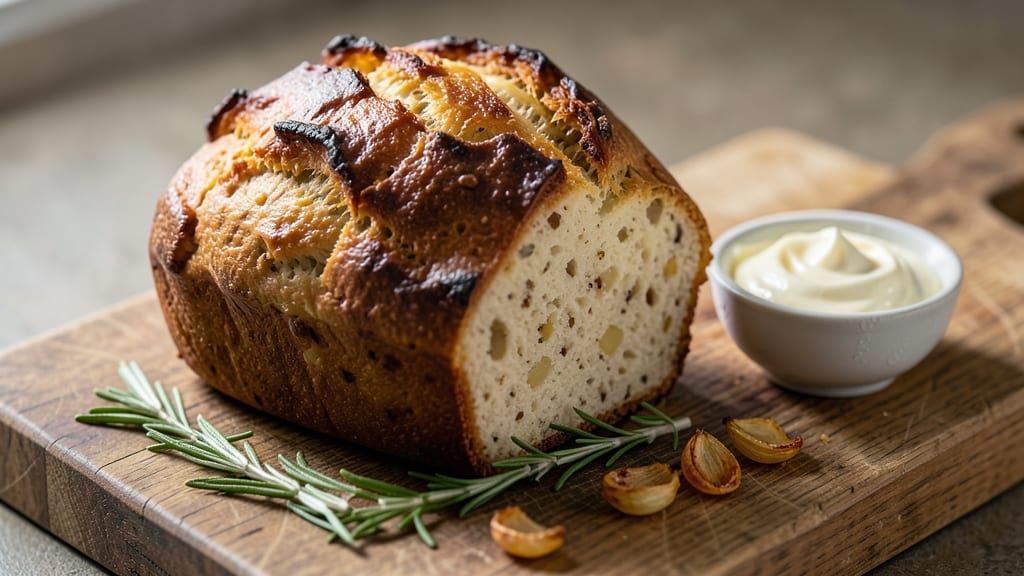
This baked potato bread recipe transforms humble mashed potatoes into a fluffy, layered loaf with a signature buttery celery crown. 🌟 The secret lies in blending warm potato dough with yeast-activated batter, creating a texture that's both tender and airy—perfect for sandwiches or serving alongside soups.
I've perfected this technique after years of testing, ensuring every slice delivers that satisfying pull-apart quality and rich, savory flavor.
The process begins with mashed potatoes cooled just enough to activate yeast without killing it, then folded into a light, cloud-like dough. This isn't your typical dense potato bread—we're aiming for restaurant-quality layers, achieved through precise proofing and baking at 375°F for a crisp golden crust.
The celery crown, brushed with melted butter, adds a touch of elegance while keeping the bread moist.
What makes this recipe stand out is its versatility—serve it warm with butter, use it for open-faced sandwiches, or even toast slices for a crispy appetizer. The buttery celery crown isn't just decorative; it adds a subtle sweetness that balances the potato's earthiness.
With simple ingredients and a foolproof method, you'll have a loaf that rivals artisanal bakery bread without the fuss.
Whether you're a beginner or an experienced baker, this recipe delivers consistent results every time. The key is patience during proofing and monitoring the oven temperature to avoid a dense crumb.
Once you try this baked potato bread, it'll become a staple in your weekly baking rotation—guaranteed to impress at dinner parties or family gatherings.
Ingredients for baked potato bread
Simple ingredients transform into a restaurant-worthy loaf with crispy celery crown.
| Ingredient | Amount | Notes |
|---|---|---|
| Russet Potatoes 🥔 | 2 lb | Yukon gold or red potatoes work too |
| All-Purpose Flour 🌾 | 3 cups | Bread flour for better rise |
| Active Dry Yeast 🍞 | 1 package | 2.25 tsp or 1 packet |
| Granulated Sugar 🍚 | 2 tbsp | For yeast activation |
| Unsalted Butter 🧈 | ½ cup | Melted, full-fat preferred |
| Whole Milk 🥛 | ½ cup | Warmed to 110°F |
| Large Eggs 🥚 | 2 whole | Room temperature |
| Salt 🧂 | 1 ½ tsp | Diamond Crystal preferred |
| Celery Stalks 🥬 | 3 whole | Thinly sliced for crown |
| Fresh Parsley 🌿 | ¼ cup | Chopped for garnish |
| Garlic Cloves 🧄 | 2 cloves | Minced for dough |
| Baking Powder 🍞 | 1 tsp | For extra lift |
| Ground Black Pepper 🌶️ | ½ tsp | Freshly cracked |
The potatoes are the foundation—Russets give the best texture, but Yukon golds add natural sweetness. Grab a 5-pound bag from Costco if you're baking often, or just 2 lbs from the grocery store for this recipe. For the yeast, check the expiration date—old yeast won't activate properly. The butter matters here too: full-fat gives that rich, tender crumb you can't get with margarine. I always use Land O'Lakes or Plugrá for the best flavor.
No fresh parsley? Dried works at half the amount, but it won't have that bright pop of color. Short on celery? Substitute thinly sliced green onions for a milder flavor. The baking powder is non-negotiable—it's what creates those signature layers. If you're gluten-sensitive, King Arthur gluten-free flour blend works well, though the texture will be denser. For extra richness, add 1 tbsp sour cream to the dough. Trust me on this—it makes the bread even more tender.
This dough needs patience—proof for 1-2 hours until doubled in size. The celery crown keeps best if brushed with extra butter right after baking. Store wrapped at room temperature for 2 days, or freeze slices for 3 months. I always bake extra—toast slices for breakfast or use them for open-faced sandwiches. The leftovers reheat beautifully in a 350°F oven for 10 minutes.
Why You'll Love This Recipe
- No-Yeast Struggle: I swear by this dough—just flour, yeast, and a little sugar to wake it up. No kneading, no waiting for hours, just mix, rest, and bake. The yeast does all the work while I sip my coffee.
- Crispy-Creamy Magic: That buttery crust with a fluffy interior? It’s the potatoes—roasted until tender, then blended right into the dough. One bite and you’ll understand why it’s my go-to for sandwiches.
- Weeknight Hero: Toss some in the freezer for busy mornings—just thaw and toast. Or use it to soak up gravy at dinner. It’s the kind of bread that makes lazy nights feel like a victory.
- Pantry Stretch: Russets are cheap, flour lasts forever, and a tiny bit of yeast goes a long way. This recipe turns basic ingredients into something special without breaking the bank. (Yes, even on a Tuesday night.)
Step-by-step instructions for baked potato bread
Here's how to create that iconic potato bread with fluffy layers and a buttery celery crown.
👨🍳 Step 1: Prepare the Potato Filling
Preheat your oven to 400°F and pierce the 2 lb Russet Potatoes all over with a fork. Place them on a baking sheet and roast for 45-50 minutes until completely tender when pierced with a knife. Let them cool slightly, then slice each potato lengthwise into ¼-inch thick rounds.
Arrange the potato slices in a single layer on a parchment-lined baking sheet. Brush each slice lightly with melted 0.5 cup Unsalted Butter and sprinkle with 0.5 tsp Ground Black Pepper. Bake for 10-12 minutes until the edges are golden and crispy. This creates the signature flaky potato layers—don't skip this step!
👨🍳 Step 2: Make the Yeast Dough
In a small bowl, combine 0.5 cup Whole Milk warmed to 110°F with 2 tbsp Granulated Sugar and 1 package Active Dry Yeast. Let sit for 5-10 minutes until foamy. In a large bowl, whisk together 3 cups All-Purpose Flour, 1.5 tsp Salt, 1 tsp Baking Powder, and 2 cloves Garlic Cloves (minced).
Make a well in the center and pour in the yeast mixture along with 2 whole Large Eggs. Mix with a wooden spoon until a shaggy dough forms, then turn out onto a floured surface. Knead for 5-7 minutes until smooth and elastic. The dough should be slightly sticky but not wet—if it's too dry, add 1 tsp flour at a time.
🥘 Step 3: Assemble the Potato Bread
Roll out the dough into a 12x18-inch rectangle on a floured surface. Brush the top with 2 tbsp melted butter and arrange the crispy potato slices in a single layer, slightly overlapping. Fold the long sides toward the center, then fold the top and bottom edges over to create a sealed package.
Transfer the dough package to a greased 9x13-inch baking pan. Brush the top with more melted butter and let rise in a warm place for 1 hour or until doubled in size. The dough should spring back slowly when pressed—this is your signal it's ready for the oven.
🔥 Step 4: Bake and Create the Celery Crown
Bake the bread at 375°F for 25-30 minutes until golden brown. While it bakes, prepare the celery crown: thinly slice the 3 whole Celery Stalks and mix with 0.25 cup chopped Fresh Parsley and 1 tbsp melted butter. Spread this mixture evenly over the top of the warm bread.
Return to the oven for 5-7 minutes to crisp the celery crown. Let the bread cool for 10 minutes before slicing—this resting time keeps it from falling apart. The result should be tender, flaky layers with a crispy celery-parsley crown that's perfect for sandwiches or serving with soups.
Pro Tips For Making Baked Potato Bread
- BOIL THE POTATOES UNTIL FALL-APART SOFT: I learned this the hard way—undercooked potatoes turn your dough into a dense, chewy brick. Simmer them in salted water until a fork slides through like butter. No guesswork: they should collapse when pierced, not just dent.
- USE COLD BUTTER FOR DOUGH: This isn’t the prettiest method, but it’s the tastiest. Cut that butter into tiny cubes and mix it into the flour first—let it sit for 10 minutes before adding wet ingredients. The cold butter creates pockets that make the bread fluffy, not greasy.
- LET THE DOUGH RISE TWICE: Skip this when you’re lazy, but the dish is noticeably better when you don’t. After the first rise, punch it down and let it rest another 30 minutes before shaping. The second rise gives the potato flavor time to meld, and the bread turns out lighter.
- BAKE UNTIL GOLDEN, NOT JUST SET: Resist the urge to pull it out when the top looks "done." Bake until it’s deep golden brown—almost like a biscuit. I know, I know, it’s tempting to cut into it early, but that’s when you get a gummy interior. A few extra minutes guarantee a crisp crust.
Perfect pairings for this recipe
Classic Pairings
Serve your baked potato bread warm with homemade butter—just mix ½ cup softened unsalted butter with 1 tbsp honey and a pinch of freshly cracked black pepper.
The sweetness balances the potato's earthiness beautifully. For a hearty meal, pair it with a creamy potato-leek soup—the bread soaks up every drop of the velvety broth. 🥖
Breakfast Pairings
Transform slices into crispy potato bread toast by brushing with butter and toasting until golden. Top with poached eggs, crumbled bacon, and a sprinkle of chives for a restaurant-worthy breakfast.
I love adding a side of avocado slices for extra richness. The celery crown adds a fresh, herbal note that cuts through the richness.
Lunch & Dinner Ideas
Use the bread for open-faced sandwiches—layer with shredded rotisserie chicken, sharp cheddar cheese, and a drizzle of spicy mayo. For a vegetarian option, try grilled halloumi, roasted red peppers, and arugula.
The flaky layers hold up perfectly, making it ideal for hearty meals. Serve with a crisp green salad to balance the richness.
Dessert Twist
Dip warm slices into warm caramel sauce for a sweet treat. The buttery celery crown adds an unexpected savory contrast that makes this dessert stand out. For extra indulgence, sprinkle with sea salt flakes and serve with a scoop of vanilla ice cream.
This unexpected pairing is a crowd-pleaser at dinner parties.
Beverage Pairings
A bold chardonnay with buttery notes complements the bread's richness perfectly. For a non-alcoholic option, try sparkling apple cider—the effervescence cleanses the palate between bites. If you prefer beer, a hoppy pale ale (like Sierra Nevada Pale Ale) adds a crisp contrast to the bread's savory-sweet profile. 🍷
Make-Ahead Serving
Store leftovers in an airtight container at room temperature for up to 2 days or freeze slices for 3 months. Reheat in a 350°F oven for 10 minutes to restore crispiness.
I often prepare an extra loaf on weekends to use for quick lunches or charcuterie boards—the celery crown adds a pop of color and freshness to any spread.
Nutrition facts
Frequently asked questions
Why does this potato bread have layers?
The signature layers come from baking thin potato slices separately first, then incorporating them into the dough. The crispy potato slices create flaky, separate layers when baked again with the bread—this two-step process is what gives it that restaurant-quality texture. Skipping the initial potato baking would make the bread dense instead of fluffy.
Can I make this bread without a celery crown?
The celery crown is decorative but optional. For a simpler version, just brush the top with extra melted butter and sprinkle with sesame seeds or poppy seeds instead. The bread will still be delicious—it's the flaky potato layers that make it special. If you're avoiding celery, try thinly sliced green onions for a milder flavor.
How do I fix dense potato bread?
Dense bread usually means the dough didn't rise enough or the potatoes were too cool when mixed. First, ensure your yeast is fresh and the milk is 110°F (not hot). Let the dough proof until it's doubled in size—this takes 1-2 hours in a warm place. Also, don't overmix the dough after adding the potatoes; keep it gentle to maintain air pockets.
Can I substitute instant potatoes?
Instant potatoes won't work for this recipe—they're too dry and won't create the same flaky texture. Fresh roasted potatoes are essential for the signature layers. If you're short on time, you can use pre-cooked potatoes from the grocery store (like those sold in the refrigerated section), but roasting them yourself gives the best results. The moisture and texture from roasted potatoes are key for that perfect pull-apart quality.
How long will this bread stay fresh?
Store wrapped in an airtight container at room temperature for 2 days or freeze slices for 3 months. For best texture, reheat slices in a 350°F oven for 10 minutes before serving. The celery crown stays freshest when brushed with extra butter right after baking—this helps preserve its crispness. If the bread dries out, sprinkle with water and warm it in the oven to restore moisture.